THERE YOU ARE

Republished by Blog Post Promoter
BUCKAROO BANSAI

If you haven’t seen this film, you should.  What else do you have to do?  — LRS

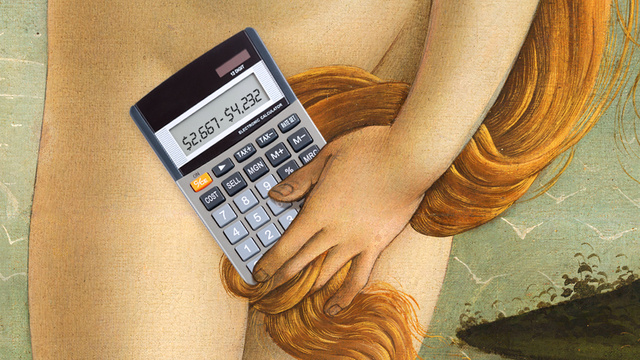
The Adventures of Buckaroo Banzai Across the 8th Dimension!, often shortened to Buckaroo Banzai, is a 1984 parody science fiction film. It was directed and produced by W. D. Richter, and concerns the efforts of the multi-talented Dr. Buckaroo Banzai, a physicistneurosurgeontest pilot, and rock musician, to save the world by defeating a band of inter-dimensional aliens called Red Lectroids from Planet 10. The film is a cross between the action/adventure and sci-fi film genres, and also includes elements of comedysatire, and romance.

EVOLUTION DOES NOT CREATE BIODIVERSITY

Republished by Blog Post Promoter

“Biologists are still trying to count the number of different life organisms on the planet. Consider the probability that an estimated TWO BILLION SPECIES have lived on Earth, of which as many as 99.9 percent are now EXTINCT! So, there probably aren’t that many left, right?

Wrong.

There are still estimated to be about 30,000,000 (thirty million!) different species of organisms still living on Earth. There are estimated to be more than 400,000 species of plants, alone. Do you like bugs? There are more than 1,000,000 species of insects (yes, that’s one million). There are 30,000 different subspecies of spiders! Not to mention the 30,000 species of beetles, 20,000 species of moths and 20,000 species of ants, bees and wasps. Researchers have estimated that for every human being there are one billion insects on Earth!

There are more than 9,000 species of birds, 4,000 species of mammals (1,700 are rodents), 10,000 species of roundworms, 4,000 species of amphibians, 21,000 species of bony fish and 6,000 species of reptiles. Don’t even think about the nearly unfathomable variety of invertebrate life in the oceans. Scientists will be working for a very long time to identify everything that lives in the waters of the world.

That’s just life in the macrocosm of Earth; i.e., just those life forms that we can see easily with the naked eye. How does this apply to the microcosm of relatively invisible animals?

There are 4,000 known species of bacteria. On the average human body, about 600 million bacteria live on the skin. The skin under your arms carries close to 500,000 bacteria and your forearm is a thriving metropolis that is home to over 12,000 bacteria per square inch! The bacteria population INSIDE your body is too numerous to count.

Then there are all the species of protozoa, algae, fungi and bacteria that eat carbon dioxide and hydrogen and produce methane as a byproduct.

In addition to the vast number of species, consider the fact that each individual cell in any complex organism is, in fact, a separate, distinct life entity. There are about 75 trillion cells in the average human body. The size of a single cell varies from the thickness of a few thousand atoms, to the largest single cell (an ostrich egg), measuring about 20 inches in diameter.

The sheer volume and diversity of life forms would seem to defy the probability of any coincidental, circumstantial, accidental or spontaneous development of the unthinkably vast, complex, intricately coordinated, precisely structured, cooperatively balanced, and yet, ingeniously bizarre, incongruously grotesque and downright peculiar variety of life on Earth. (Remember, we aren’t even counting the 99 percent of life forms that USED to live on the planet, which are now extinct!)

In the 150 years since Darwin and others have re-proposed the Theory of Evolution, no one has ever demonstrated it to be true. Not a single one of any of this immense number of species have ever successfully interbred and created a fertile reproductive combination of two different species.

The point is this: Darwin’s theory does not provide us with a workable solution. The missing pieces of the puzzle are still missing, namely: where did man and the other life forms on this planet come from?”

~ excerpt from THE OZ FACTORS by Lawrence R. Spencer

TRIP TO THE MOON IN 1902

Republished by Blog Post Promoter

French ambient electronica band Air impart a cosmic touch to the newly restored color edition of George Méliès’ iconic 1902 film Le Voyage dans la Lune (A Trip to the Moon). Technically innovative at the time, Méliès’ masterpiece pioneered the use of trompe l’oeil objects, papier-mâché props and double-exposure to tell the first science fiction tale in cinema. The story sees astronomer Professeur Barbenfouillis, played by Méliès, fire himself and six colleagues to the moon, explore caverns beneath the surface and escape from the indigenous insectoid Selenites. The color reel, hand-painted by Méliès, was discovered in 1993 by the Spanish film archive La Filmoteca de Catalunya and took almost two decades to restore.