Republished by Blog Post Promoter
The job of a Death Fairy is a thankless task, but somebody must do it!
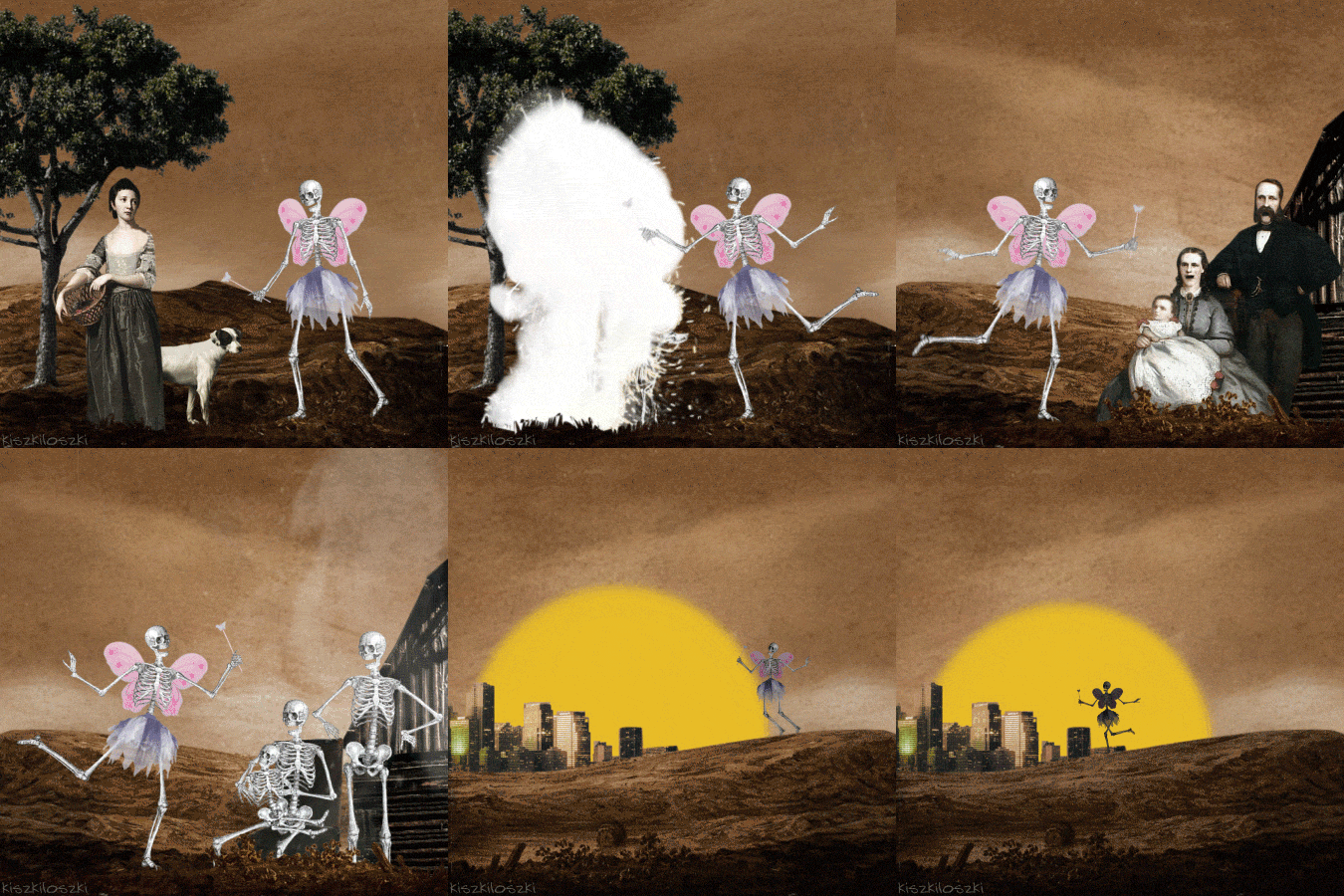 A banshee (“woman of the sídhe, woman of the fairy mounds”) is a female spirit in Irish mythology, who heralds the death of a member of one of the prominent Gaelic families. The banshee is often described in Gaelic lore as wearing red or green, usually with long, disheveled hair. She can appear in a variety of forms. Perhaps most often she is seen as an ugly, frightful hag, but she can also appear as young and beautiful if she chooses. In some tales, the figure who first appears to be a banshee or other cailleach (hag) is later revealed to be the Irish battle goddess, the Morrígan.
One popular belief was that they were the dead. This noted that many common points of belief, such as the same legends being told of ghosts and fairies, the sídhe in actuality being burial mounds, it being dangerous to eat food in both Fairyland and Hades, and both the dead and fairies living underground. Diane Purkiss observes an equating of fairies with the untimely dead who left “unfinished lives”.
Another belief is that the fairies were an intelligent species, distinct from humans and angels. In alchemy in particular they were regarded as elementals, such as gnomes and sylphs, as described by Paracelsus. This is uncommon in folklore, but accounts describing the fairies as “spirits of the air” have been found.