Republished by Blog Post Promoter

Republished by Blog Post Promoter
Republished by Blog Post Promoter
PAN GOD OF THE WOODS – FREE PDF BOOK ( CLICK TO DOWNLOAD)
Pan, the Greek god of forests, shepherds and fertility, has long represented the pagan gods in general. With the advent of the Christian church communication with the pagan gods was very heavily suppressed by priests  who have a vested interest in eliminating religious competition, by any means required, including, but not limited to lying, stealing, cheating, murder, mayhem, extortion, torture and blackmail. As a result, general public attention to the pagan gods disappeared about 2,000 years ago.
PAN-GOD OF THE WOODS assumes that the pagan gods may still be active, living beings. If any of the ancient gods are still around in the 21st century, what are they doing now? If they are here now — still watching, still powerful, still immortal — where or how might we contact them? If Pan is still around which of us mortals could not use the helping hand of a friendly god once in awhile?
~ Lawrence R. Spencer
Republished by Blog Post Promoter

KEEP YOUR FEET ON THE GROUND
YOUR SOUL ON THE ROAD
YOUR DREAMS BEYOND THE CLOUDS
__________
~ Lawrence R. Spencer. 2015 ~
Republished by Blog Post Promoter
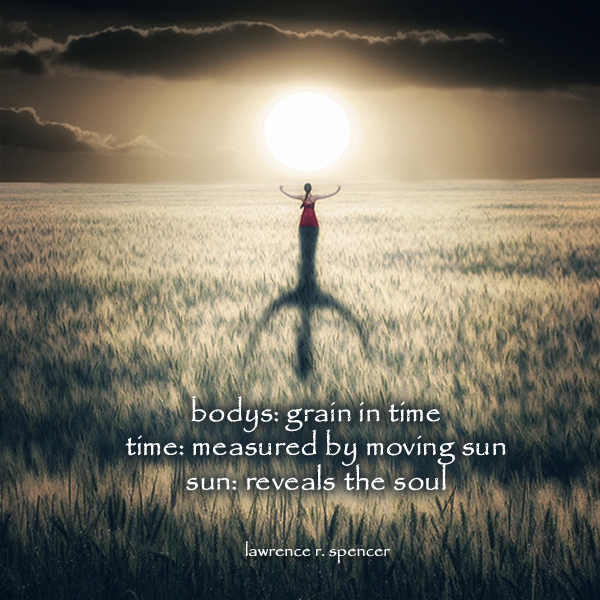
A Haiku (in the English language) is a short poem which uses imagistic language to convey the essence of an experience of nature or the season intuitively linked to the human condition. It is a development of the Japanese haiku poetic form in the English language. Some of the more common practices in English include: use of three lines of up to 17 syllables; most commonly, 5, 7, 5. Haiku uses an economy of words to paint a multi-tiered painting, without “telling all”.
Republished by Blog Post Promoter
 Khalil Gibran January 6, 1883 – April 10, 1931) was a Lebanese-American artist and poet. Khalil Gibran was born in the town of Bsharri in the Mount Lebanon Mutasarrifate, Ottoman Empire (north of modern-day Lebanon). As a young man Khalil emigrated with his family to the United States, where he
 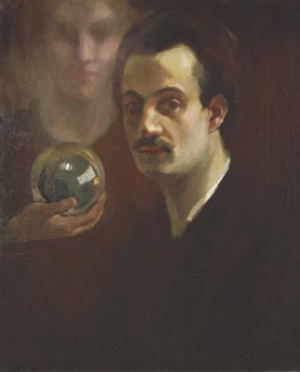 studied art and began his literary career, writing in both English and Arabic. In the Arab world, Gibran is regarded as a literary and political rebel. His romantic style was at the heart of a renaissance in modern Arabic literature, especially prose poetry, breaking away from the classical school. In Lebanon, he is still celebrated as a literary hero. He is chiefly known in the English-speaking world for his 1923 book The Prophet, an early example of inspirational fiction including a series of philosophical essays written in poetic English prose. The book sold well despite a cool critical reception, gaining popularity in the 1930s and again especially in the 1960s counterculture. Gibran is the third best-selling poet of all time, behind Shakespeare and Laozi.