
Republished by Blog Post Promoter
Category Archives: POETIC NONSENSE
Poetry by Lawrence R. Spencer. Poetic nonsense by Lawrence R. Spencer and others. Haiku poems by Lawrence R. Spencer.
A REAL HERO
Republished by Blog Post Promoter
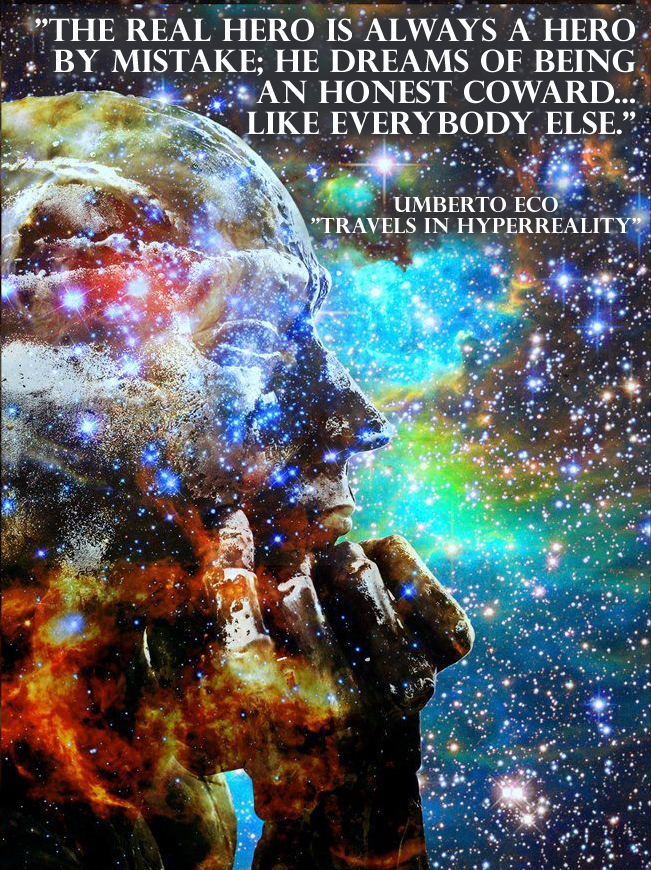
“An early description of the way contemporary culture is now full of re-creations and themed environments was provided by Umberto Eco. In a brilliant essay, Eco saw that we create these realistic fabrications in an effort to come up with something that is better than real — a description that is true of virtually all fiction and culture, which gives us things that are more exciting, more beautiful, more inspiring, more terrifying, and generally more interesting than what we encounter in everyday life. In his description of Disney, Eco also saw that behind the facades lurks a sales pitch. Put these ideas together and you have a succinct characterization of the age, which is forever offering us something that seems better than real in order to sell us something.” — Umberto Eco (born 5 January 1932 — ) is an Italian semiotician, essayist, philosopher, literary critic, and novelist.
CONSPIRACY THEORY
Republished by Blog Post Promoter

The Oxford English Dictionary defines conspiracy theory as “the theory that an event or phenomenon occurs as a result of a conspiracy between interested parties; spec. a belief that some covert but influential agency (typically political in motivation and oppressive in intent) is responsible for an unexplained event”. It cites a 1909 article in The American Historical Review as the earliest usage example, although it also appears in journals as early as April 1870. The word “conspiracy” derives from the Latin con- (“with, together”) and spirare (“to breathe”).
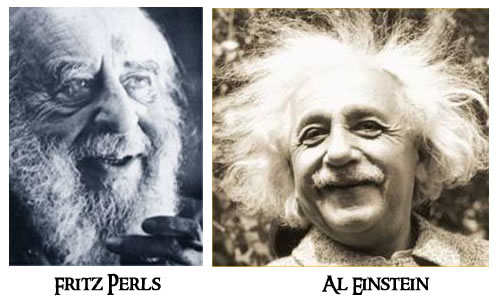
PERLS OF EINSTEIN
Republished by Blog Post Promoter


QUOTATION SOURCE: http://quoteinvestigator.com/2010/05/04/universe-einstein/
PHILOSOPHER FOR HIRE
Republished by Blog Post Promoter
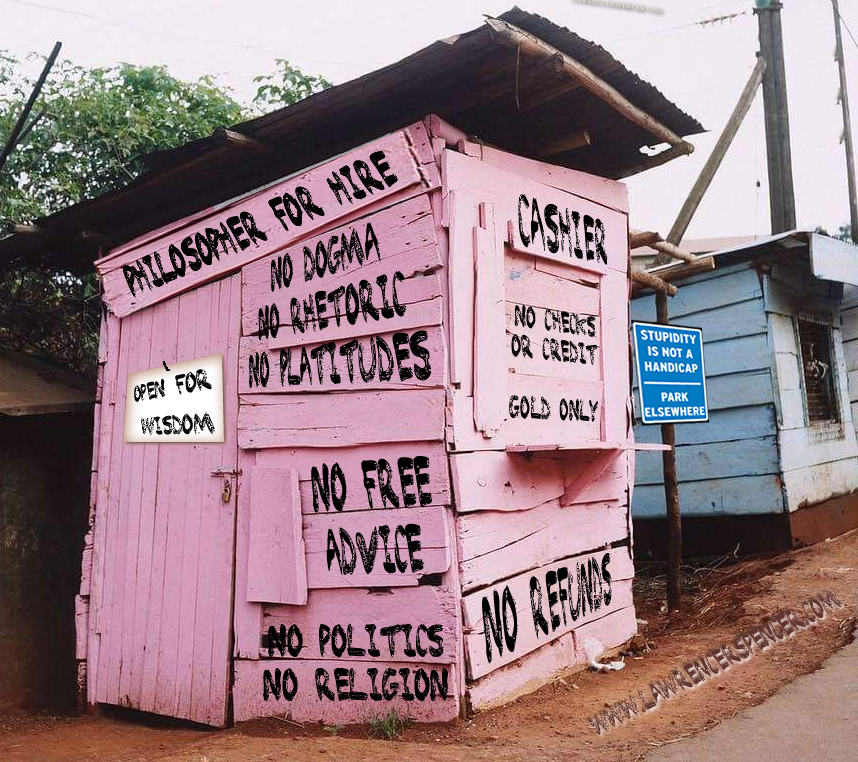 A philosopher is someone who practices philosophy, which involves rational inquiry into areas that are outside of either theological dogma or science. The term “philosopher” comes from the Ancient Greek φιλόσοφος (philosophos) meaning “lover of wisdom”. Its origination has been ascribed to the Greek thinker Pythagoras.
In the classical sense, a philosopher was someone who lived according to a certain way of life, focusing on resolving existential questions about the human condition, and not someone who discourses upon theories or comments upon authors. Typically, these particular brands of philosophy are Hellenistic ones and those who most arduously commit themselves to this lifestyle may be considered philosophers.
In a modern sense, a philosopher is an intellectual who has contributed in one or more branches of philosophy, such as aesthetics, ethics, epistemology, logic, metaphysics, social theory, and political philosophy. A philosopher may also be one who worked in the humanities or other sciences which have since split from philosophy proper over the centuries, such as the arts, history, economics, sociology, psychology, linguistics, anthropology, theology, and politics.
— Wikipedia