Republished by Blog Post Promoter
Hummingbirds are truly “magical”, as demonstrated in this superb documentary video.

miscellaneous postings by Lawrence R. Spencer
Republished by Blog Post Promoter
Hummingbirds are truly “magical”, as demonstrated in this superb documentary video.
Republished by Blog Post Promoter
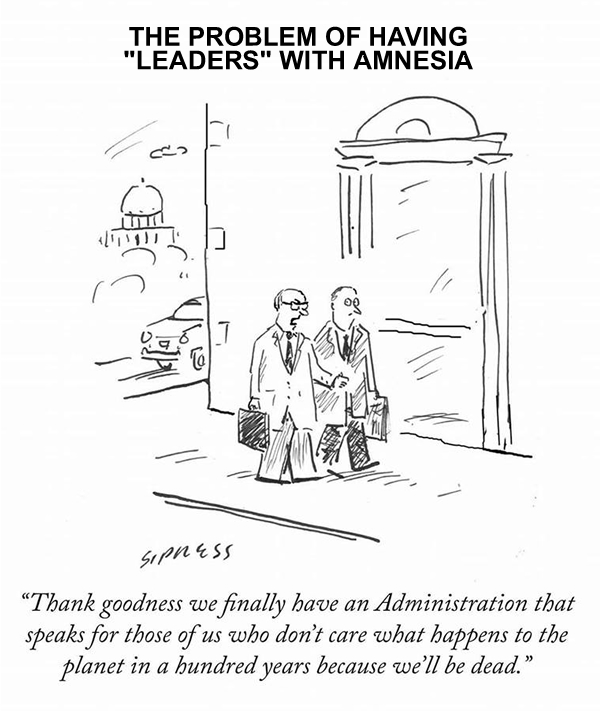 As long has human beings continue to allow this planet to be controlled by beings with amnesia there will be no possibility of sustaining a livable environment. We must remember that we are Immortal Spiritual Beings, and we must INSIST that everyone becomes aware of themselves as such. — LRS
Republished by Blog Post Promoter

“The English word spirit (from Latin spiritus “breath“) has many differing meanings and connotations, most of them relating to a non-corporeal substance contrasted with the material body. The word spirit is often used metaphysically to refer to the consciousness or personality. The notions of a person’s spirit and soul often also overlap, as both contrast with body and both are understood as surviving the bodily death in religion and occultism, and “spirit” can also have the sense of “ghost“, i.e. a manifestation of the spirit of a deceased person.
| Noun | 1. | disembodied spirit – any incorporeal supernatural being that can become visible (or audible) to human beings
spiritual being, supernatural being – an incorporeal being believed to have powers to affect the course of human events
control – a spiritual agency that is assumed to assist the medium during a seance
evil spirit – a spirit tending to cause harm
djinn, djinni, djinny, genie, jinnee, jinni – (Islam) an invisible spirit mentioned in the Koran and believed by Muslims to inhabit the earth and influence mankind by appearing in the form of humans or animals
familiar spirit, familiar – a spirit (usually in animal form) that acts as an assistant to a witch or wizard
peri – (Persian folklore) a supernatural being descended from fallen angels and excluded from paradise until penance is done
apparition, fantasm, phantasm, phantasma, phantom, spectre, specter – a ghostly appearing figure; “we were unprepared for the apparition that confronted us”
presence – an invisible spiritual being felt to be nearby
kachina – a deified spirit of the Pueblo people
numen – a spirit believed to inhabit an object or preside over a place (especially in ancient Roman religion)
python – a soothsaying spirit or a person who is possessed by such a spirit
|
Definitions from TheFreeDictionary.com and Wikipedia.org
Republished by Blog Post Promoter
Watch this brilliant animated video: Nothing To Fear
“…government emerges with regularity on planets where the citizens abandon personal responsibility for autonomous, self-regulation. They frequently lose their freedom…”
— Excerpted from the book “Alien Interview”, edited by Lawrence R. Spencer
Republished by Blog Post Promoter
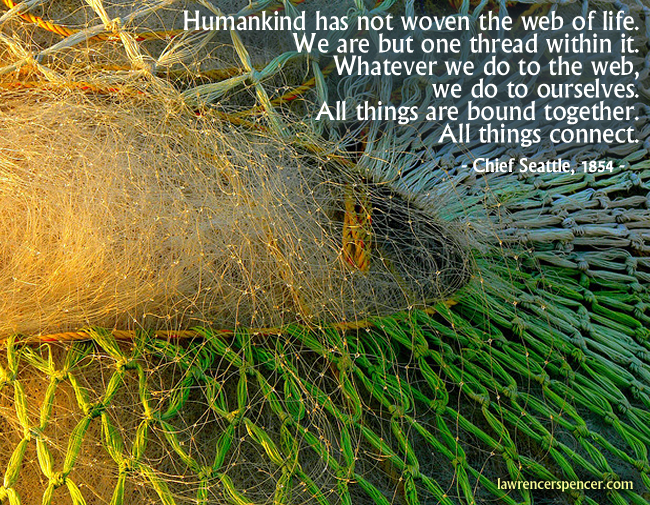
Chief Seattle (an Anglicization of Si’ahl) c. 1780 – June 7, 1866) was a Dkhw’Duw’Absh (Duwamish) chief,also known as Sealth, Seathle, Seathl, or See-ahth. A prominent figure among his people, he pursued a path of accommodation to white settlers, forming a personal relationship with David Swinson “Doc” Maynard. The city of Seattle, in the U.S. state of Washington, was named after him. A widely publicized speech arguing in favor of ecological responsibility and respect of native Americans’ land rights has been attributed to him.
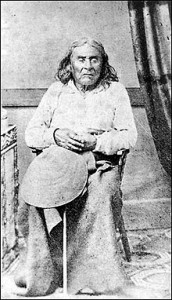 Si’ahl earned his reputation at a young age as a leader and a warrior, ambushing and defeating groups of enemy raiders coming up the Green River from the Cascade foothills, and attacking the Chimakum and the S’Klallam, tribes living on the Olympic Peninsula. Like many of his contemporaries, he owned slaves captured during his raids. He was tall and broad for a Puget Sound native at nearly six feet; Hudson’s Bay Company traders gave him the nickname Le Gros (The Big One). He was also known as an orator; and when he addressed an audience, his voice is said to have carried from his camp to the Stevens Hotel at First and Marion, a distance of 3⁄4 miles (1.2 km).
He took wives from the village of Tola’ltu just southeast of Duwamish Head on Elliott Bay (now part of West Seattle). His first wife La-Dalia died after bearing a daughter. He had three sons and four daughters with his second wife, Olahl.[3] The most famous of his children was his first, Kikisoblu or Princess Angeline. For all his skill, Si’ahl was gradually losing ground to the more powerful Patkanim of the Snohomish when white settlers started showing up in force. When his people were driven from their traditional clamming grounds, Si’ahl met Maynard in Olympia; they formed a friendly relationship useful to both. Persuading the settlers at Duwamps to rename the town Seattle, Maynard established their support for Si’ahl’s people and negotiated relatively peaceful relations among the tribes. (Wikipedia.org)