Symbiosis (from Ancient Greek σύν “together” and βίωσις “living”) is close and often long-term interaction between two or more different biological species.
Some of the most common and frequent symbiotic relationships examples are prey-predator and parasitism.
Parasitism is yet anther example of symbiotic relationship. The concept is fairly simple and it can be seen throughout nature. Mosquitoes for example, represent one form of parasitism. Other kinds can be seen in animals who have fleas and ticks.
Symbiosis can be a vital process for some species. A great example is Prey-Predator in which only one species can win the other being killed and annihilated.
Do not make the mistake of thinking that International BANKERS are anything more or less than Predators and Parasites. These “creatures” are NOT the same species of animal as human beings. When a BANKER looks at you, he sees FOOD. You are very carefully fed with “CREDIT” lies, false aspirations and false values to entice you into becoming a victim of the false economic institutions that literally CREDIT MONEY FROM NOTHING, and convince that it has “real value”. Factually, what we call “money” is created from thin air by PARASITES AND PREDATORS who produce NOTHING of value and STEAL all of your possessions, your work and your future from you.
The common-sense approach to preventing yourself from becoming “food” in the mouths of bankers is to AVOID them, or EXTERMINATE them!
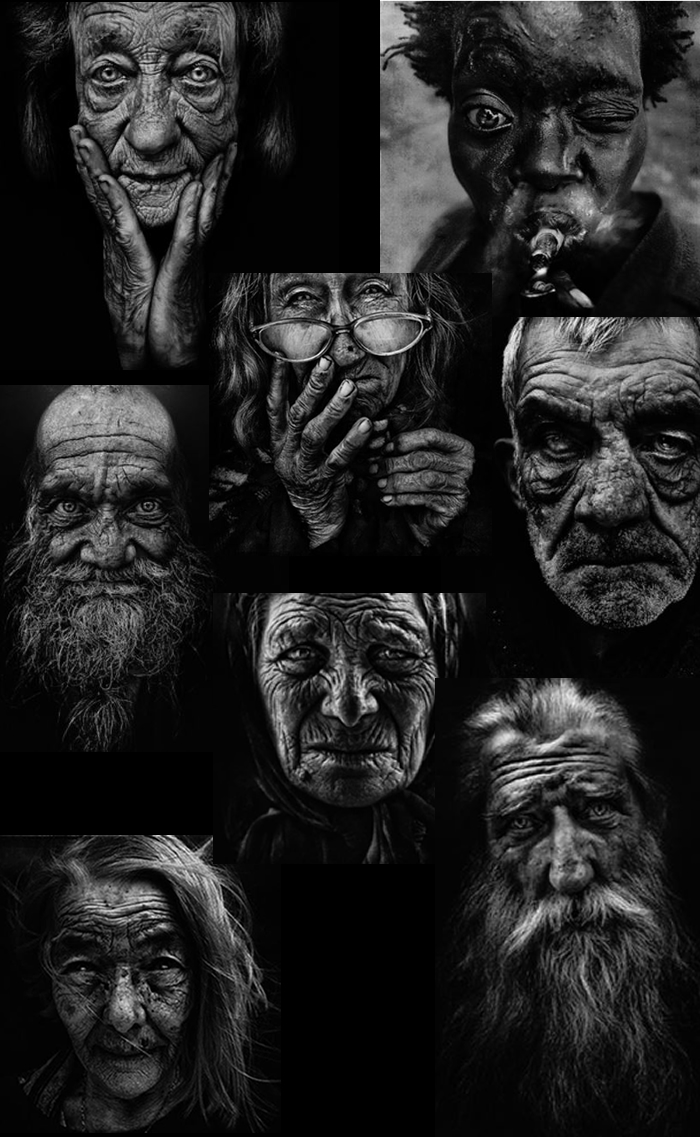
Are you afraid that an “Alien Invasion” might wipe out the human race? Are you concerned about Armageddon? Are you afraid that looming signs of the “End of Days” are all around you? Do you think the NWO may be planning your extermination to reduce population? Well, meet some people whose ancestors already experienced it. There are a few of them still living among us.
Learn more about the culture and history of the original citizens of the American Continents, before they were hunted almost into extinction by the Caucasian European Invasion. Before Columbus, The Spanish Conquistadors, The Pilgrims and the hordes of ignorant, filthy, greedy Caucasian European Invaders migrated in their blood-thirsty millions to the Americas there were estimated to be 100 Million people already living here. Caucasian Europeans systematically set about slaughtering every man, woman, child on the entire continent with guns, fire and blankets infested with small pox.
Visit the wonderful website below to experience some of the majesty, dignity, beauty and pain of those indigenous people.
“I have a friend who shall not be named that regularly accuses me of being a pie-in-the-sky Pollyanna. She thinks talking only about the good and the beautiful is denying facts. But here’s my position. “Facts” are not that interesting. I much prefer discussing possibilities. Sure those studies, those government reports, those doctors’ prognoses declare what she might call irrefutable “facts.” But to me, they’re nothing but a catapult for something better. I believe the most important faculty we possess is our imagination, and that by aligning it with the field of infinite potentiality, we can create something so much better than “current facts.”
Harping on about “current facts” just calls in more of the same. To waste our time on “appearances” is denying the power we have to change things for the better. I would much rather deny “facts” than deny my own ability to imagine something better. My words are the seeds that plant the possibilities. We can continue to focus on “what is” or “what appears to be,” or we can focus on what we can better imagine. “What is” is simply what we’ve been focusing on. “What could be” is much more interesting. At least to me.” — Pam Grout, Author of E-Squared: 9 Do-it-Yourself Energy Experiments That Prove Your Thoughts Create Your Reality.
Here is some interesting food for thought from Thomas Campbell’s My Big TOE (Theory of Everything):
“If you have read Flatland, it will be clear that the ordinary residents of a given reality can only observe and understand interactions within their own reality and the interactions of residents of realities that are more highly constrained than their own. Residents of a more constrained reality cannot comprehend a less constrained reality because it lies beyond the limits of their normal perception.
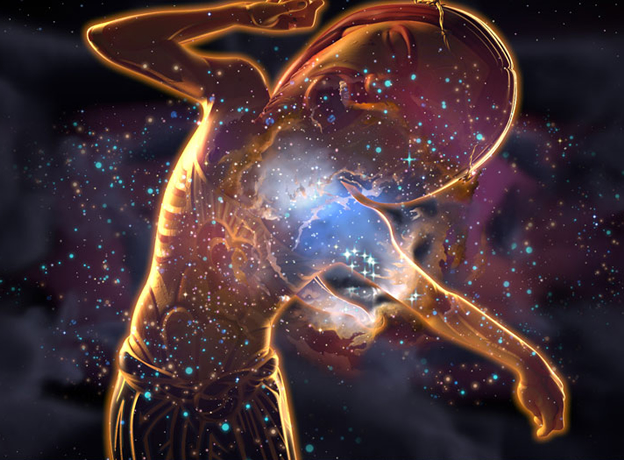
Each dimension of reality has its own rules that define its objective science. Additionally, each dimension of reality experiences the next higher (less limited) dimension as subjective and mystical. Consequently, your mysticism may be another’s science: It depends on how big a picture you live and work in, and the degree to which restraints limit your perception. The perspective from the next higher dimension provides a bigger picture with a more complete understanding. This more comprehensive, complete, and less restrictive knowledge is only accessible to lower dimensional beings (those with a more constrained awareness) through the experience of their individual locally-subjective mind.
Consequently, a mystic could be a scientist from a higher dimension, or a delusional fool hopelessly caught in a distorted web of belief. How do you know which is which? A good question! ”
_________________________________________
Flatland: A Romance of Many Dimensions is an 1884satiricalnovella by the English schoolmaster Edwin Abbott Abbott. Writing pseudonymously as “a Square”,Abbott used the fictional two-dimensional world of Flatland to offer pointed observations on the social hierarchy of Victorian culture. However, the novella’s more enduring contribution is its examination of dimensions.
Antony Cyril Sutton (February 14, 1925 – June 17, 2002) was a British-born economist, historian, and writer. Sutton studied at the universities of London, Göttingen, and California, and received his D.Sc. from the University of Southampton. He was an economics professor at California State University, Los Angeles and a research fellow at Stanford University’s Hoover Institution from 1968 to 1973. During his time at the Hoover Institution, he wrote the major study Western Technology and Soviet Economic Development (in three volumes), arguing that the West played a major role in developing the Soviet Union from its very beginnings up until the present time (1970). Sutton argued that the Soviet Union‘s technological and manufacturing base — which was then engaged in supplying the Viet Cong – was built by United States corporations and largely funded by US taxpayers. Steel and iron plants, the GAZ automobile factory – a Ford subsidiary, located in eastern Russia – and many other Soviet industrial enterprises were, according to Sutton, built with the help or technical assistance of the United States or U.S. corporations. He argued further that the Soviet Union’s acquisition of MIRV technology was made possible by receiving (from U.S. sources) machining equipment for the manufacture of precision ball bearings, necessary to mass-produce MIRV-enabled missiles.
In 1973, Sutton published a popularized, condensed version of the three volumes called National Suicide: Military Aid to the Soviet Union and was thereby[citation needed] forced out of the Hoover Institution. His conclusion from his research on the issue was that the conflicts of the Cold War were “not fought to restrain communism”, since the United States, through financing the Soviet Union “directly or indirectly armed both sides in at least Korea and Vietnam”; rather, these wars were organised in order “to generate multibillion-dollar armaments contracts”.[1] The update to this text, The Best Enemy Money Can Buy, looked at the role of technology transfers up to the 1980s. Appendix B of that text contained the text of his 1972 testimony before Subcommittee VII of the Platform Committee of the Republican Party where he summarized the essential aspects of his overall research:
“
In a few words: there is no such thing as Soviet technology. Almost all — perhaps 90-95 percent — came directly or indirectly from the United States and its allies. In effect the United States and the NATO countries have built the Soviet Union. Its industrial and its military capabilities. This massive construction job has taken 50 years. Since the Revolution in 1917. It has been carried out through trade and the sale of plants, equipment and technical assistance.[2]
”
Sutton’s next three major published books Wall Street and the Bolshevik Revolution, Wall Street and the Rise of Hitler and Wall Street and FDR detailed Wall Street’s involvement in the Bolshevik Revolution (in order to destroy Russia as an economic competitor and turn it into “a captive market and a technical colony to be exploited by a few high-powered American financiers and the corporations under their control”[3]) as well as its decisive contributions to the rise of Adolf Hitler and Franklin Delano Roosevelt, whose policies he assessed as being essentially the same, namely “corporate socialism” planned by the big corporations.[4] Sutton concluded that this was all part of the economic power elites‘ “long-range program of nurturing collectivism”[1] and fostering “corporate socialism” in order to ensure “monopoly acquisition of wealth”, because it “would fade away if it were exposed to the activity of a free market”.[5] In his view, the only solution to prevent such abuse in the future was that “a majority of individuals declares or acts as if it wants nothing from government, declares it will look after its own welfare and interests”, or specifically that “a majority finds the moral courage and the internal fortitude to reject the something-for-nothing con game and replace it by voluntary associations, voluntary communes, or local rule and decentralized societies”.[1] In Sutton’s own words he was “persecuted but never prosecuted” for his research and subsequent publication of his findings.
In the early 1980s, Sutton used a combination of public-domain information on Skull and Bones (such as Yale yearbooks) and previously unreleased documents sent to him by Charlotte Iserbyt, whose father was a Skull and Bones member,[6] to speculate that it had played an important role in coordinating the political and economic relationships underlying the historical events he (Sutton) wrote of in his previous works. He published his speculations as America’s Secret Establishment: An Introduction to the Order of Skull and Bones – which, according to Sutton, was his most important work.
In his book, Between Two Ages: America’s Role in the Technetronic Era (New York: Viking Press;1970), Zbigniew Brzezinski wrote:
For impressive evidence of Western participation in the early phase of Soviet economic growth, see Antony C. Sutton’s Western Technology and Soviet Economic Development: 1917–1930, which argues that ‘Soviet economic development for 1917–1930 was essentially dependent on Western technological aid’ (p.283), and that ‘at least 95 per cent of the industrial structure received this assistance.’ (p. 348).
Professor Richard Pipes, of Harvard, said in his book, Survival Is Not Enough: Soviet Realities and America’s Future (Simon & Schuster;1984):
In his three-volume detailed account of Soviet Purchases of Western Equipment and Technology …” Sutton comes to conclusions that are uncomfortable for many businessmen and economists. For this reason his work tends to be either dismissed out of hand as ‘extreme’ or, more often, simply ignored