Republished by Blog Post Promoter
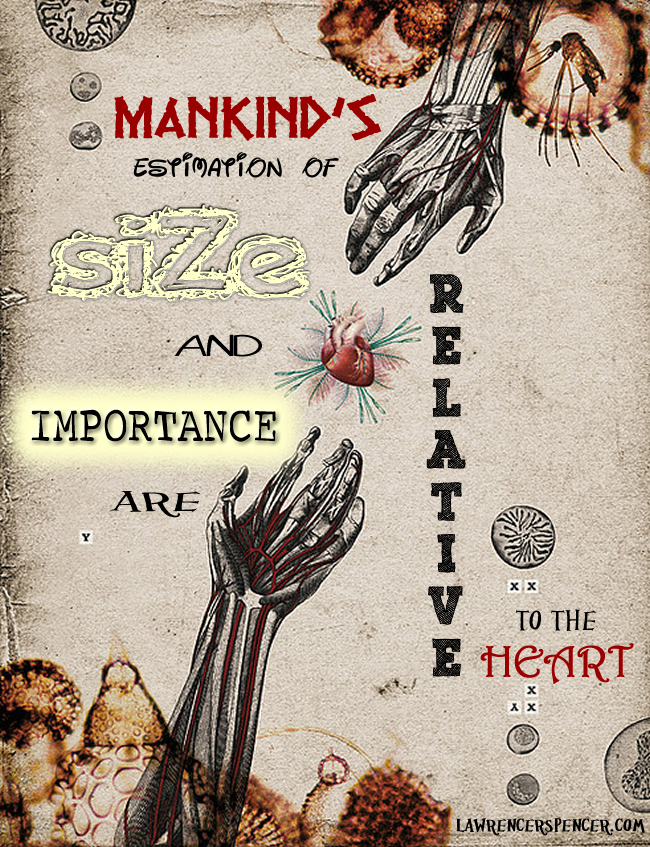
MANKIND’S ESTIMATION OF SIZE AND IMPORTANCE ARE RELATIVE TO THE HEART

Republished by Blog Post Promoter
MANKIND’S ESTIMATION OF SIZE AND IMPORTANCE ARE RELATIVE TO THE HEART
Republished by Blog Post Promoter
Video by Richard Borge
Lyrics and Music by Tom Waits:
Misery’s the River of the World.
Misery’s the River of the World.
The higher the monkey can climb the more he shows his tail.
Call no man happy ’til he dies.
There’s no milk at the bottom of the pail.
God builds a church.
The Devil builds a chapel like the thistles that are growing ’round the trunk of a tree.
All the good in the world you can put inside a thimble and still have room for you and me.
If there’s one thing you can say about Mankind: there’s nothing kind about Man.
You can drive out Nature with a pitch fork but it always comes roaring back again.
Misery’s the River of the World.
Misery’s the River of the World.
Misery’s the River of the World.
For want of a bird the sky was lost.
For want of a nail a shoe was lost.
For want of a life the knife was lost.
For want of a toy a child was lost.
Misery’s the River of the World.
Misery’s the River of the World.
Everybody Row! Everybody Row!
Misery’s the River of the World.
Misery’s the River of the World.
Everybody Row! Everybody Row!
Republished by Blog Post Promoter
 Definition: invasive species
In spite of political, religious, economic and scientific propaganda, a growing body of evidence demonstrates that the species “homo sapiens” is not indigenous to planet Earth. i.e. humans did not “evolve” here. In fact, the “theory of evolution by natural selection” is still a theory. Evolution, i.e. an ape does not “evolve” into becoming a “human”. It doesn’t work, in actual fact…. unless, a technician in a biological laboratory artificially combines the DNA with another species of life.
If the species “homo sapiens” did not originate or evolve on Earth, where did it come from? Details of where humans came from, why, when and how are found in the book ALIEN INTERVIEW:
“…evolution does not occur accidentally. It requires a great deal of technology which must be manipulated under the careful supervision of IS-BEs. Very simple examples are seen in the modification of farm animals or in  the breeding of dogs. However, the notion that human biological organisms evolved naturally from earlier ape-like forms is incorrect. No physical evidence will ever be uncovered to substantiate the notion that modern humanoid bodies evolved on this planet.
The reason is simple: the idea that human bodies evolved spontaneously from the primordial ooze of chemical interactivity in the dim mists of time is nothing more than a hypnotic lie instilled by the amnesia operation to prevent your recollection of the true origins of Mankind. Factually, humanoid bodies have existed in various forms throughout the universe for trillions of years.”
Republished by Blog Post Promoter
 Candide: or, The Optimist (1762) It begins with a young man, Candide, who is living a sheltered life in an Edenic paradise and being indoctrinated with Leibnizian optimism (or simply “optimism”) by his mentor, Professor Pangloss. The work describes the abrupt cessation of this lifestyle, followed by Candide’s slow, painful disillusionment as he witnesses and experiences great hardships in the world. Voltaire concludes with Candide, if not rejecting optimism outright, advocating a deeply practical precept, “we must cultivate our garden”, in lieu of the Leibnizian mantra of Pangloss, “all is for the best” in the “best of all possible worlds”.
Candide is characterised by its sarcastic tone as well as by its erratic, fantastical and fast-moving plot. A picaresque novel with a story similar to that of a more serious Bildungsroman, it parodies many adventure and romance clichés, the struggles of which are caricatured in a tone that is mordantly matter-of-fact. Still, the events discussed are often based on historical happenings, such as the Seven Years’ War and the 1755 Lisbon earthquake. As philosophers of Voltaire’s day contended with the problem of evil, so too does Candide in this short novel, albeit more directly and humorously. Voltaire ridicules religion, theologians, governments, armies, philosophies, and philosophers through allegory; most conspicuously, he assaults Leibniz and his optimism.
François-Marie Arouet (French: 21 November 1694 – 30 May 1778), known by his nom de plume Voltaire, was a French Enlightenment writer, 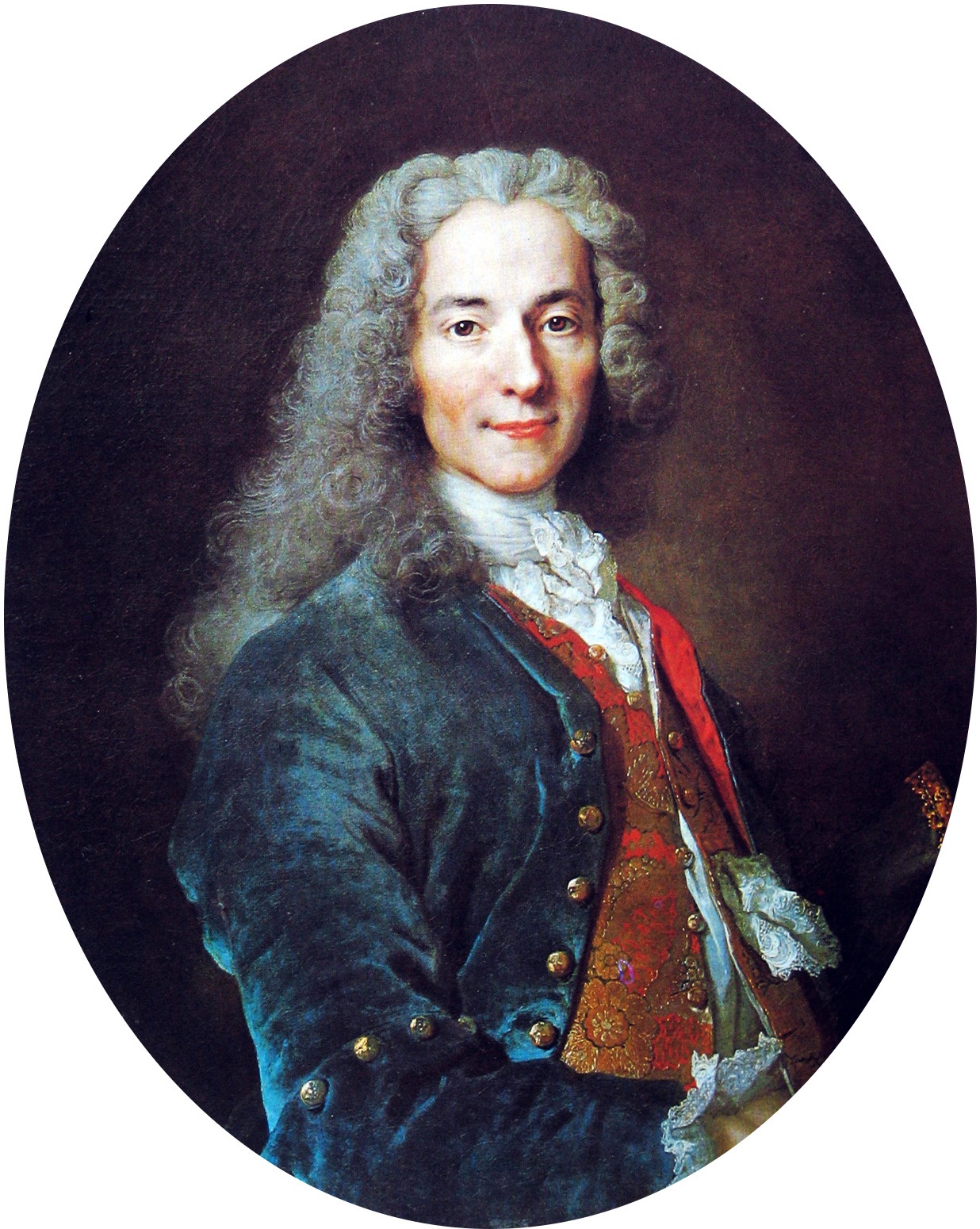 historian, and philosopher famous for his wit, his attacks on the established Catholic Church, and his advocacy of freedom of religion, freedom of expression, and separation of church and state. Voltaire was a versatile writer, producing works in almost every literary form, including plays, poems, novels, essays, and historical and scientific works. He wrote more than 20,000 letters and more than 2,000 books and pamphlets. He was an outspoken advocate of several liberties, despite the risk this placed him in under the strict censorship laws of the time. As a satirical polemicist, he frequently made use of his works to criticize intolerance, religious dogma, and the French institutions of his day.
(reference: Wikipedia.org)
Republished by Blog Post Promoter