Republished by Blog Post Promoter

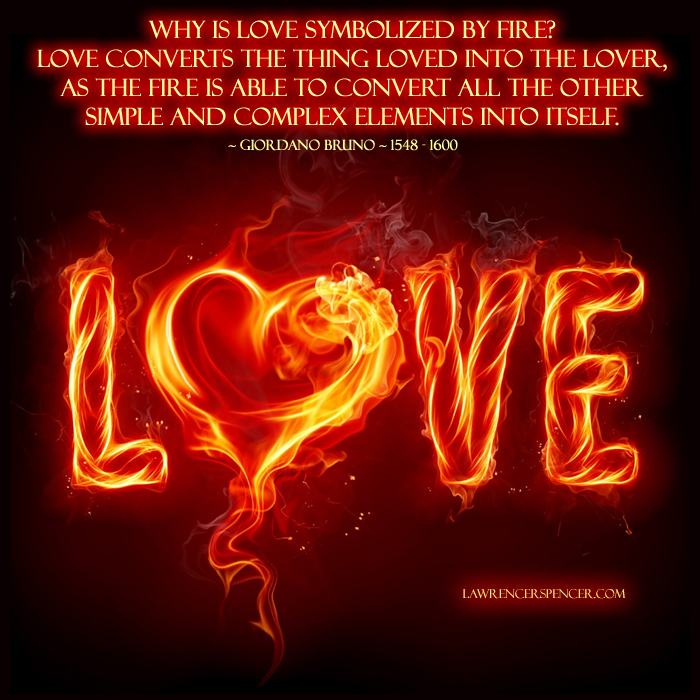
“Why is love symbolized by fire? Love converts the thing loved into the lover, as the fire is able to convert all the other simple and complex elements into itself.”
~ Giordano Bruno ~
1569
Republished by Blog Post Promoter
“Why is love symbolized by fire? Love converts the thing loved into the lover, as the fire is able to convert all the other simple and complex elements into itself.”
~ Giordano Bruno ~
1569
Republished by Blog Post Promoter
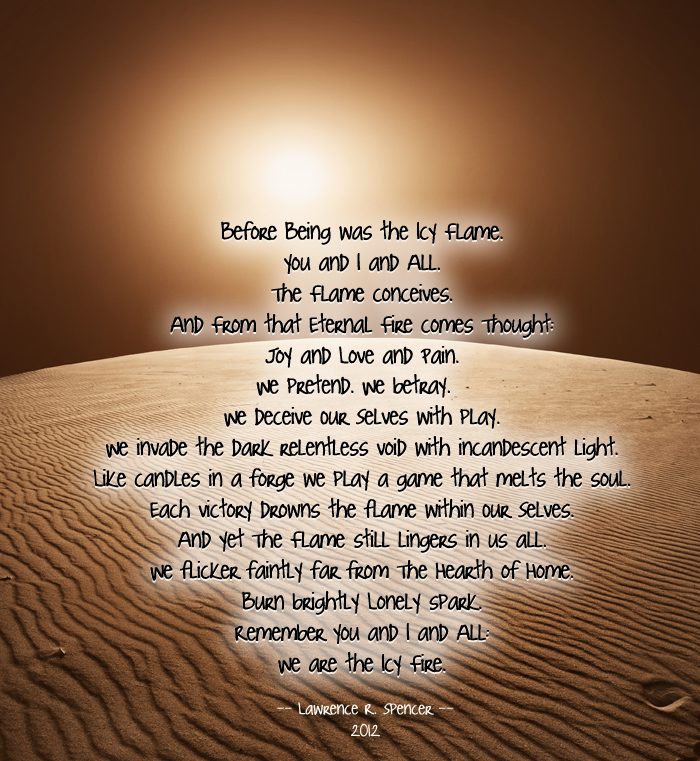
Before Being was the Icy Flame.
You and I and All.
The Flame conceives.
And From that Eternal Fire comes Thought:
Joy and Love and Pain.
We pretend. We betray.
We deceive Our Selves with play.
We invade the dark relentless void with incandescent Light.
Like candles in a forge we play a game that melts the soul.
Each victory drowns the flame within Our Selves.
And yet The Flame still lingers in us all.
We flicker faintly far from The Hearth of Home.
Burn brightly Lonely spark.
Remember You and I and All:
We are the Icy Fire.
— Lawrence R. Spencer, 2012 —
Republished by Blog Post Promoter

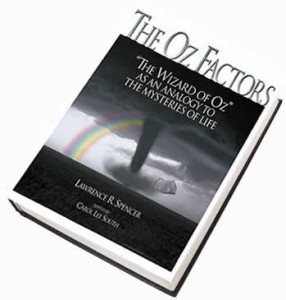
“The history of mankind seems blanketed in a simultaneous state of amnesia and deja vu. The ruins of ancient civilizations whisper a reminder that we have forgotten everything we knew.
A multitude of gods have shown themselves like shadows in the halls of history. We know not yet, except by our own observation and decision, which of them is real. We are betrayed by those who teach us that we must trust the Wizards of the West. While pretentious politicians defend the castles of the Witch, the media monkeys swarm to spin perverted lies to cover up their covert tricks.
The voiceless bones of wonderful wizards have dissolved to mortal dust once more. Their words have vanished in the smoke of sacred libraries, searing our souls with the stupefying stench of wisdom lost forever in their flames. From day to day the timeworn treadmill of survival forces us to worship at the soulless bankers’ shrine. Gold is still the god of the great and powerful Oz.
The future is an extension of the present. We must live our lives in the present in a manner which will create the greatest good for the greatest number of beings in the future. If we are aware of our own past lives, we must also be aware that we are creating our own future by our present actions. We will inherit our own legacy.”
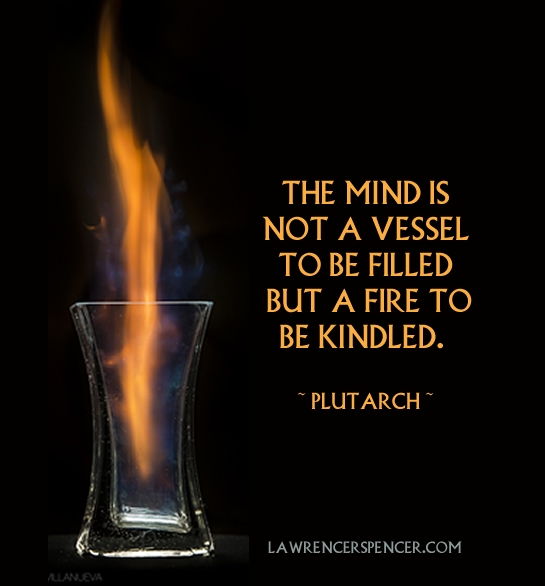
“The soul, being eternal, after death is like a caged bird that has been released. If it has been a long time in the body, and has become tame by many affairs and long habit, the soul will immediately take another body and once again become involved in the troubles of the world. The worst thing about old age is that the soul’s memory of the other world grows dim, while at the same time its attachment to things of this world becomes so strong that the soul tends to retain the form that it had in the body. But that soul which remains only a short time within a body, until liberated by the higher powers, quickly recovers its fire and goes on to higher things.” PLUTARCH (c. AD 46 – AD 120) was a Greek historian, biographer and essayist, known primarily for his Parallel Lives and Moralia.
Plutarch was born to a prominent family in the small town which lies approximately eighty kilometres east of Delphi, in the Greek region known as Boeotia. He lived most of his life at Chaeronea, and was initiated into the mysteries of the Greek god Apollo. However, his duties as the senior of the two priests of Apollo at the Oracle of Delphi (where he was responsible for interpreting the auguries of the Pythia) apparently occupied little of his time. He led an active social and civic life while producing an extensive body of writing, much of which is still extant.
Plutarch spent the last thirty years of his life serving as priest in Delphi. He thus connected part of his work with the sanctuary of Apollo, the processes of oracle giving and the personalities which lived or traveled there. One of his most important works is the “Why Pythia does not give oracles in verse”
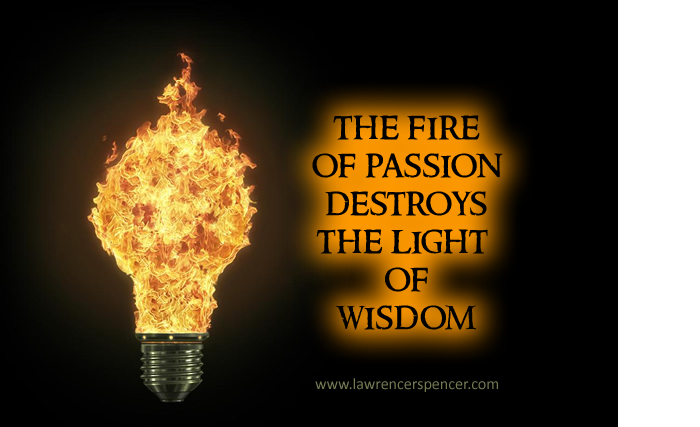
“The Fire of Passion Destroys the Light of Wisdom”
— Lawrence R. Spencer. 2014