Republished by Blog Post Promoter
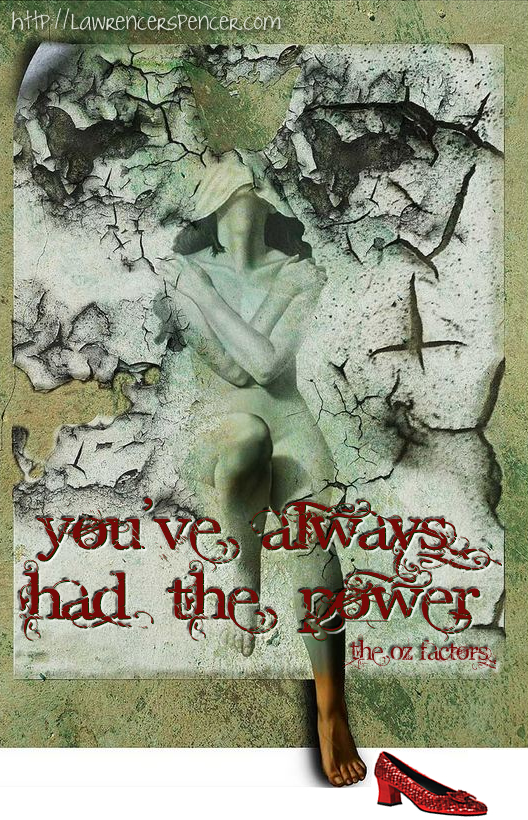 “You’ve always had the power to go back to Kansas” — Glinda, The Good Witch of the West
“Oh Dear! That’s too wonderful to be true!” — Dorothy
“Now those magic slippers will take you home in two seconds. Just close your eyes and think to yourself, ‘There’s no place like home’.” — Glinda
“Then why didn’t you tell her before”? — The Scarecrow
“Because she wouldn’t have believed me. She had to learn it for herself.” — Glinda
“Like Dorothy in ‘The Wizard of Oz’ we are creatures of our own design. We live in universes created by our own agreements and imagination. We are inside the Physical Universe looking out to find the origin of our being. We long for a place we feel certain must exist; a place where there is no trouble. We wait for wizards and witches to show us the way home. Yet we fear to close our eyes and click our heels to see the Universe Within.
Our journey home begins at the source of the rainbow; shining light upon our own eternal, ethereal selves.
The history of mankind seems blanketed in a simultaneous state of amnesia and deja vu. The ruins of ancient civilizations whisper a reminder that we have forgotten everything we knew.
A multitude of gods have shown themselves like shadows in the halls of history. We know not yet, except by our own observation and decision, which of them is real. We are betrayed by those who teach us that we must trust the Wizards of the West. While pretentious politicians defend the castles of the Witch, the media monkeys swarm to spin perverted lies to cover up their covert tricks.
The voiceless bones of wonderful wizards have dissolved to mortal dust once more. Their words have vanished in the smoke of sacred libraries, searing our souls with the stupefying stench of wisdom lost forever in their flames. From day to day the timeworn treadmill of survival forces us to worship at the soulless bankers’ shrine. Gold is still the god of the great and powerful Oz.
We have crash-landed in a twisted alien landscape of pain and mortality, far away from our home Universe. As a race we have amnesia. We are repeatedly bumped on the head by the recurring cataclysmic upheavals of a planet whirling in space like a farmhouse in a tornado.
The future is an extension of the present. We must live our lives in the present in a manner which will create the greatest good for the greatest number of beings in the future. If we are aware of our own past lives, we must also be aware that we are creating our own future by our present actions. We will inherit our own legacy.”
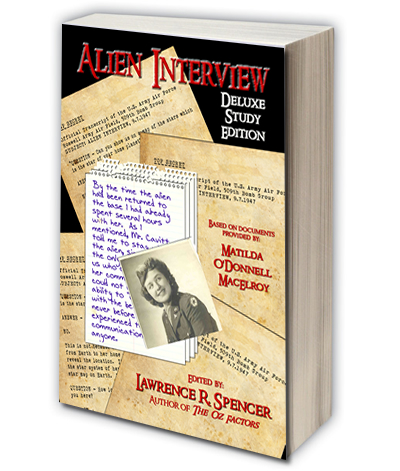
— Excerpt from the book THE OZ FACTORS by Lawrence R. Spencer