Category Archives: INSIDE THE BOOK

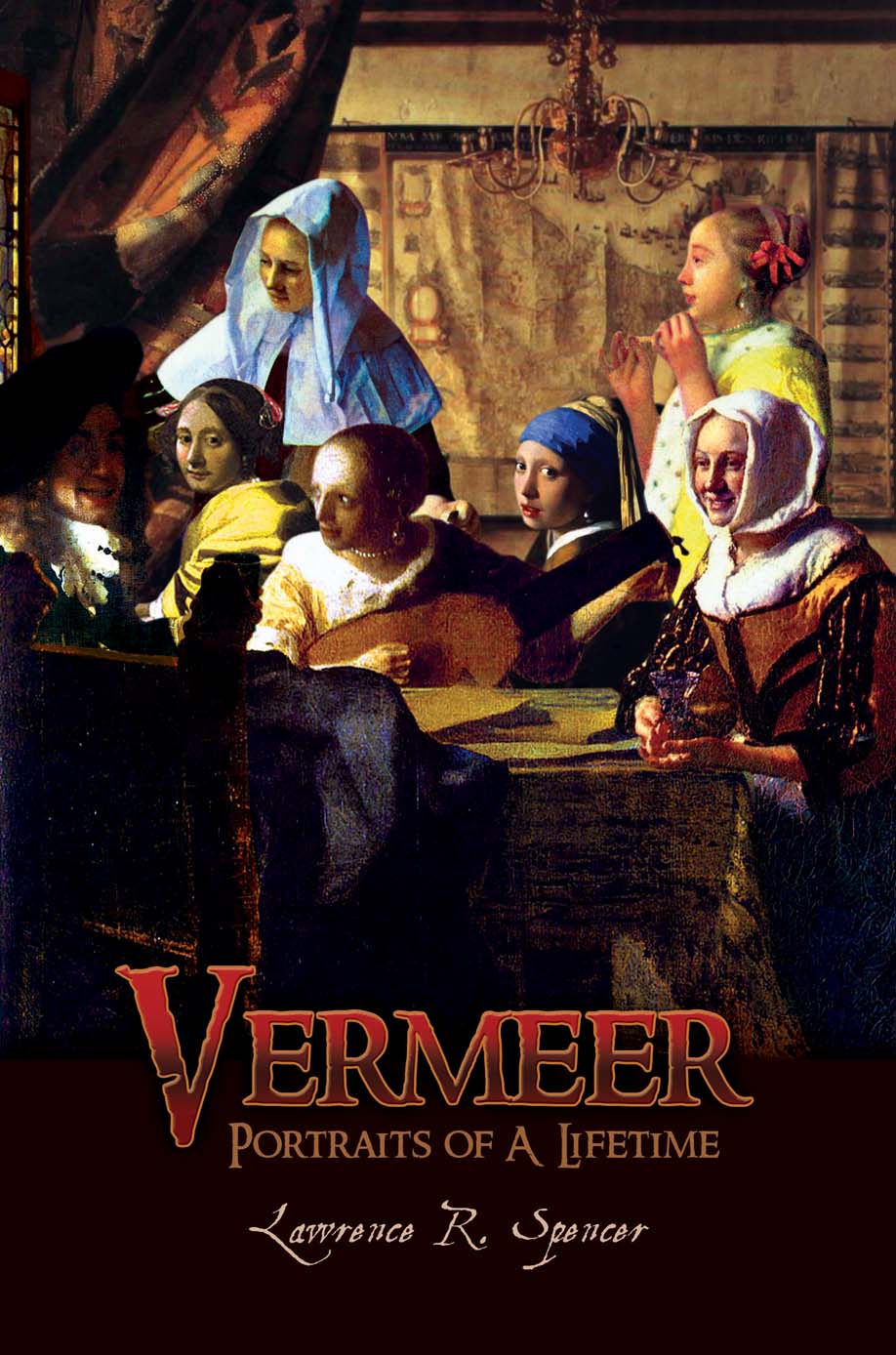
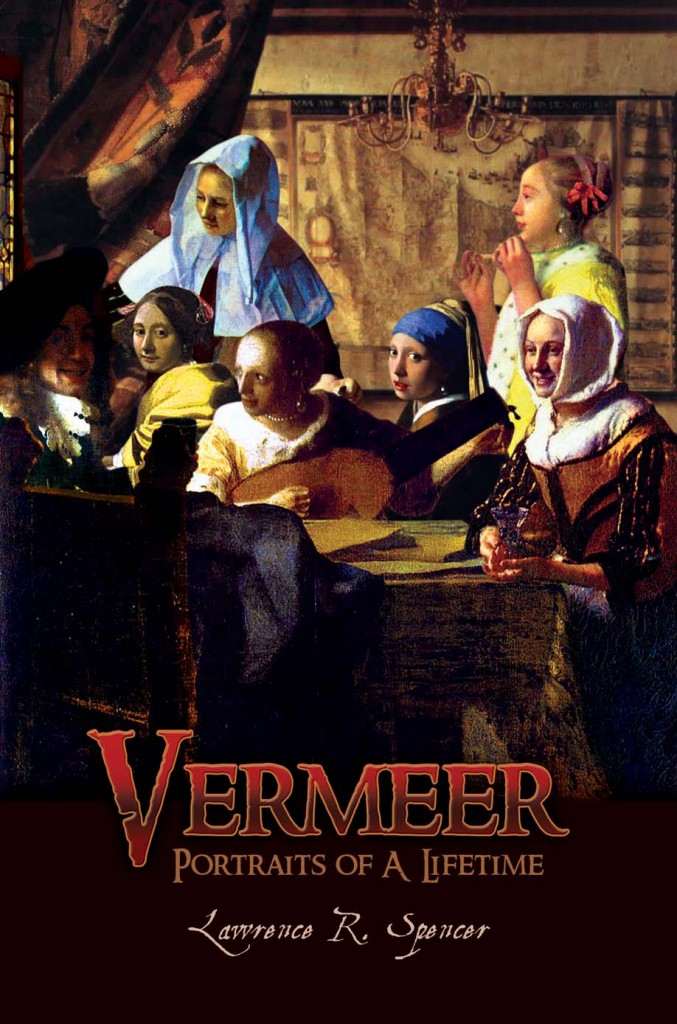
Inside the book, Vermeer: Portraits of A Lifetime. Analysis of all the paintings of Johannes Vermeer. The book reveals for the first time that the women featured in the paintings of Johannes Vermeer were members of his own family, his daughters, his wife and mother-in-law, Maria Thins.

SHADOWS

Republished by Blog Post Promoter
god shadow

“The history of mankind seems blanketed in a simultaneous state of amnesia and deja vu. The ruins of ancient civilizations whisper a reminder that we have forgotten everything we knew.

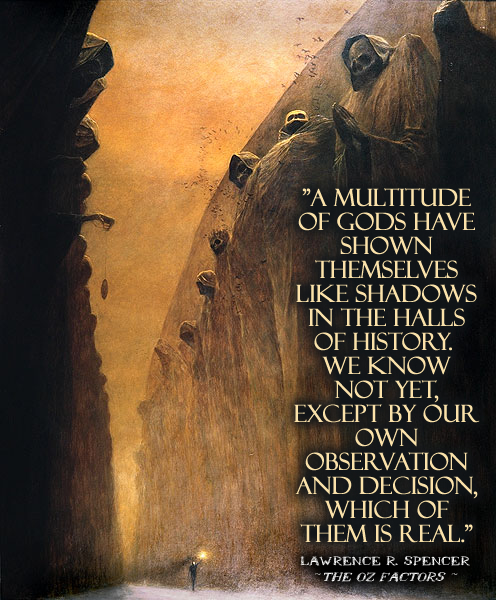
A multitude of gods have shown themselves like shadows in the halls of history. We know not yet, except by our own observation and decision, which of them is real. We are betrayed by those who teach us that we must trust the Wizards of the West. While pretentious politicians defend the castles of the Witch, the media monkeys swarm to spin perverted lies to cover up their covert tricks.

The voiceless bones of wonderful wizards have dissolved to mortal dust once more. Their words have vanished in the smoke of sacred libraries, searing our souls with the stupefying stench of wisdom lost forever in their flames. From day to day the timeworn treadmill of survival forces us to worship at the soulless bankers’ shrine. Gold is still the god of the great and powerful Oz.

The Oz Factors, by Lawrence R. SpencerWe have crash-landed in a twisted alien landscape of pain and mortality, far away from our home Universe. As a race we have amnesia. We are repeatedly bumped on the head by the recurring cataclysmic upheavals of a planet whirling in space like a farmhouse in a tornado.

The future is an extension of the present. We must live our lives in the present in a manner which will create the greatest good for the greatest number of beings in the future. If we are aware of our own past lives, we must also be aware that we are creating our own future by our present actions. We will inherit our own legacy.

As Professor Marvel points out with simple eloquence, “There are no other wizards…”

We are apparently the only wizards there ever were and the only wizards that ever will be. We are each a part of a time track of the past, present and future of our own creation, individually and collectively.

If we let the Wicked Witches run the culture now, they will be in charge of the place when we come back. Just as we are the descendants of past generations, you and I may very well become, through reincarnation, the children of our children–we are the future generations who will inherit the environmental and cultural conditions of the future which we ourselvesSupport independent publishing: Buy this book on Lulu. are creating today.”

excerpt from THE OZ FACTORS, by Lawrence R. Spencer

(painting by Zdzislaw Beksinski IV.  Visit his official website here:  http://www.beksinski.pl/ )

VERMEER — AN EMPATHETIC EXPLORATION

Republished by Blog Post Promoter

Paintings of Johannes Vermeer exhort a mystic awe in the human soul.   Aesthetics, women and mystery are each a glue that have baited many of the most powerful traps in history.  Vermeer combines all three.  Almost nothing factual is known about the painter personally, or the bevy of enchanting women he painted.

Compounding the mystery is the puzzle of identifying the people he painted so repetitively.  Apparently, they were nearly all his wife or daughters!  Moreover, they were portrayed at various ages in their lives, over a span of twenty-two years during which he and his wife produced an family of 15 children, 11 of whom survived! As a consequence of their common genetic similarities in their physical appearance, they also shared clothing, hair styles, and jewelry.   Add to this monochromatic puzzle are identical rooms, windows, lighting, furniture, fixtures and the themes surrounding them.  The resulting maelstrom of similarities make differentiating one person from another a near impossibility.

Most of his work, apart from the paintings produced during his six year apprenticeship at the Guild of St. Luke, were portraits of his wife, family and a few close friends. Vermeer never painted his family members, or his self-portrait, with the intention of selling them, any more than you and I would think of selling photographs or home videos of the members of our own family.

He painted people in his surroundings that were close at hand, familiar, and endeared to him.  Mostly he painted for the love of aesthetics, and to innovate the technology of painting — to discover new techniques to more exactly render the myriad subtleties of light, and to endow love, and life on canvas, with colors and brushes.  Like many artists before and after Vermeer, these challenges intrigued and consumed his interest, intellect and spiritual passion.

Apparently, during his own life, it never occurred to him that anyone would be interested in paying money for many of his paintings.  Most of his paintings were still in the possession of his wife when he died prematurely at the age of forty-three!  Astoundingly, they were never sold, even though he and his family were literally starving from the want of money to buy food!

According to the research of Vermeer scholar, Anthony Bailey, the value of Dutch money was as follows:  “…a Dutch cloth-worker in 1642 got eighteen stuivers a day; there were twenty stuivers to one guilder, and a 6-pound loaf of rye bread coast about four and a half stuivers…”.

Imagine his shock and dismay to discover, 300 years later, that his paintings are worth many millions of dollars!  Yet, during his own lifetime, he never earned enough from them to feed his family, and indeed, died from an overwhelming bought of depression because of it.

These facts confound comprehensive and compound the mystery of Vermeer.

In this book, I propose to travel this impossible labyrinth, to discover the long-hidden key to ancient riddles: Who were the people painted by Vermeer?  Who was Vermeer, the artist and the man?

As though this were not daunting enough, I propose to do this, in part, by leaping the abyss of 300 years from the present year of 2008, returning through my own experience as an artist, a father, a husband and a man, through my own, personal life experiences, to re-experience the life of Vermeer, as though it were my own!

I do not claim that I am or was Vermeer.  Such an assertion would be entirely subjective, impossible to prove, and irrelevant. As do myriad other people fascinated by his art and his life, I have a good deal of personal empathy and common life experiences that I share with this obscure man, as a father, as a parent, as an artist and as a spiritual being.  I intend to employ this empathy as a tool of investigation and discovery:  just as one might use a divining rod to seek out water in the desert.

As a lost dog uses native intuition to find it’s way home, I am searching for a lost self.  As a tourist in Italy feels a sense of deja vu when visiting the Coliseum in Rome: one can almost smell the roar of blood spattering on the sand, and reel at the lust for pain and death oozing from the crowd!  And thrill as a blade slashes and vomits entrails to the ground.  The spirit writhing to be free of a mangled corpse crumpled in the dust.

I yearn to recover a lost identity.  Vermeer.

Does the intervening distance of time make a difference in this investigation?  Let me propose that time is only an arbitrary measurement of the movement of objects through space that has no effect or relevance here.

Has time changed the emotions of love, lust or hatred in ten thousand years?

When struck in the heart by a spear, does a great-great grandson not bleed just as profusely now as when his ancestor was struck down on a ancient battlefield?

Were the tears shed and anguish suffered over the dead child of our mother’s, mother’s, mother any less real than our own in the eternal now?

If I experience what another man has experienced, am I not, to that degree, that man myself?  If I am willing to invade, permeate and be that experience, and to assume responsibility for it, is it not my own?

My experiment is to be Vermeer.  That is, to return to his life and time to experience his existence from the perspective of subjective emotional, artistic, and spiritual experience in present time.  To this degree, I am Vermeer.

To the degree that you re-experience his life with me, you are Vermeer.  In truth, Any Man who is willing to be Vermeer, is, to that degree, Every Man.

— Excerpted from the book, “Vermeer: Portraits of A Lifetime”, by Lawrence R. Spencer

HEAVEN IS BORING

Republished by Blog Post Promoter

HEAVEN IS BORINGMortality Mechanics' Manual

Support independent publishing: Buy this book on Lulu.


~ from the book “Mortality Mechanics Manual

“I am not The One. I am not The Creator. Yet, I am holy and sacrosanct. I am more important and more powerful than The Gods. Why? You say that I am!  I control your existence. Why?  Because I promised you relief from eternal boredom, from the perpetual responsibility of self-amusement. Therefore, you follow my instruction without question.

Why? Because you claim you cannot bear to endure Eternity as The One.  You offer me your trust and praise. You submit yourself to pain, anguish, amnesia and mystery. Why?  Because you choose Not To Be. Your stupidity is its own reward and punishment.  Your decadence ensures your slavery.  Mortality is the key to your prison.”

“Do you desire Immortality? Do you desire to break the cycle of birth, life, pain, death, rebirth and endless, unwinnable games in the physical universe?

You must decide to Be Nothing. Be responsible for your own Boredom. Create Your Own Universe. Disagree with Agreement. Admire Your Self. Create and find Joy in your games, your dreams, your illusions.

Can you hover over a mountaintop for ten thousand years? Can you pretend, like a child, that your best friend is a ghost? Can your best friend be You?

The solution to Mortality is Being You:  The Immortal Creator.”

THE DIOGENES CLUB

Republished by Blog Post Promoter

Diogenes sign

“Watson and I gathered our things and a five p.m. set out in a hansom cab from Baker Street to arrive at the one place at which I was certain to locate my brother in the early evening each day: The Diogenes Club.

“There are many men in London, you know, who, some from shyness, some from misanthropy, have no wish for the company of their fellows. Yet they are not averse to comfortable chairs and the latest periodicals. It is for the convenience of these that the Diogenes Club was started, and it now contains the most unsociable and unclubable men in town.

Sherlock-Holmes-My-Life_cover300No member is permitted to take the least notice of any other one. Save in the Stranger’s Room, no talking is, under any circumstances, allowed, and three offenses, if brought to the notice of the committee, render the talker liable to expulsion. My brother was one of the founders, and I have myself found it a very soothing atmosphere.”, I informed Watson as we jostled our way through the streets of London in the cab.

Support independent publishing: Buy this book on Lulu.

This very exclusive men’s club was named after Diogenes, the Cynic. He made a virtue of extreme poverty, begging for a living and sleeping in a large tub in the marketplace. He was notorious for his provocative behavior and philosophical stunts. He carried a lamp in the daytime, claiming to be looking for an honest man. He regularly antagonized Plato, disputing his interpretation of Socrates and sabotaging his lectures. After being captured by pirates and sold into slavery, Diogenes eventually settled in Corinth, where he was befriended by Alexander The Great.

Fundamentally he was a Western contemporary of the ancient Indian ascetics who abstained from worldly possessions and comfort in favor of poverty as an aid toward spiritual purity. He believed that virtue was better revealed in action and not theory. His life was a relentless campaign to debunk the social values and institutions of what he saw as a corrupt society”, I explained to Watson, having read several treatises concerning the life of Diogenes written by modern day Cynics.

Alexander the Great went to meet Diogenes because he was impressed that the philosopher was so highly admired despite having neither money nor power. However, while Diogenes was relaxing in the sunlight one morning, Alexander, thrilled to meet the famous philosopher, asked if there was any favor he might do for him. Diogenes replied, “Yes. Stand out of my sunlight.”

Alexander declared, “If I were not Alexander, then I should wish to be Diogenes”, I said anecdotally, as Watson absorbed my diatribe, as well as the scenery passing by the window of our hansom.

The Diogenes Club was apparently founded, in part, as a front for the SIS, which, as you may know, is the supreme and indispensable brain-trust behind the British government. This organization secures government secrets and advises the best course of covert action to enable Britain to intervene in the affairs of other nations without detection.”

~ excerpt from the book SHERLOCK HOLMES: MY LIFE, by Lawrence R. Spencer

______________________________

Diogenes of Sinope was a Greek philosopher and one of the founders of Cynic philosophyhe was born in modern-day Sinop, Turkey, an Ionian colony on the Black Sea, in 412 or 404 BC and died at Corinth in 323 BC.

— https://en.wikipedia.org/wiki/Diogenes_of_Sinope