Category Archives: The Real Johannes Vermeer

The real life person of the famous Dutch painter, Johannes Vermeer, and his wife Catharina, his daughters and the role these women played in his paintings.

REINCARNATED AS A HUMAN BEING, AGAIN

Republished by Blog Post Promoter
COMMENTS ON REINCARNATION and THE IMMORTALITY OF THE SOUL, by famous thinkers, as these may be related to the life, death, memory erasure and reincarnation of souls on Earth:

Krishna – Bhagavad Gita  (5th Century B.C.E. or earlier)

“Learn thou! the Life is, spreading life through all; It cannot anywhere, by any means, Be anywise diminished, stayed, or changed. But for these fleeting frames which it informs with spirit deathless, endless, infinite, They perish. Let them perish, Prince! and fight! He who shall say, “Lo! I have slain a man!” He who shall think, “Lo! I am slain!” Those both know naught! Life cannot slay. Life is not slain!”

Socrates  (469 BC–399 BC) Classical Greek philosopher.

“I am confident that there truly is such a thing as living again, that the living spring from the dead, and that the souls of the dead are in existence.”

Origen  (ca. 185–ca. 254) was an early Christian scholar, theologian, and one of the most distinguished of the early fathers of the Christian Church.)

“It can be shown that an incorporeal and reasonable being has life in itself independently of the body… then it is beyond a doubt bodies are only of secondary importance and arise from time to time to meet the varying conditions of reasonable creatures. Those who require bodies are clothed with them, and contrariwise, when fallen souls have lifted themselves up to better things their bodies are once more annihilated. They are ever vanishing and ever reappearing.”

Voltaire (21 November 1694 – 30 May 1778), Enlightenment writer and philosopher

“It is not more surprising to be born twice than once; everything in nature is resurrection.”

Benjamin Franklin (January 17, 1706 – April 17, 1790) was one of the Founding Fathers of the United States of America.

“I look upon death to be as necessary to the constitution as sleep. We shall rise refreshed in the morning.” And, “Finding myself to exist in the world, I believe I shall, in some shape or other always exist.”

Ralph Waldo Emerson (May 25, 1803 – April 27, 1882) American essayist

“It is the secret of the world that all things subsist and do not die, but only retire a little from sight and afterwards return again. Nothing is dead; men feign themselves dead, and endure mock funerals…and there they stand looking out of the window, sound and well, in some strange new disguise. The soul comes from without into the human body, as into a temporary abode, and it goes out of it anew it passes into other habitations, for the soul is immortal.”

Walt Whitman (May 31, 1819 – March 26, 1892) American poet

“I know I am deathless. No doubt I have died myself ten thousand times before. I laugh at what you call dissolution, and I know the amplitude of time.”

Helena Blavatsky, Secret Doctrine, Vol. II, p. 424 (12 August 1831— May 8, 1891)

“That which is part of our souls is eternal. . . Those lives are countless, but the soul or spirit that animates us throughout these myriads of existences is the same; and though “the book and volume” of the physical brain may forget events within the scope of one terrestrial life, the bulk of collective recollections can never desert the divine soul within us. Its whispers may be too soft, the sound of its words too far off the plane perceived by our physical senses; yet the shadow of events that were, just as much as the shadow of the events that are to come, is within its perceptive powers, and is ever present before its mind’s eye.”

Herman Hesse (2 July 1877—9 August 1962)

“He saw all these forms and faces in a thousand relationships become newly born. Each one was mortal, a passionate, painful example of all that is transitory. Yet none of them died, they only changed, were always reborn, continually had a new face: only time stood between one face and another.”

Jack London, author, best known for book “Call of the Wild”

“I did not begin when I was born, nor when I was conceived. I have been growing, developing, through incalculable myriads of millenniums. All my previous selves have their voices, echoes, promptings in me. Oh, incalculable times again shall I be born.”

Albert Schweitzer (14 January, 1875 – 4 September, 1965) Alsatian theologian, who  received the 1952 Nobel Peace Prize in 1953.

“Reincarnation contains a most comforting explanation of reality by means of which Indian thought surmounts difficulties which baffle the thinkers of Europe.”

Mark Twain  (November 30, 1835 – April 21, 1910) American Author

“I have been born more times than anybody except Krishna.”

Mahatma Gandhi (2 October 1869 – 30 January 1948) leader of the Indian independence movement.

“I cannot think of permanent enmity between man and man, and believing as I do in the theory of reincarnation, I live in the hope that if not in this birth, in some other birth I shall be able to hug all of humanity in friendly embrace.”

Henry Ford (July 30, 1863 – April 7, 1947) Founder of the Ford Motor Company

“I adopted the theory of reincarnation when I was 26. Genius is experience. Some think to seem that it is a gift or talent, but it is the fruit of long experience in many lives. I am in exact accord with the belief of Thomas Edison that spirit is immortal, that there is a continuing center of character in each personality. But I don’t know what spirit is, nor matter either. I suspect they are forms of the same thing. I never could see anything in this reputed antagonism between spirit and matter. To me this is the most beautiful, the most satisfactory from a scientific standpoint, the most logical theory of life. For thirty years I have leaned toward the theory of Reincarnation. It seems a most reasonable philosophy and explains many things. No, I have no desire to know what, or who I was once; or what, or who, I shall be in the ages to come. This belief in immortality makes present living the more attractive. It gives you all the time there is. You will always be able to finish what you start. There is no fever or strain in such an outlook. We are here in life for one purpose—to get experience. We are all getting it, and we shall all use it somewhere.”

General George S. Patton (November 11, 1885 – December 21, 1945) U.S. Army officer

“Through the travail of the ages,
Midst the pomp and toil of war,
Have I fought and strove and perished,
Countless times upon this star.

So as through a glass, and darkly
The age long strife I see
Where I fought in many guises,
Many names, – but always me.”

________________________________________

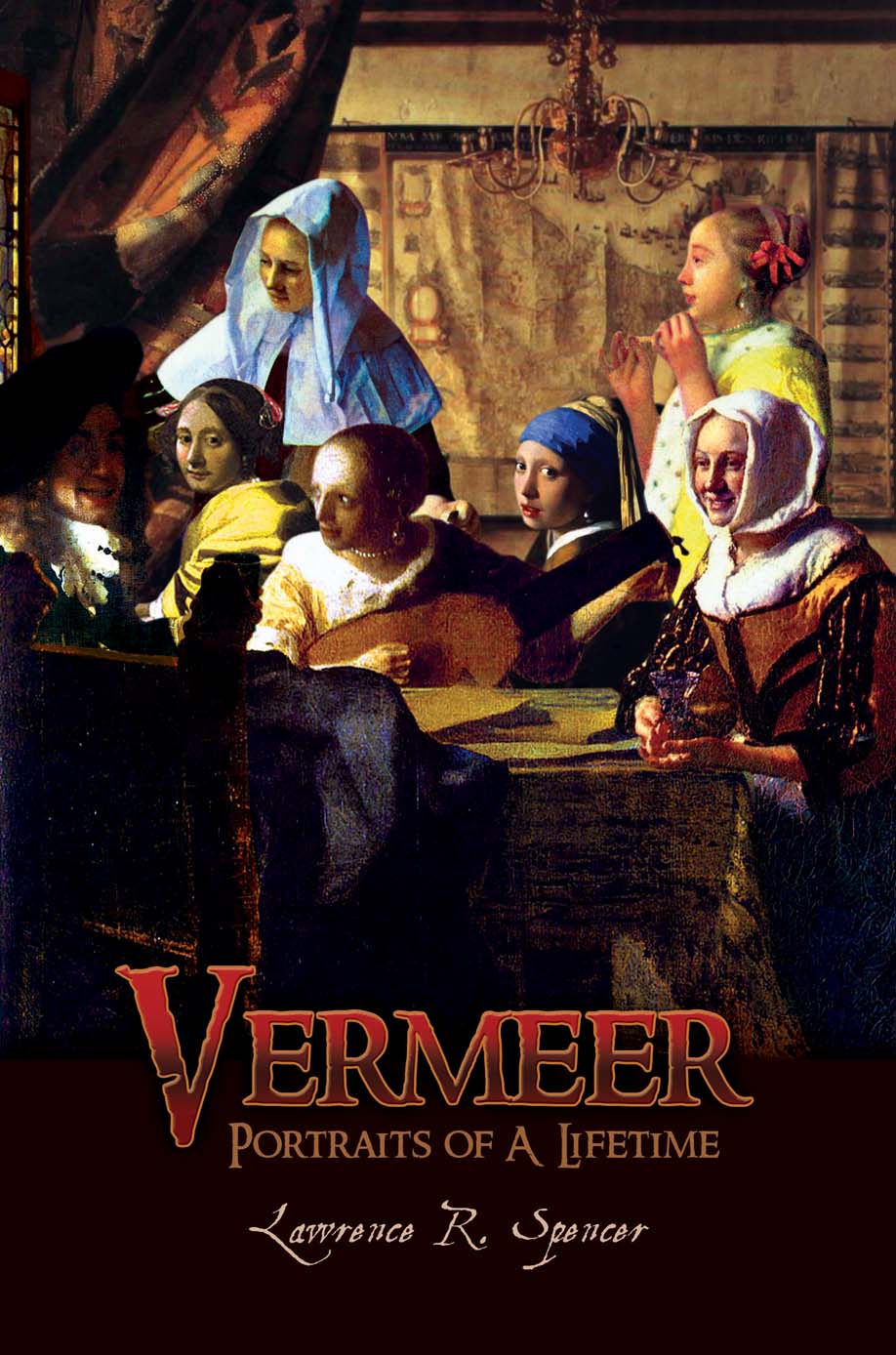
Excerpted from the Introductory pages of the book VERMEER: PORTRAITS OF A LIFETIME, by Lawrence R. Spencer

Support independent publishing: Buy this e-book on Lulu.

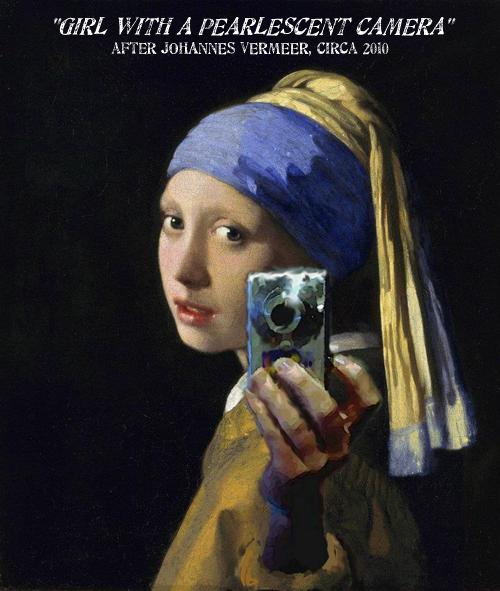
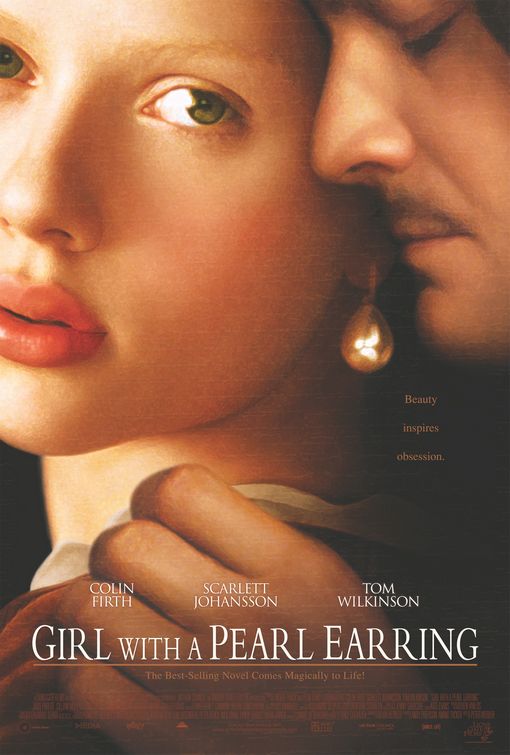
GIRL WITH A PEARL iPHONE

Republished by Blog Post Promoter

Vermeer on iTunes

DOWNLOAD THE AUDIO BOOK VERSION from iTunes

Vermeer: Portraits of A Lifetime  https://itunes.apple.com/us/audiobook/vermeer-portraits-lifetime/id569744974

DOWNLOAD THE TEXT VERSION from iTunes

Vermeer: Portraits of A Lifetime  https://itunes.apple.com/us/book/vermeer/id443800993?mt=11

_________________________________________

Vermeer: Portraits of A Lifetime is a revolutionary reexamination of the mystique and mythology surrounding the 17th Century Dutch Master painter, Johannes Vermeer. For the first time in over 300 years names of people who posed for his paintings are identified. An unknown portrait of Vermeer, painted by his friend, Gerard ter Borch, is exposed. This book is an empathetic retrospective, built on observations that reveal answers to dozens of speculations about his paintings, his wife, his daughters, and contemporaries who were the subjects of his art, and with whom he shared his brief life in Delft.

FREE AUDIOBOOK

Republished by Blog Post Promoter

CLICK ON THE LINK BELOW TO LEARN HOW YOU CAN DOWNLOAD A FREE COPY OF ONE OF MY AUDIOBOOKS:

http://www.audible.com/t1/30DayGoldFT_at?source_code=PBRP0389WS110209

FREE AUDIO BOOKSHERE ARE THE LINKS TO MY AUDIOBOOKS ON AUDIBLE.COM YOU CAN DOWNLOAD FREE WHEN YOU BECOME A TRIAL MEMBER OF AUDIBLE.COM:

SHERLOCK HOLMES: MY LIFE   http://www.audible.com/pd/ref=sr_1_1?asin=B00A27BCHG&qid=1355950962&sr=1-1

VERMEER: PORTRAITS OF A LIFETIME   http://www.audible.com/pd/ref=sr_1_2?asin=B009NVX2PM&qid=1355950962&sr=1-2

HAPPY LISTENING, MY FRIENDS!

DELUSIONAL or HERETICAL?

Republished by Blog Post Promoter

Vermeer on iTunes

“I am very sure that my new book, Vermeer: Portraits of A Lifetime, will be considered by many people to be delusional or heretical.  Many will dismiss my observations and comments because they don’t follow the dictates of  “authoritative research” or the opinions of art “experts”.

This book may threaten persons who have a financial vested interest in the Vermeer paintings that still exist today, as their livelihood or financial well-being depend to some degree on the value currently assigned to the paintings.

Although the monetary value of Vermeer’s paintings have been vastly inflated, in part, due to the mystique created by authorities or speculators, it is not my intention to devaluate them. It is not my intention to invalidate property that was sold or bartered by Vermeer and his wife, Catharina, hundreds of years ago.  Quite the contrary.

My intention is to honor the lives of Johannes, Catharina, their eleven surviving children and Maria Thins, his mother-in-law and patroness.

This book does not represent or endorse any financial, spiritual, religious, political organization or practice or philosophy of any kind.  All personal observations and opinions offered by the author herein are purely and solely personal opinions, with no other source than those noted in the footnotes or appendix.

Any and all individuals or organizations from whom research and/or opinions have been borrowed or sited for referential purposes in this book are not affiliated with and do not in any way acknowledge the validity of or endorse the findings or assertions of the author or publisher of this book.

Finally, this book is not intended for people who have a vested interest, or who “know best”.  Personal observations, whether visual, empathetic or conjectural, of the author about the life and death of Vermeer, 300 years after the fact, are wholly subjective.”

Vermeer: Portraits of A Lifetime  https://itunes.apple.com/us/audiobook/vermeer-portraits-lifetime/id569744974

Paperback book —     Support independent publishing: Buy this e-book on Lulu.

AUDIOBOOK — http://www.audible.com/pd/Arts-Entertainment/Vermeer-Audiobook/B009NVX2PM/ref=a_search_c4_1_4_srTtl?qid=1392802819&sr=1-4

VERMEER — AN EMPATHETIC EXPLORATION

Republished by Blog Post Promoter

Paintings of Johannes Vermeer exhort a mystic awe in the human soul.   Aesthetics, women and mystery are each a glue that have baited many of the most powerful traps in history.  Vermeer combines all three.  Almost nothing factual is known about the painter personally, or the bevy of enchanting women he painted.

Compounding the mystery is the puzzle of identifying the people he painted so repetitively.  Apparently, they were nearly all his wife or daughters!  Moreover, they were portrayed at various ages in their lives, over a span of twenty-two years during which he and his wife produced an family of 15 children, 11 of whom survived! As a consequence of their common genetic similarities in their physical appearance, they also shared clothing, hair styles, and jewelry.   Add to this monochromatic puzzle are identical rooms, windows, lighting, furniture, fixtures and the themes surrounding them.  The resulting maelstrom of similarities make differentiating one person from another a near impossibility.

Most of his work, apart from the paintings produced during his six year apprenticeship at the Guild of St. Luke, were portraits of his wife, family and a few close friends. Vermeer never painted his family members, or his self-portrait, with the intention of selling them, any more than you and I would think of selling photographs or home videos of the members of our own family.

He painted people in his surroundings that were close at hand, familiar, and endeared to him.  Mostly he painted for the love of aesthetics, and to innovate the technology of painting — to discover new techniques to more exactly render the myriad subtleties of light, and to endow love, and life on canvas, with colors and brushes.  Like many artists before and after Vermeer, these challenges intrigued and consumed his interest, intellect and spiritual passion.

Apparently, during his own life, it never occurred to him that anyone would be interested in paying money for many of his paintings.  Most of his paintings were still in the possession of his wife when he died prematurely at the age of forty-three!  Astoundingly, they were never sold, even though he and his family were literally starving from the want of money to buy food!

According to the research of Vermeer scholar, Anthony Bailey, the value of Dutch money was as follows:  “…a Dutch cloth-worker in 1642 got eighteen stuivers a day; there were twenty stuivers to one guilder, and a 6-pound loaf of rye bread coast about four and a half stuivers…”.

Imagine his shock and dismay to discover, 300 years later, that his paintings are worth many millions of dollars!  Yet, during his own lifetime, he never earned enough from them to feed his family, and indeed, died from an overwhelming bought of depression because of it.

These facts confound comprehensive and compound the mystery of Vermeer.

In this book, I propose to travel this impossible labyrinth, to discover the long-hidden key to ancient riddles: Who were the people painted by Vermeer?  Who was Vermeer, the artist and the man?

As though this were not daunting enough, I propose to do this, in part, by leaping the abyss of 300 years from the present year of 2008, returning through my own experience as an artist, a father, a husband and a man, through my own, personal life experiences, to re-experience the life of Vermeer, as though it were my own!

I do not claim that I am or was Vermeer.  Such an assertion would be entirely subjective, impossible to prove, and irrelevant. As do myriad other people fascinated by his art and his life, I have a good deal of personal empathy and common life experiences that I share with this obscure man, as a father, as a parent, as an artist and as a spiritual being.  I intend to employ this empathy as a tool of investigation and discovery:  just as one might use a divining rod to seek out water in the desert.

As a lost dog uses native intuition to find it’s way home, I am searching for a lost self.  As a tourist in Italy feels a sense of deja vu when visiting the Coliseum in Rome: one can almost smell the roar of blood spattering on the sand, and reel at the lust for pain and death oozing from the crowd!  And thrill as a blade slashes and vomits entrails to the ground.  The spirit writhing to be free of a mangled corpse crumpled in the dust.

I yearn to recover a lost identity.  Vermeer.

Does the intervening distance of time make a difference in this investigation?  Let me propose that time is only an arbitrary measurement of the movement of objects through space that has no effect or relevance here.

Has time changed the emotions of love, lust or hatred in ten thousand years?

When struck in the heart by a spear, does a great-great grandson not bleed just as profusely now as when his ancestor was struck down on a ancient battlefield?

Were the tears shed and anguish suffered over the dead child of our mother’s, mother’s, mother any less real than our own in the eternal now?

If I experience what another man has experienced, am I not, to that degree, that man myself?  If I am willing to invade, permeate and be that experience, and to assume responsibility for it, is it not my own?

My experiment is to be Vermeer.  That is, to return to his life and time to experience his existence from the perspective of subjective emotional, artistic, and spiritual experience in present time.  To this degree, I am Vermeer.

To the degree that you re-experience his life with me, you are Vermeer.  In truth, Any Man who is willing to be Vermeer, is, to that degree, Every Man.

— Excerpted from the book, “Vermeer: Portraits of A Lifetime”, by Lawrence R. Spencer