Category Archives: INSIDE THE BOOK

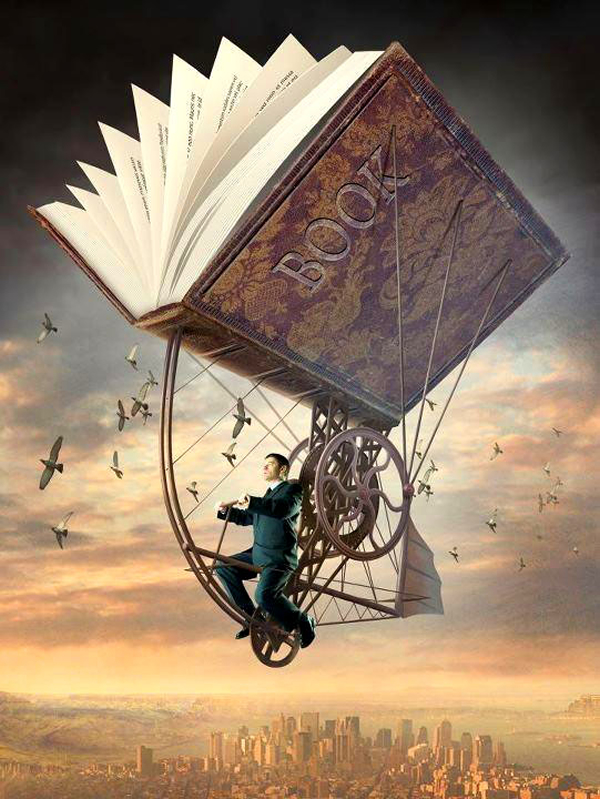
Inside the book, Vermeer: Portraits of A Lifetime. Analysis of all the paintings of Johannes Vermeer. The book reveals for the first time that the women featured in the paintings of Johannes Vermeer were members of his own family, his daughters, his wife and mother-in-law, Maria Thins.

FREE AUDIOBOOK

Republished by Blog Post Promoter
CLICK ON THE LINK BELOW TO LEARN HOW YOU CAN DOWNLOAD A FREE COPY OF ONE OF MY AUDIOBOOKS:

http://www.audible.com/t1/30DayGoldFT_at?source_code=PBRP0389WS110209

FREE AUDIO BOOKSHERE ARE THE LINKS TO MY AUDIOBOOKS ON AUDIBLE.COM YOU CAN DOWNLOAD FREE WHEN YOU BECOME A TRIAL MEMBER OF AUDIBLE.COM:

SHERLOCK HOLMES: MY LIFE   http://www.audible.com/pd/ref=sr_1_1?asin=B00A27BCHG&qid=1355950962&sr=1-1

VERMEER: PORTRAITS OF A LIFETIME   http://www.audible.com/pd/ref=sr_1_2?asin=B009NVX2PM&qid=1355950962&sr=1-2

HAPPY LISTENING, MY FRIENDS!

DELUSIONAL or HERETICAL?

Republished by Blog Post Promoter

Vermeer on iTunes

“I am very sure that my new book, Vermeer: Portraits of A Lifetime, will be considered by many people to be delusional or heretical.  Many will dismiss my observations and comments because they don’t follow the dictates of  “authoritative research” or the opinions of art “experts”.

This book may threaten persons who have a financial vested interest in the Vermeer paintings that still exist today, as their livelihood or financial well-being depend to some degree on the value currently assigned to the paintings.

Although the monetary value of Vermeer’s paintings have been vastly inflated, in part, due to the mystique created by authorities or speculators, it is not my intention to devaluate them. It is not my intention to invalidate property that was sold or bartered by Vermeer and his wife, Catharina, hundreds of years ago.  Quite the contrary.

My intention is to honor the lives of Johannes, Catharina, their eleven surviving children and Maria Thins, his mother-in-law and patroness.

This book does not represent or endorse any financial, spiritual, religious, political organization or practice or philosophy of any kind.  All personal observations and opinions offered by the author herein are purely and solely personal opinions, with no other source than those noted in the footnotes or appendix.

Any and all individuals or organizations from whom research and/or opinions have been borrowed or sited for referential purposes in this book are not affiliated with and do not in any way acknowledge the validity of or endorse the findings or assertions of the author or publisher of this book.

Finally, this book is not intended for people who have a vested interest, or who “know best”.  Personal observations, whether visual, empathetic or conjectural, of the author about the life and death of Vermeer, 300 years after the fact, are wholly subjective.”

Vermeer: Portraits of A Lifetime  https://itunes.apple.com/us/audiobook/vermeer-portraits-lifetime/id569744974

Paperback book —     Support independent publishing: Buy this e-book on Lulu.

AUDIOBOOK — http://www.audible.com/pd/Arts-Entertainment/Vermeer-Audiobook/B009NVX2PM/ref=a_search_c4_1_4_srTtl?qid=1392802819&sr=1-4

THE NATURE OF MAN

Republished by Blog Post Promoter

dove-hawkCandide: or, The Optimist (1762)  It begins with a young man, Candide, who is living a sheltered life in an Edenic paradise and being indoctrinated with Leibnizian optimism (or simply “optimism”) by his mentor, Professor Pangloss. The work describes the abrupt cessation of this lifestyle, followed by Candide’s slow, painful disillusionment as he witnesses and experiences great hardships in the world. Voltaire concludes with Candide, if not rejecting optimism outright, advocating a deeply practical precept, “we must cultivate our garden”, in lieu of the Leibnizian mantra of Pangloss, “all is for the best” in the “best of all possible worlds”.

Candide is characterised by its sarcastic tone as well as by its erratic, fantastical and fast-moving plot. A picaresque novel with a story similar to that of a more serious Bildungsroman, it parodies many adventure and romance clichés, the struggles of which are caricatured in a tone that is mordantly matter-of-fact. Still, the events discussed are often based on historical happenings, such as the Seven Years’ War and the 1755 Lisbon earthquake. As philosophers of Voltaire’s day contended with the problem of evil, so too does Candide in this short novel, albeit more directly and humorously. Voltaire ridicules religion, theologians, governments, armies, philosophies, and philosophers through allegory; most conspicuously, he assaults Leibniz and his optimism.

François-Marie Arouet (French: 21 November 1694 – 30 May 1778), known by his nom de plume Voltaire, was a French Enlightenment writer, MV 8159historian, and philosopher famous for his wit, his attacks on the established Catholic Church, and his advocacy of freedom of religion, freedom of expression, and separation of church and state. Voltaire was a versatile writer, producing works in almost every literary form, including plays, poems, novels, essays, and historical and scientific works. He wrote more than 20,000 letters and more than 2,000 books and pamphlets. He was an outspoken advocate of several liberties, despite the risk this placed him in under the strict censorship laws of the time. As a satirical polemicist, he frequently made use of his works to criticize intolerance, religious dogma, and the French institutions of his day.

(reference: Wikipedia.org)

MORE THINGS TO DO WHILE YOU’RE DEAD

Republished by Blog Post Promoter

# 485  BE YOUNG FOREVER.

As a disembodied spirit you probably don’t show your age as much as you did when you were in a body. If you are an immortal spiritual being you are infinitely aged and will continue to be infinitely ageless.

There have been quite a few spiritual sages from the ancient east, like Buddha in India or Lao Tze in China, for example, who have contemplated the nature of the spirit. If the rumors are true, they were able to transcend the continual cycle of life, death and rebirth.

Apparently the process of birth, death and rebirth predisposes one to suffer from reoccurring amnesia so that one tends to forget the life just lived.

Part of this has to do with the loss of the body and possessions through which you established your identity while on Earth. When you lost your body and possessions you also felt as though you lost your “self” or your “identity”.

Conversely, if one does not identify oneself as their possessions or as their body, one is less likely to forget their actual, spiritual identity. Therefore, if you decide to go back to Earth to inhabit another body, for whatever reason, don’t forget that you are who you are – the same immortal spiritual being you’ve been for billions and billions of years.

# 749  AVOID OLD AGE.

One of the most unlovely disadvantages of owning and occupying a body made of meat is decay. Use of the euphemistic term “aging” does not diminish to reality that old bodies experience one or more of the following: chronic pain, general deterioration of function, loss of energy, loss of hair, accumulation of fat, loss of muscle strength, loss of eyesight, loss of teeth, loss of sexual desire, function (which is the main reason for getting the goddamned thing in the first place!) and loss of mental acuity which leads to emotional and spiritual anxiety.

Loss of friends and family who are expiring all around you leads to loneliness and grief. The final agony of death relieves the ordeal, but only if one does not fall for the temptation to return to Earth, yet again, and get another new body and start the whole  process again.

Seriously, what kind of “all-knowing, all-seeing, all-telling, all powerful creator god” would think up anything as defective, temporary and fragile as a body made of meat? Why not biodegradable plastic bodies? Or stainless steel bodies? Or lightweight titanium bodies?

If you happen to meet “the god” while you’re dead please tell it/him/her/them this: “For Christ’s sake, if you’re going to create bodies, get it right next time! OK?!”

— Excerpts from the book 1001 THINGS TO DO WHILE YOU’RE DEAD: A DEAD PERSON’S GUIDE TO LIVING, by Lawrence R. Spencer

BUY THE BOOK …BEFORE IT’S TOO LATE!

Support independent publishing: Buy this book on Lulu.

SHERLOCK HOLMES – MY LIFE, Chapter Four

Republished by Blog Post Promoter


READ CHAPTER ONE

READ CHAPTER TWO

READ CHAPTER THREE

CLICK THE LULU BUTTON TO READ THE ENTIRE BOOK:

Support independent publishing: Buy this book on Lulu.

CHAPTER FOUR: A CHARMING CHESHIRE CHEESE


“Would you tell me, please, which way I ought to go from here?”, asked Mr. Dodgson.

“That depends a good deal on where you want to get to”, I replied.

“I don’t much care where…”,  said Mr. Dodgson.

‘Then it doesn’t matter which way you go”, said Watson.

“I have solved many obscure and nefarious cases in my career to date.  However, the singular complexity of the matter which stands before us now — these accusations and alternative explanations, present features of a most illogical and inexplicable nature”, I said, passing the butter dish across to Mr. Dodgson.

“Prey, do have some butter with your bread “, I suggested, “while I ring for our landlady, Mrs. Hudson, to bring up the main course of our meal”, I said, stepping across to pull upon the bell chord to alert our mistress that we were ready to be served.

Momentarily, Mrs. Hudson appeared at the door, huffing with exertion of having carried a large tray of dishes up the stairs. She set the tray upon the sideboard.

“Will there be anything else you require, gentlemen?”, she asked. “If not, then I will retire for the evening. I’ve had a long day of shopping and preparations and cooking and cleaning already. Just leave the dishes outside the door when you have finished, and I will fetch them in the morning”, she said bowing herself out the door.

“Please leave to door open, Mrs. Hudson, if you would be so kind”, I said as she started to close it behind her.

“That will not be necessary, Mr. Holmes”, said Dodgson.  “I feel quite reassured that I am safe with you”.

“Very well then. Good evening to you all then, gentlemen”, she said. She glanced back at me curiously and pushed the door closed, turned and trudged back down the stairs.

The meal was hearty, yet bland, as is the traditional fair for the citizens of London: boiled flesh of some unidentifiable creature, peeled and boiled potatoes with a few carrots, bread, butter, and a pot of tea.  Fortunately, I had taken the trouble to supply ourselves with two bottles of red table wine for the occasion, which enlivened the otherwise nondescript flavor of the food.

As we finished eating our meal, and placing the dishes outside the door, as instructed by Mrs. Hudson, I reviewed the peculiar features of our situation with my companions.

“For the sake of securing the status of my identity, and to respond the most singular accusations brought against us by Dr. Doyle, please let me summarize the possible resolutions to this anomaly. Several possible answers may be postulated, as follow:

1. That I am impersonating a fictional character created by Dr. Doyle in his works of fiction, notwithstanding the testimony of Constable Barrett, who one might argue, is himself a fictional character.  That being the case, all here present must also be fictional characters, including Dr. Dodgson.

2. That I am a real person, from whom Dr. Doyle, as the author of works of fiction, has copied my name, address, actions and characteristics as a source of inspiration for his stories.

3.  That I am a real person, and that the author is an imposter, or a fictional character.  Inasmuch as you visited the alleged gentleman yourself upon this very morning, one would assume that he, like ourselves, is not a fictional character.

4.  That Dr. Watson and I are both fictional characters, including all of our surroundings, environs, apartment, possessions, bodies, memories, expertise and identities: a hypothesis which seems to have been disproven thus far, unless further evidence presents itself to our attention.

5. That Mr. Dodgson and Dr. Doyle are real characters, including all of their surroundings, environs, apartments, possessions, bodies, memories, expertise and identities, and Dr. Watson and I are both impersonating fictional characters, as discussed.

6. An alternative solution may also be proffered: that each and all of what is supposed to be “real”, whether deemed fact or fiction by the observer, are equally illusions. Therefore, neither comprises a definition of reality or fantasy, accept by the subjective opinion of the observers, creators and / or characters”, I concluded.

I paused momentarily to fill my pipe, and allowed sufficient time for the gravity and details of my proposition to be absorbed by Dr. Watson and our guest.  Neither of them had anything further to offer in the argument at the moment. No doubt they were confounded by the apparent absurdity of my arguments. Nonetheless, taking silence as permission to continue, I resumed my deductive analysis.

“I have observed that the lowest and vilest alleys in London do not present a more dreadful record of sin than does the smiling and beautiful countryside”, gentlemen.

“I do not see what you are getting at, Holmes”, said Watson. Mr. Dodgson looked up with equal, but silent, agreement.

“On the contrary, Watson, you can see everything. You fail, however, to reason from what you see. You are too timid in drawing your inferences”, I said, taking a seat in my armchair, and inviting our guest to take a cigar from the box I offered.

“However, before we digress, let me allude to the discussion that Mr. Dodgson and I had when I visited him in is quarters.  He himself mentioned several methods of investigation which he has studied in the alchemical works of Sir Isaac Newton, and in his own mathematical application of portmanteau poetry to the development of mathematical thinking.

“Circumstantial evidence is a very tricky thing.  It may seem to point very straight to one thing, but if you shift your own point of view a little, you may find it pointing in an equally uncompromising manner to something entirely different”, I said while crossing over to the sideboard.

I picked up the manuscript that Mr. Dodgson had given me when I visited him entitled, Alice’s Golden Hour. While flipping through the pages to find a particular passage, I asked Mr. Dodgson a question about his work.

“Might I inquire as to the origin of one of the fictional characters whom Alice meets in Wonderland — The Cheshire Cat?”

“Frankly, I believe the idea came to me from an old expression I learned as a child”, replied Mr. Dodgson after momentarily pondering the question. “I believe it to be derived from a cheese which was sold in Cheshire, near my home. The cheese was molded in the shape of a cat. The cheese was cut from the tail end first, so that the last part eaten was the head of the smiling cat”.

“Very well”, I said. “Let us then observe that you have extracted something from the reality of your childhood, and with a liberal application of your creative imagination have used it to conjure an illusion…an alternative to reality, as it were. Is this not so, Mr. Dodgson?”

“Well, yes, I suppose. However, I fail to see what relevance my fictional tales have to our current situation. Certainly you do not suppose that I am to believe that reality can be conjured from a work of fiction?  The notion is absurd!”, he replied.

“I do not ask you, or anyone, to believe anything whatsoever. Belief is a matter of personal opinion or conviction which cannot be shared by anyone else, accept to the degree that they share a similar opinion.  Some  men believe that the world was created by an omnipotent, invisible being in seven days. People in some aboriginal tribes believe that the world is supported on the back of an enormous elephant which stands upon the shell of a colossal tortoise”, I said, finally arriving at the pages I was looking for in the manuscript.

“As for myself, I believe that what is true for you is true for you, although no other person may agree upon your belief. Regardless, a truth for you, may not be true for others. Is that not a fundamentally sound assumption?”, I asked.

“I suppose you are right Mr. Holmes. It is difficult, if not impossible, to stay apace of your ability to remain logical in the face of a situation which is so absurdly enigmatic. You are proposing that the philosophical paradigm of reality should be considered of equal importance with fiction. How can you ever solve a criminal case, your occupation, if every piece of hard evidence could be a contrivance of imagination on the part of the investigator or of the criminal?”, said Mr. Dodgson.

“Quite the contrary”, I said. “But rather than keeping to my methods alone, let me ask you what meaning you attribute to the following passage in your book”, I said, turning to the page which described in the encounter between Alice and the Cheshire Cat.

“Let me read your own words to you.”

“…she was a little startled by seeing the Cheshire Cat sitting on a bough of a tree a few yards off.

The Cat only grinned when it saw Alice. It looked good-natured, she

thought: still it had VERY long claws and a great many teeth, so she

felt that it ought to be treated with respect.

‘Cheshire Puss,’ she began, rather timidly, as she did not at all know

whether it would like the name: however, it only grinned a little wider.

‘Come, it’s pleased so far,’ thought Alice, and she went on. ‘Would you

tell me, please, which way I ought to go from here?’

‘That depends a good deal on where you want to get to,’ said the Cat.

‘I don’t much care where–‘ said Alice.

‘Then it doesn’t matter which way you go,’ said the Cat.

‘–so long as I get SOMEWHERE,’ Alice added as an explanation.

‘Oh, you’re sure to do that,’ said the Cat, ‘if you only walk long

enough.’

Alice felt that this could not be denied, so she tried another question.

‘What sort of people live about here?’

‘In THAT direction,’ the Cat said, waving its right paw round, ‘lives

a Hatter: and in THAT direction,’ waving the other paw, ‘lives a March

Hare. Visit either you like: they’re both mad.’

‘But I don’t want to go among mad people,’ Alice remarked.

‘Oh, you can’t help that,’ said the Cat: ‘we’re all mad here. I’m mad.

You’re mad.’

‘How do you know I’m mad?’ said Alice.

‘You must be,’ said the Cat, ‘or you wouldn’t have come here.’

Alice didn’t think that proved it at all; however, she went on, ‘And how

do you know that you’re mad?'”

“So, Mr. Dodgson, let me pose the same question to you that young Alice asked of the chimerical cat in your own story: how do you know whether you are mad or not mad? How would you satisfy yourself that I am not mad? How do we know that everyone is mad or not mad?”, I said, rising from my chair to place the manuscript upon the sideboard.

I refilled my pipe once again, in anticipation of the protracted debate that was sure to follow on the heels of these profoundly absurd, yet existential queries and arguments.

Mr. Dodgson did not seem the least bit nonplused by my insinuation  regarding his sanity, or the sanity of all. Rather, he thanked us very cordially for our hospitality, rose from his chair and reached the door to exit the apartment. As he reached the door he turned back to me.

“Mr. Holmes, I will leave the resolution of this mystery entirely in your very capable hands. If anyone were able to solve the questions you pose to me, I assure you that I am not that man. Neither are any of the mentors whom I have studied, including Sir Isaac himself. I trust that you will be kind enough to inform me of your eventual success, if such is possible. Good day to you, gentlemen”.

With that, he departed, clomped down the stairs. Through the window we saw him walk briskly away through a light drizzle of rain in the direction of the train station.

“What do you make of it Holmes?”, asked Watson, who seemed to have been disquieted by our visitor. “I must admit that our meeting with this  gentleman is the most perplexing I have ever had,” he said, resuming his seat in front of the fire.

“Yes. Most perplexing, indeed”, I agreed, taking my own seat and refilling my pipe. “Most perplexing.”

“What do you know of this Dr. Doyle?”, I asked Watson after an interlude of silent contemplation.

“Well, I can’t say that I know anything about the man”, he said. “Have you not heard anything of him?”

“No.  I have not.  However, our friend, Mr. Dodgson seems to know quite a good deal about the fellow. So much so, that he was entirely certain that it is I that perform the part of an imposter in an imaginary play invented by this man!”, I observed.

“Well, my dear fellow, in my professional opinion as a doctor, I am certain that this gentleman is suffering from the residual effects of some narcotic. His own fantastical story, from which you read to us this evening, seems very peculiar indeed!”, said Watson. “And, his behavior is quite inappropriate for a professor of mathematics at Oxford, certainly. Perhaps the allegations suggested in the newspaper, that the man is a pedophile, or a kidnapper, should be investigated more thoroughly”, he suggested.

“Perhaps”, I said. “Let us sleep upon the matter for the moment. In this instance, however, the best way of successfully acting a part is to be it”, I conjectured. ”

___________________________________

Copyright © 2011 by Lawrence R. Spencer. All Rights Reserved.