Republished by Blog Post Promoter

THERE ARE ENOUGH RESOURCES IN THIS UNIVERSE FOR EVERY SENTIENT BEING TO LIVE SAFE, HEALTHY, COMFORTABLE AND FULFILLING LIVES.
— www.lawrencerspencer.com —

Republished by Blog Post Promoter
THERE ARE ENOUGH RESOURCES IN THIS UNIVERSE FOR EVERY SENTIENT BEING TO LIVE SAFE, HEALTHY, COMFORTABLE AND FULFILLING LIVES.
— www.lawrencerspencer.com —
Republished by Blog Post Promoter

Republished by Blog Post Promoter
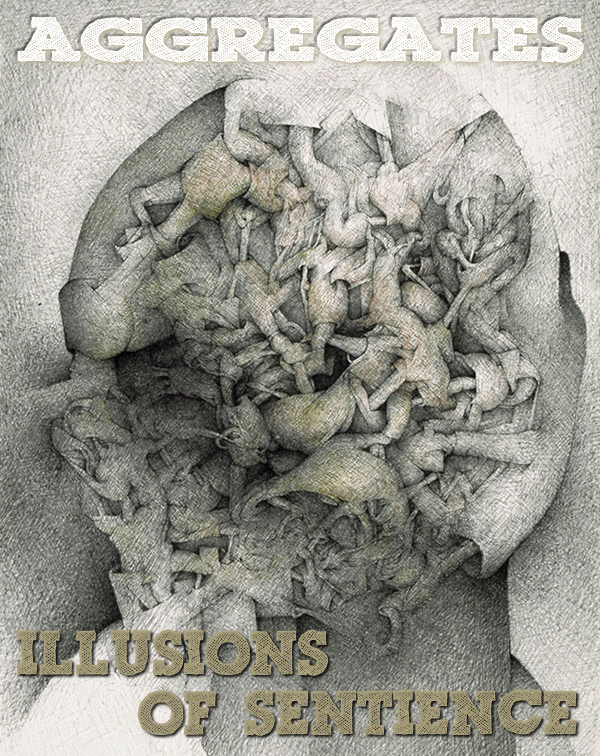 In the philosophy of consciousness, “sentience” can refer to the ability of any entity to have subjective perceptual experiences. This is distinct from other aspects of the mind and consciousness, such as creativity, intelligence, sapience, self-awareness, and intentionality (the ability to have thoughts that mean something or are “about” something). Sentience is a minimalistic way of defining “consciousness“, which is otherwise commonly used to collectively describe sentience plus other characteristics of the mind.
Eastern religions including Hinduism, Buddhism, Sikhism, and Jainism recognize non-humans as sentient beings.According to Buddhism, sentient beings made of pure consciousness are possible. In Buddhism, the concept is related to the Bodhisattva, an enlightened being devoted to the liberation of others. The first vow of a Bodhisattva states: “Sentient beings are numberless; I vow to free them.” Sentience in Buddhism is the state of having senses (sat + ta in Pali, or sat + tva in Sanskrit). In Buddhism, the senses are six in number, the sixth being the subjective experience of the mind. Thus, an animal qualifies as a sentient being.
In Buddhism the skandhas (or aggregates in English) are the five functions or aspects that constitute the human being. The Buddha teaches that nothing among them is really “I” or “mine”. Suffering arises when one identifies with or clings to an aggregate. Suffering is extinguished by relinquishing attachments to aggregates.
The Buddhist literature describes the aggregates as arising in a linear or progressive fashion, from form to feeling, to perception, to mental formations to consciousness. In the early texts, the scheme of the five aggregates is not meant to be an exhaustive classification of the human being. Rather it describes various aspects of the way an individual manifests.
— I HAVE EXCERPTED THE TEXT ABOVE FROM VARIOUS ARTICLES AND LINKS FOUND IN WIKIPEDIA.ORG (LRS)
Republished by Blog Post Promoter
Anna Breytenbach was born on August 16, 1968 in Cape Town, South Africa. After having studied Psychology, Marketing and Economics at the University of Cape Town she entered the corporate world. She had a career for 12 years in Human Resources and Information Technology, in both Australia and the USA. Since 2004 Anna Breytenbach has practiced as a professional animal communicator. She currently lives in coastal South Africa and travels in other African countries, Europe, Australia and USA to conduct workshops on animal communication.
Anna Breytenbach’s official website: www.animalspirit.org
The Assisi International Animal Institute: www.assisianimals.org
Wilderness awareness training school: www.wildernessawareness.org
Jukani Predator Park: www.jukani.co.za
Republished by Blog Post Promoter
