Category Archives: THE OZ FACTORS

“The Oz Factors” is a book which reveals the 12 common denominators of civilization that prevent mankind for discovering workable solutions to the problems of life. The Oz Factors was written by Lawrence R. Spencer and published in 1999.

MY PERSONAL READING LIST

Republished by Blog Post Promoter

Decline and Fall of Rome

Here is a list books I read (I usually listen to the audiobook version) during the last two years (in no particular order).  There may have been others, but these are most worthy of mention.  I have read many of these books more than once, as I consider them to be seminal works of English literature, or fundamental to an understanding of Life, Universes and Other Stuff.

I have discovered that not all “spiritual” books are necessarily spiritual.  Likewise, I find that some books in the science fiction and history genre reveal a profound

Age of Reasonunderstanding of the nature andbehavior of humans.  For example, there is no doubt in my mind that foibles and follies described in The Decline and Fall of The Roman Empire, by Edward Gibbon reveal in painfully absurd detail the reality that the humans who populate modern Western civilization of Europe and the United States are the very same beings who built and destroyed the civilizations of Rome and it’s immediate predecessor, Greece.  And, we are the very same spiritual beings who build and destroy every civilization, life after life, again and again, in the Eternal Now.

The more things change, the more humans remain the same.  If you have read the book Alien Interview, you will understand the cyclical nature of human insanity and the wicked wizards and witches
behind the “curtain of lies” that perpetuate our stupidity,  brutal depravity and the inability to confront the evil beings who perpetuate our pain.  Factually,  the serpentine parasites who enslave the “untouchables of Earth” are terrified that innocent and honest inquiries of children and small dogs will expose and depose them from their brutal thrones of power, control and possession of the physical universe, without which they would perish in the  frigid, eternal dark from which they were spawned!  Likewise, The Age of Reason, by Thomas Paine and the books of E.E. Doc Smith and Robert Heinlein reveal profound understandings of philosophy and spirituality that are forbidden, and  unknown, in religious texts on Earth. Reading the autobiographies of Yogananda, and Gandhi, and Nikola Tesla and Mark Twain exposed me to “Spiritual Skyscrapers” who tower with magnificent wisdom and courage above the barren landscape of human inhumanity.
612vWYLI0PL._SL175_Such beings, who demonstrate the most powerful empathy for their fellow beings, are magnified in contrast to a race of spiritual monstrosities (the “Edorians” of The Lensman Series, for example) as elucidated with demonic eloquence by Hitler in Mein Kampf.  Although the “bad guys” are just as powerful and “intelligent” as any “good guy” they are utterly and irreversibly antipathetic to every spiritual entity in every universe, including themselves!  I suspect that the game of “good guys” versus “bad guys” is simply an eternal, intergalactic struggle for survival between two equally opposed races of spiritual beings who originated in different times and places, but who now coexist in the space / time continuum of the physical universe.
Alien Interview coverPersonally, I have grown weary of mortal games.  I write books that suggest alternatives to the physical universe logic of dichotomies:  life /death, good /bad, black / white, life / death, up /down, in / out, etc.,.  I prefer the “illogic” of immortal spirits, infinite possibilities  and unlimited imagination!  Life, and Universes, and Other

Stuff are created from and sustained by the “no-thing” of Eternal Spiritual Beings.  However, I have read that the spiritually ignorant physicists of western universities are finally beginning to “grok” that Quantum Mechanics has been known and understood by the Vedic sages and gurus of India for more than 10,000 years.  Light, energy, matter, forms and spaces are contrivances of our own imaginations.

In spite of all the books I’ve read, I have, as yet, not discovered the solution to escaping the “Wheel of Life”, or the Cycle of Birth and Death.  I hope that the books I am planning to read during the next year will provide me with some real answers, as I’m not getting any younger.  Religious lies and rhetoric notwithstanding, not a single author of a book I’ve read has died and returned to tell us how to “escape from Earth”.  If you have read a book that verifiably solves this problem, please let me know.  I will add it to my list of “must read” books.

— Lawrence R. Spencer. October, 2013.

___________________________________

The History of The Decline and Fall of The Roman Empire (Unabridged), by Edward Gibbon

The Moon is a Harsh Mistress, by Robert Heinlein

The Cat Who Walked Through Walls, by Robert Heinlein

Strangers in A Strange Land, by Robert Heinlein

Animal Wise: The Thoughts and Emotions of Our Fellow Creatures, by Virginia Morell

The Art of Happiness, by Howard C.Cutler, with the Dalai Lama

Mein Kampf, by Aldolph Hitler

Vermeer: Portraits of A Lifetime, by Lawrence R. Spencer

The Skylark of Space: Skylark Series #1, by E.E. Doc Smith

Skylark Two, by E.E. Doc Smith

Skylark of Valeron (#3), by E.E. Doc Smith

Skylark DuQuesne: Skylark Series #4,  by E.E. Doc Smith

The Lensman Series, (6 books) by E.E. Doc Smith

Triplanetary

First Lensman

Galactic Patrol

Gray Lensman

Second Stage Lensman

Children of The Lens

The Spacehounds of IPC, by E.E. Doc Smith

The Oz Factors, by Lawrence R. Spencer

Good Omens, by Neil Gaiman and Terry Pratchett

Valis, by Philip K. Dick

Alien Interview, Edited by Lawrence R. Spencer

The Dying Earth, by Jack Vance

An Autobiography: The Story of My Experiments with Truth, by Mohandas (Mahatma) K. Gandhi

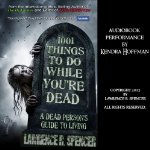
1,001 Things to Do While You’re Dead: A Dead Persons Guide to Living, by Lawrence R. Spencer

The Bhagavad Gita, by Phoenix Books , Barbara Stoler-Miller (translator)

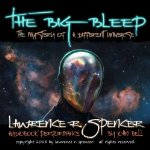
The Big Bleep: Mystery of A Different Universe, by Lawrence R. Spencer

Wizard: The Life and Times of Nikola Tesla: Biography of a Genius, by Marc J. Seifer

Autobiography of a Yogi, by Paramahansa Yogananda

Our Occulted History: Do the Global Elite Conceal Ancient Aliens?, by Jim Marrs

My Inventions, by Nikola Tesla

Flatland, by Edwin A. Abbott

Sherlock Holmes: My Life, by Lawrence R. Spencer

Ubik, by Phillip K. Dick

Vermeer: Portraits of A Lifetime, by Lawrence R. Spencer

The Minotaur Takes a Cigarette Break: A Novel, by Steven Sherrill

Winter of the World: The Century Trilogy, Book 2, by Ken Follett (partial)

Coming of Conan The Cimmerian, by Robert E. Howard

A Game of Thrones: A Song of Ice and Fire, Book 1, by George R. Martin

The Dispossessed: A Novel, by Ursula K. Le Guin

The Girl With the Dragon Tattoo: The millennium Trilogy, Book 1, by Steig Larsson

The Vortex Blaster, by E.E. “Doc” Smith

The Republic, by Plato

Fall of Giants: The Century Trilogy, Book 1, by Ken Follett

The Confession: A Novel, by John Grisham

Sherlock Holmes: My Life, by Lawrence R. Spencer

Anansi Boys, by Neil Gaiman

Enders Game, by Orson Scott Card

Autobiography of Mark Twin (Unabridged), by Mark Twain

American Gods, by Neil Gaiman

Tao Te Ching: A New English Version, by Loa Tzu, translated by Stephen Mitchell

The Story of Philosophy: The Lives and Opinions of the Greater Philosophers, by Will Durant

You See But You Do Not Observe, by Robert J. Sawyer

The Age of Reason, by Thomas Paine

The Complete Stories of Sherlock Holmes, Volume 1 and 2, by Arthur Conan Doyle

The Valley of Fear, by Arthur Conan Doyle

His Last Bow, by Arthur Conan Doyle

The Adventures of Sherlock Holmes, by Sir Arthur Conan Doyle

Under the Dome, by Stephen King

The Rape of The Mind: The Psychology of Thought Control, Menticide, and Brainwashing, by Joost A. M. Meerloo, M.D.

The Cultural Cold War: The CIA and the World of Arts and Letters, by Frances Stonor Saunders

The Magus of Strovolos: The Extraordinary World of a Spiritual Healer, by Kyriacos C. Markides,

1984, by George Orwell

Animal Farm, by George Orwell

The Foundation Trilogy, by Isaac Asimov

The Rise of The Fourth Reich, by Jim Marrs

The Face, by Dean Koontz  (and, about a dozen of his other books in years past! )

Meditation on Living, Dying and Loss, by Graham Coleman with the Dalai Lama

Tick Tock, by James Patterson and Michael Ledwidge

Frankenstein or The Modern Prometheus, by Mary Shelley

The Strange Case of Dr. Jekyll and Mr. Hyde, by Robert Louis Balfour Stevenson

Treasure Island, by Robert Louis Balfour Stevenson

Dracula, by Bram Stoker

LISTEN CAREFULLY

Republished by Blog Post Promoter

I love to listen to audio books!  It allows me to “read” a book while doing other things, like driving, walking, shopping, washing dishes, vacuuming the floor, doing the laundry, feeding the cat, working out at the gym, sitting outside on the patio, and other “mindless” activities that require very little attention.  I listen to one audio book every week, or more.  You can get a very affordable monthly subscription from www.Audible.com.  Every month you can download one or more books and listen to them on your phone, iPod, iPad, computer, or MP3 player.

Try it for FREE for one month!

1001 things cover

Alien Interview cover

Big Bleep cover

Domain cover

MMManual cover

Sherlock Holmes cover

The Oz Factors cover

Vermeer cover


TIME AND UNIVERSES ARE RELATIVES

Republished by Blog Post Promoter

“You see that (hour glass)? That’s how much longer you have to live! And it isn’t long, my pretty, it isn’t long … “

–The Wicked Witch of the West in ‘The Wizard of Oz’

                THE DATING GAME OF RELATIVES

                Theoretically, a very practical and useful investigative tool used by some scientific disciplines to gather and evaluate information is to establish the age of an artefact.

                Carbon-14, the most commonly used dating method in archaeology and paleontology, works only on organic material. It is supposed to measure the relative rate of deterioration of a Carbon-14 atom as a standard for organic matter. At best, it is useful in dating organic materials no older than 80,000 years. Since one atom does not equal all other atoms, the technology does not work on stone or any other non-organic material. Based on such a limited technology, trying to assign an age to a stone pyramid, for instance, is bound to provide wrong answers.

               Similarly, a relatively new dating method called uranium-lead isotope analysis is supposed to date rocks as old as two billion years, give or take a few million.

               However, there is a flaw in the logic of these dating methods which invalidates the information they provide, namely, all dating methods are based on the assumption that matter is destructible! In fact, there exists no slightest shred of evidence that matter is anything other than utterly indestructible.

               While it is observable that the action of energy or force against matter can alter the form of matter, it does not ever really destroy it.

               Example: Stone is turned to dust by beating it with a hammer. Buildings can be torn down with explosives. Water can be vaporized with heat. Sand can melt and turn into glass. Granite cliffs can be sliced up into one-hundred ton blocks to build pyramids. But, none of these actions do anything other than alter the form of the matter.

               Whether matter is in the form of a solid, liquid, gas or energy, it is still composed of the same subatomic particles that existed at the instant of its creation. The most that Mother Nature, or any life form, can do with matter is alter its form. Humans can create a temporary illusion by changing matter from one form into another. However, that illusion will eventually return to the same basic particles from which it is composed. The particles themselves persist timelessly.

                HOW OLD IS “FATHER TIME”?

                Time is a subject that is far from absolute. The measurement of time is the activity of monitoring the movement of matter or energy particles through space. In order to establish the passage of time, one must establish an agreed-upon reference point for beginning the period of time to be measured. Then, the increments of measurement must be uniformly consistent throughout the period of time being quantified. This set of qualifying factors, however, applies only to the Physical Universe.

               Does time (as the Munchkins would say) morally, ethically, spiritually, physically, positively, absolutely, undeniably and reliably actually, really exist?

               Imagine that you are completely isolated, unable to observe any physical motion whatsoever–no sun, moon and stars, night or day. If you were isolated from your own body such that you could not detect any breathing rhythm or heartbeat or cellular motion of any kind to use as a reference point, would time exist?

                People who have been locked in solitary confinement, whether in a prison or in an isolation chamber, have experienced the phenomenon of “no time”.

                Since many people seem to have an innate, built-in time sense, or a “biological clock”, there may be a subjective awareness of time. But, even so, time is determined by measuring some motion in the physical universe.

                How can the dates of something for which you have no starting point be measured? How can the age of our planet, our galaxy, or the entire physical universe be determined? How can the age of something which does not exist in the physical universe, such as a spirit, be calculated?

                Logically, an arbitrary unit of measurement must be chosen. Then a particle or object which can move through space must exist. This particle would have to travel at a uniformly predictable rate of speed. The unit of measurement would depend on the magnitude or size of the motion of the particle relative to a fixed point in space, or a fixed point of view.

                Here is a simple example: let’s imagine a theoretical COSMIC TIME CLOCK in which ONE SECOND equals ONE EARTH YEAR.

               If you counted the ticks of the second hand of this cosmic clock in “normal” time increments of 24 hour days, every day, how long would it take you to measure the recent history of planet Earth?

                2 years and 22 days ago would equal the end of the Dinosaur Age (75 million BC)

               1 hour, 14 minutes,6 seconds ago equals 2,450 BC– Egyptian Pharaoh Khufu

               53 minutes, 36 seconds ago equals 1220 BC–Moses’ Exodus from Egypt

               42 minutes 39 seconds ago equals 563 BC–Buddha is born

                33 minutes 16 seconds ago equals “year zero” the calendar in use throughout most of the world, sponsored by Pope Gregory XIII in 1582

                8 minutes 24 seconds ago equals 1492 AD, Columbus “discovers” America

               3 minutes 40 seconds ago equals 1776 AD, the United States of America is founded

                One human average lifetime (70 years) equals 1 minute, 10 seconds on the Cosmic Time Clock.

                Time is a relative measurement of the motion of particles in the Physical Universe. The order of magnitude of the unit of measurement may vary according to the point of view of the observer.

                To venture a guess as to the age of the physical universe, based on a supposed decay of matter is another example of “scientific theory” based on assumption and personal viewpoint.

                According to some authorities, mainly from the non-physical sciences, such as philosophy, there is reason to believe that the physical universe may have existed for many trillions of years or perhaps for a nearly infinite period of time. However, since time is a relative factor, it’s importance as a tool for evaluating other information is also relative.”

— Excerpt from the book THE OZ FACTORS, by Lawrence R. Spencer

Support independent publishing: Buy this book on Lulu.

OZ FACTORS: THE 12 COMMON DENOMINATORS

Republished by Blog Post Promoter

“The term “Oz Factor” was originally coined by the British UFO researcher Jenny Randles in reference to a peculiar, almost dreamlike state of silence that sometimes precedes UFO encounters. Jenny Randles supposed the Oz Factor to be an altered state of consciousness induced by the “persons” behind the UFO phenomenon. She conceived that this influence originated from beings of another planet, capable of reaching across space to influence human behavior. She postulated that these beings are physically present in the vicinity of the affected person. Jenny describes this experience as “not really happening, yet it is far more than a mere hallucination.”

Randles uses the term to describe a variety of phenomena:

“What I wanted to do was to anchor this state of mind very firmly in real experience. I have surveyed what witnesses say in this wide range of paranormal phenomena, both obviously time related (such as time-slips) and not so obviously related (such as near-death or UFO close-encounter visions). The pattern is the same and you can readily build up this portrait of the state of consciousness which seems to facilitate their occurrence.

“That is the first step. Giving it a neutral name to capture its essence of magical transportation was the next move forward, hence the Oz Factor.

“We must move on from here. It helps a little to say that the Oz factor is a set of symptoms denoting an altered state of consciousness in which the normal bonds of time are freed and the mind senses the universe as it really is and can wander through those corridors of forever.”

Illusion, hallucination, imagination and reality: universes can be created by each of us individually and/or collectively.

Our purpose here is not to speculate on the relative validity of universes. Like Jenny Randles, we are traveling on a “Yellow Brick Road” toward the resolution of primordial questions. The road may be a reality or it may be an hallucination. Our journey is to examine some of the factors that may adversely effect our ability to discover workable solutions–the differences between reality and hallucination–in any universe.

Unlike Dorothy in the Land of Oz, we do not have Ruby Slippers and a Good Witch to lead us or protect us. We are on our own in our travels through the Land of Oz, Kansas, planet Earth, the Physical Universe and Your Own Universe.

Like a scarecrow who can’t decide which way to go, the twists and turns of the road which have been charted by western science, have not resolved our primordial questions. Some people, who don’t have any more brains than a scarecrow, do an awful lot of talking but we still have no reliable road map–we have no proven sign posts. Therefore, we must draw our own map and post signs to guide ourselves and mark the way for others who may follow.

Our journey must define a new map through uncharted universes. Our map must not only help to choose the right road, but it must also protect us from the perils of lions and tigers and bears (oh, my!), witches, flying monkeys, great and powerful Ozes, and other distractions, along the way.

Every time we take a wrong turn, every time we encounter a perilous barrier to understanding, we must post a new sign. We call each one of these sign posts, an “Oz Factor”.

    DEFINITION OF “OZ FACTOR”: A COMMON DENOMINATOR OF WESTERN LOGIC WHICH PREVENTS OBSERVATION, UNDERSTANDING, AND THE ATTAINMENT OF A WORKABLE SOLUTION.”

Support independent publishing: Buy this book on Lulu.

READ The Oz Factors to discover the 12 Common Denominators (Oz Factors) and how you can use them to improve your life.

LOGIC IN THE LAND OF OZ

Republished by Blog Post Promoter

“WHICH IS THE WAY BACK TO KANSAS?”

“I’d give anything to get out of Oz altogether, but which is the way back to Kansas? I can’t go the way I came.”–Dorothy

“The only person who might know would be the great and wonderful Wizard of Oz himself. He lives in the Emerald City and that’s a long journey from here. Did you bring your broomstick with you?“–Glinda, the Good Witch of the North

“No, I’m afraid I didn’t.“–Dorothy

“Well then, you’ll have to walk. It’s always best to start at the beginning and all you do is follow the Yellow Brick Road.”–Glinda in ‘The Wizard of Oz’

One of the primordial questions Dorothy was trying to answer in ‘The Wizard of Oz’ was, “which is the way back to Kansas?”

Trying to figure out the answers to the mysteries of life here on planet Earth is even harder than Dorothy trying to get back to Kansas–none of us have a broomstick to ride, we don’t have a good witch to ask for directions and there is no Yellow Brick Road to follow.  So, we’re stuck here having to figure it out for ourselves, logically, using the information we have in our environment.

To begin at the beginning, the Land of Oz is a type of Universe. According to Webster’s Dictionary, a universe is defined as: “an area, province or sphere, as of thought or activity, regarded as a distinct, comprehensive system or world.”

The physical reality we all share on Earth and everything throughout the surrounding space is called the Physical Universe (PU).

On the other side of reality is your own imagination, your personal perceptions, viewpoints, dreams, hopes, desires, and creations, which comprise Your Own Universe (YOU).

The Land of Oz can be considered to be a Universe dreamed up by Dorothy, as conceived in the mind of L Frank Baum, the author of the book. (It has been speculated that the author created the “Land of Oz” after glancing at his file cabinet. The two file drawers were labeled “A-N” and “O-Z”. Dorothy could just as easily have been transported by the author’s pen into the imaginary “Land of AN”.)

In the movie version of the story, Dorothy creates the Land of  Oz in a dream, induced by a knock on the head, using remnants of Kansas in the physical universe mixed together with creations from her own universe–which, for Dorothy, existed over the rainbow in the Land of Oz.

Every Universe seems to be made up of its own, peculiar set of Laws. The PHYSICAL UNIVERSE, for example, is built on a set of agreed upon Laws.  A few examples of these Laws are:

The Law of Motion: “For every action, there is an equal and opposite reaction.”

The Food Chain Law: “In order for one life organism to live, another life organism must die.”

The Law of Gravity: “Whatever goes up, must come down.”

The Law of Time: “Time marches on.”

Most of us take the Laws of the Physical Universe for granted because everyone seems to agree with them. However, such laws leave a lot to be desired when compared to the Laws of a Universe we might create for ourselves!

In YOUR OWN UNIVERSE you can create any set of Laws, or have no Laws at all. You can make them, change them or break them. The Laws of YOUR OWN UNIVERSE can be anything or nothing, limited only by your imagination.

In YOUR OWN UNIVERSE, everything you wish comes true, because you are the “wizard” of YOUR OWN UNIVERSE!

In Dorothy’s universe, Scarecrows and trees can talk; witches can be beautiful and fly in magic bubbles; Munchkin girls join the “Lullaby League” and Munchkin boys have a “Lollipop Guild”; horses can change their color; and, Dorothy can dye her eyes to match her gown.

Dorothy’s first awareness of the particular universe she calls the Land of Oz is the realization that she is definitely NOT in Kansas. When she opens the door to her farmhouse, which has just crash-landed in Oz, Dorothy compares her past experience in Kansas with her present experience in Munchkinland. The Technicolor flowers, a good witch in a flying bubble, all the little brightly dressed people, a yellow brick road, etc, are definitely NOT similar to anything she has ever seen in Kansas.

The Land of Oz is an example of what Earth scientists would call an anomaly. For Dorothy, the anomaly is a departure from the usual arrangement of things as compared to her past experiences. In the universe of Oz, everything is so completely different from the universe Dorothy is familiar with in Kansas that she thinks she is lost.

How do you find the way back home when you are lost?

One way is to ask someone for directions. Of course, if you’ve ever been sent on a wild goose chase by a stranger, the experience taught you that it is a good idea to be somewhat selective as to whom you ask for directions. So, how do you know who is a reliable source of directions or information?

Perhaps it would be a good idea to find out something about the person from whom you are asking directions before you act upon what they tell you. Right? (Or, is it left?)

In our example, should Dorothy be asking for directions back to Kansas from the local natives, the Munchkins?

The main reason one would ask a local resident for directions is that one makes the assumption, otherwise known as an hypothesis (which is the first step in creating any scientific theory), that someone who lives in the area will be a reliable source of information and will give correct directions.

Well, in Dorothy’s case, the Munchkins have lots of familiarity with the Land of Oz, but they have no familiarity with Kansas. Fortunately for Dorothy, they are honest enough to tell her that they don’t have a clue where Kansas is, and they pass the buck to the Wizard of Oz, who they believe knows everything. And, based on their familiarity with the Yellow Brick Road and Munchkinland, they are certain that it leads to where the Great Oz lives.

Most would agree that a certainty is better than an assumption. When one has no familiarity based on personal experience or observation, it is best not to assume that one knows the correct directions. So, one asks for information from someone one believe knows–like a scientist, for example–who is supposed to be familiar with the area or subject in question.

Do the local Munchkins or local scientists of Oz give Dorothy the correct directions to help her get back to Kansas?

When Dorothy crash-landed her house in Munchkin City, the Munchkins cowered under the bushes and flowers in terror of retribution for the death of the Wicked Witch of the East from her mean, nasty, ugly sister, the Wicked Witch of the West.

Their benevolent, all-powerful protector, Glinda, the Good Witch of the North, who the Munchkins trust implicitly, is not much help in solving Dorothy’s problem, either. To begin with, Glinda does not have all the information regarding the situation, because she was not even there when Dorothy crashed her house into Munchkin City and inadvertently killed a wicked witch.

Undaunted by her lack of factual information, the first thing Glinda does after coaxing the Munchkins out from their hiding places, is to sing them a song about her assumption, or hypothesis, regarding Dorothy’s crash-landing. She sings: “Come out, come out, wherever you are, and meet the young lady who fell from a star. She fell from the sky, she fell very far, and ‘Kansas’ she says, is the name of the star.”

So, where did Glinda get the idea that Dorothy came from a star? Dorothy never said that she came from a star! But, somehow this all seems very logical to the Munchkins. Even Dorothy doesn’t object to Glinda’s false statement!

In our analogy, Glinda’s assumption that Dorothy fell from a star could be called a scientific theory. The theory proposed by the Good Witch of the North is that Kansas is a star! This theory is based on an assumption derived from an apparent anomaly as measured against her own personal experience and by information received from the Munchkins who are supposed to be a reliable source, but, who did not actually see the house crash because they were all in hiding. In truth, none of them have any familiarity with Kansas or cyclones or farm houses or dogs or little girls, either!

To complicate matters further, Glinda has to put on the appearance that she knows what she’s talking about in front of all her Munchkins followers, even though she is really just making a wild guess. After all, she has a very good job being the protector of the Munchkins, who appear to be utterly defenseless against their enemies, the Wicked Witch sisters. Anyway, Glinda is a good witch, which means she is probably really trying to help, so, they all believe her scientific theory that Dorothy has fallen from a star.

In their cute little minds, the Munchkins have accepted, without question, the logic, which underlies the assumption that is the basis of Glinda’s scientific theory:

SKY equals VERY FAR equals STAR equals KANSAS.

This kind of reasoning process could be called “Everything Logic”; i.e., Everything Equals Everything. This sort of logic might also be the definition of stupidity.

Example: If KANSAS equaled SKY equaled STAR, one could theoretically gaze up into the heavenly firmament to watch Kansas cattle grazing on the twinkling prairies in the stars above.

Unfortunately, much of what we call “science” on planet Earth is based on “Everything Logic”.

___________________________________________

— Excerpted from the book THE OZ FACTORS by Lawrence R. Spencer