Republished by Blog Post Promoter
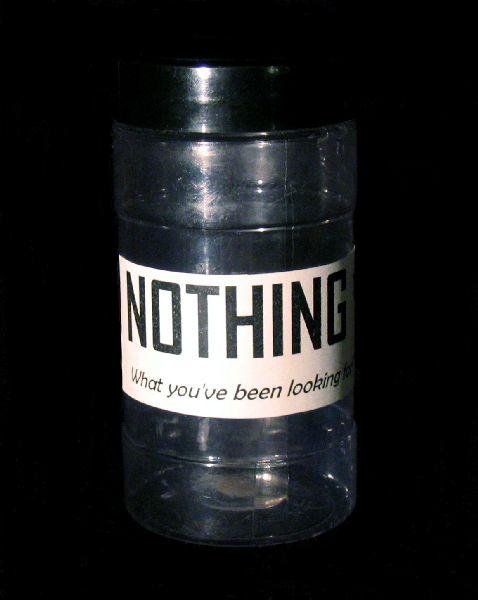
Since time immemorial, curious people have asked where the universe came from. Nowadays we have a secular answer: the Big Bang. And yet that answer, incredible as it may be, is only partially satisfying. After all, we can still ask where the Big Bang came from; and we can still wonder, sensibly enough, how something (the universe) could come from nothing (whatever came before it). In his new book, On Being, Peter Atkins, a British chemist and science writer, offers an intriguing answer to those questions. To understand how something can come out of nothing, he writes, you have to appreciate the fact that “there probably isn’t anything here anyway” — that “at a deep level there is nothing” in the universe, really. “The substrate of existence,” he argues, “is nothing at all.”
Consider electrical charge. In our universe, there are positively and negatively charged particles. How did all that charge come into being out of nothingness? It didn’t, Atkins writes, since “the total charge is zero.” The Big Bang merely separated out a uniform state of chargelessness into many individual instances of charge, positive and negative. The same goes for matter and energy generally: the total amount of matter and energy in the universe seems to be balanced out by huge amounts of “dark matter” and “dark energy,” which express themselves in terms of gravitational attraction. The Big Bang didn’t create all that energy, as such. Instead, it seems to have turned an initial Nothingness into a “much more interesting and potent” Nothingness — a “Nothing that has been separated into opposites to give, thereby, the appearance of something.”
How much, if anything, does that explain? “The separation of Nothing into opposites still needs explanation,” Atkins concedes. Still, he writes, “it seems to me that such a process, though fearsomelessly difficult to explain, is less overwhelmingly fearsome than the process of positive, specific, munificent creation.” The main point is that the Big Bang doesn’t mark, necessarily, the creation of something out of nothing. If that happened at all — and it may be, Atkins points out, that there was has never been absolutely Nothing, in a total sense — then it probably happened further back in the pre-cosmological past. Instead, it marks the emergence of texture, differentiation, and particularity out of even, unchanging featurelessness. It’s not something out of nothing, but interestingness out of boredom.

more thoughts from Sri Nisargadatta Maharaj (17 April 1897 – 8 September 1981):