Republished by Blog Post Promoter
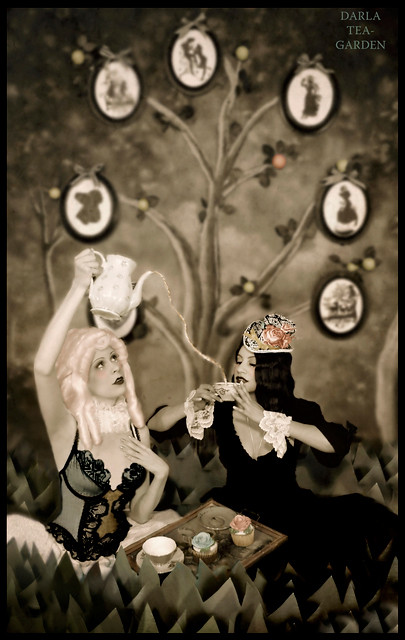
THE WEIRDLY WONDERFUL WORLD OF DARLA TEAGARDEN
(Lady Gaga, eat your heart out….)
http://www.darlateagarden.com/

__________________________

_______________________________

_________________________

Poetry by Lawrence R. Spencer. Poetic nonsense by Lawrence R. Spencer and others. Haiku poems by Lawrence R. Spencer.
Republished by Blog Post Promoter
THE WEIRDLY WONDERFUL WORLD OF DARLA TEAGARDEN
(Lady Gaga, eat your heart out….)
http://www.darlateagarden.com/
__________________________
_______________________________
_________________________
Republished by Blog Post Promoter
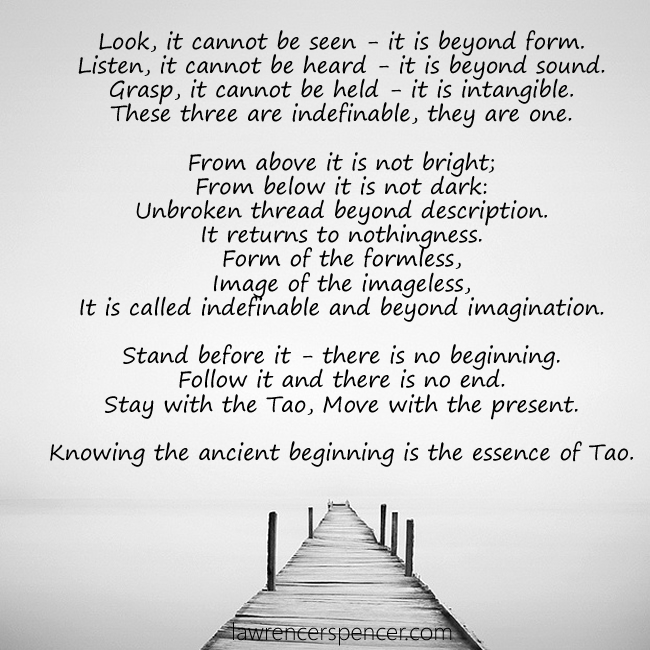
The Tao Te Ching, Daodejing, or Dao De Jing (道德經: 道 dào “way”; 德 dé “virtue”; 經 jīng “classic” or “text”) is simply referred to as the Laozi. According to tradition, it was written around 6th century BC by the sage Laozi (or Lao Tzu, “Old Master”), a record-keeper at the Zhou Dynasty court, by whose name the text is known in China. The text’s true authorship and date of composition or compilation are still debated, although the oldest excavated text dates back to the late 4th century BC.
Many different translations, versions and interpretations of The Tao have been produced through the past 2,500 years, or so, since the original appearance. Like any “religion”, the “opinions” and “interpretations” of “priests” MODIFY and INTRODUCE FALSE IDEAS into the original. Therefore, I suggest that anyone who wishes to sincerely study The Tao as a body of wisdom, study many difference translations before you decide whether or not any of the many versions of this book point to “the way” or “no way”.
Republished by Blog Post Promoter
Mankind remains virtually unchanged, in essence or fundamental behavior, during the past 2,400 years. There is a great deal in Aristotle’s description of “the perfect man” to recommend as a path for living now, just as there was during his lifetime ca. 350 B.C.E..
Aristotle (384 BCE — 322 BCE) was a Greek philosopher, a student of Plato and teacher of Alexander the Great. His writings cover many subjects, including physics, metaphysics, poetry, theater, music, logic, rhetoric, linguistics, politics, government, ethics, biology, and zoology. Together with Plato and Socrates (Plato’s teacher), Aristotle is one of the most important founding figures in Western philosophy. Aristotle’s writings were the first to create a comprehensive system of Western philosophy, encompassing morality and aesthetics, logic and science, politics and metaphysics.
Republished by Blog Post Promoter
Spots that say “NOT” have been used in this universe for billions and billions of years. Get yours now, and make any reality you can’t confront disappear!
Republished by Blog Post Promoter
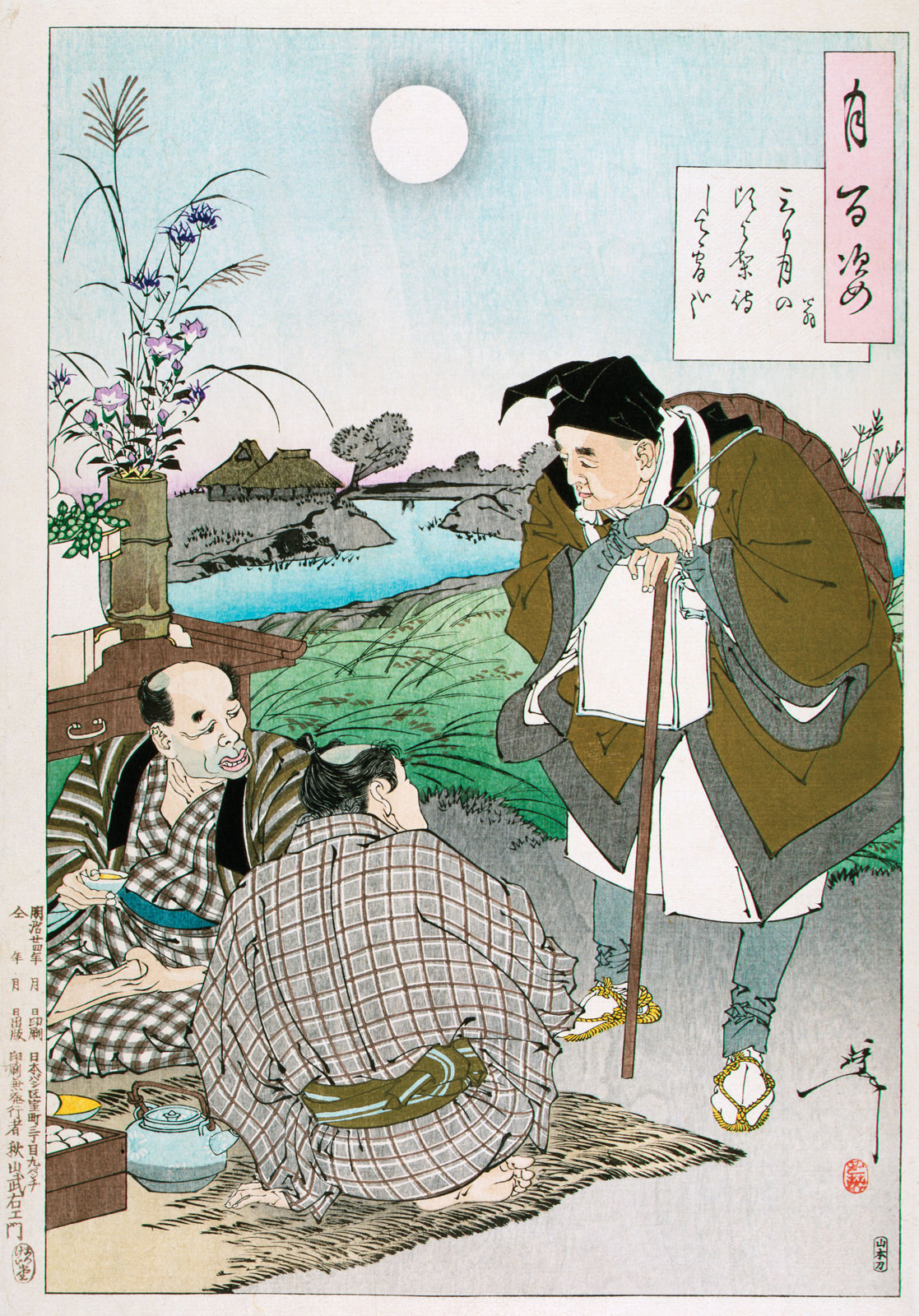
Here are a few of the wonderful *Haiku poems attributed to Bash (they may not have retained their purity in the English translation, but you get the flavour of them):
An old pond!
A frog jumps in-
The sound of water.
____________
The years first day
thoughts and loneliness;
the autumn dusk is here.
____________
Poverty’s child –
he starts to grind the rice,
and gazes at the moon.
____________
A weathered skeleton
in windy fields of memory,
piercing like a knife
____________
*DEFINITION OF HAIKU: Haiku is one of the most important form of traditional Japanese poetry. Haiku is, today, a 17-syllable verse form consisting of three metrical units of 5, 7, and 5 syllables. Since early days, there has been confusion between the three related terms Haiku, Hokku and Haikai. The termhokku literally means “starting verse”, and was the first starting link of a much longer chain of verses known ashaika. Because the hokku set the tone for the rest of the poetic chain, it enjoyed a privileged position in haikaipoetry, and it was not uncommon for a poet to compose ahokku by itself without following up with the rest of the chain.
The name Basho (banana tree) is a sobriquet he adopted around 1681 after moving into a hut with a banana tree alongside. He was called Kinsaku in childhood and Matsuo Munefusa in his later days.