Category Archives: INSIDE THE BOOK

Inside the book, Vermeer: Portraits of A Lifetime. Analysis of all the paintings of Johannes Vermeer. The book reveals for the first time that the women featured in the paintings of Johannes Vermeer were members of his own family, his daughters, his wife and mother-in-law, Maria Thins.

SYNOPSIS OF SHERLOCK HOLMES: MY LIFE

Republished by Blog Post Promoter

Sherlock Holmes: My Life, is a memoir in which Sherlock Holmes discloses a conspiracy between Dr. Watson, who is proven to be a fraud, and his associate, Dr. Arthur Doyle, to publish his real life adventures as works of fiction. Sherlock solicits the very able assistance of his brother Mycroft Holmes, who is aided by the British Secret Information Services, to help him resolve the most infamous literary fraud in history!

Their investigation of the two Scottish doctors, together with several authors, publishers and politicians who collaborated with them, exposes the scam as well as the farcical claim to knighthood of “Sir” Arthur Doyle and his life as an opportunistic hoaxer.  The insidious plan of Watson and Doyle to erase the real person of Sherlock Holmes inadvertently unveils the true identity of Professor Moriarty.

The actual reasons for the disappearance of Mr. Holmes from public life, after his alleged “death” at the hands of Professor Moriarty in Switzerland, are disclosed for the first time.  While staying as a guest at The Diogenes Club, under the cover of a false identity, Mr. Holmes served for several years in the employment of the Office of The Chancellor of The Exchequer, of which Mycroft was the pre-eminent administrator.  During this singular period in his career Mr. Holmes encountered his most challenging cases.

Remarking retrospectively upon his diverse career during retirement, Mr. Holmes describes the most enigmatic, yet previously unrecorded, adventures of his life: encounters that influenced the literary creations of Charles Dodgson (author of Alice’s Adventures in Wonderland), J.M. Barrie (author of Peter Pan), the American writer Mark Twain, as well as Bram Stoker (author of Dracula) and Robert Louis Stevenson (author of Strange Case of Dr Jekyll and Mr Hyde).

Finally, Mr. Holmes confides intimate personal details of his concoction and use of alchemical potions, his family, and sexual preference. Philosophical reflections upon his past and future are expressed in several poignant personal letters, including one received from his friend the 13th Dalai Lama, and in a reply to an inquiry from the American science fiction writer H.P. Lovecraft.

______________________________________

— An excerpt from the book: SHERLOCK HOLMES: MY LIFE —

“As it pertains to the case before us, as viewed through the perfect lens of hindsight, it is plain to me now that Watson has always treated me, as regards his writing, in a circumspect and covert manner.  Moreover, his constant  supplications to me for permission to publish ‘just one more case’, have often bordered upon beggary!”, I cried.

“I am quite certain that your intuition in the matter is accurate, though highly disturbing to me”, said Mycroft. “Have you never examined any of the published volumes of the stories written about your cases by Dr. Watson?”, he asked.

“No, I must admit that I have never bothered to acquire a single copy, nor has Dr. Watson ever brought a single volume of a published work home with him to Baker Street, now that you mention it?”, I replied, realizing to my own astonishment, the singular improbability of it, especially after so many volumes had been published, and over such a protracted number of years, is remarkable!

“I believe that an examination of the published works of Dr. Watson will add more clarity to our discovery of the facts”, Mycroft said pointedly  with his fork. “Let me be specific, my dear fellow.  Did you, by any chance, read the manuscript of the last of his stories about your investigations?  It is the case regarding the lost letter upon which your assistance was solicited by no less than the Prime Minister.  Watson fictionalized his name as ‘Lord Bellinger’, and that of the Secretary of Foreign Affairs, under the name of Trelawney Hope”.

These were not their actual names of course, as you are keenly aware. Rather, the gentlemen in question were none other than Robert Gascoyne-Cecil who thrice served as Prime Minister, and twice as the Secretary of State for Foreign Affairs.  He was accompanied by the then reigning Prime Minister at the date of the incident, Arthur Balfour”.

I could not deny that the solution of this case was of singular gravity and import to the well-being of Britain.  Of course, Mycroft and his staff had been intimately associated, covertly, with attempts to recover the missing letter in that case.  However, I admitted that I had not seen that book, or any other for that matter, in published form.”

________________________________________

The book may be ordered in printed form, or downloaded as a PDF, from the website of the  publisher: http://stores.lulu.com/pan

Support independent publishing: Buy this book on Lulu.

CORPUS EST SPIRITUS CARCERE

Republished by Blog Post Promoter

the body is a prison of the spirit

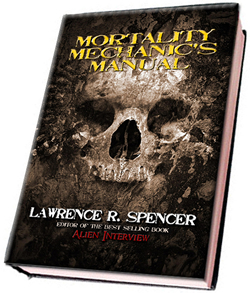
Mortality Mechanics' Manual“A human being is the literal embodiment of mortality. The flesh is a prison for the Being. The Earth is a prison for the body: a prison within a prison for a Soul, carefully concealed in Mystery. An object animated by a Soul that thinks that it is the object is the ultimate accomplishment of the trade and technology of The Mortality Mechanic.”

Support independent publishing: Buy this book on Lulu.

# 583 — OPERATE AN ORACLE SHRINE

Republished by Blog Post Promoter

# 583   —  OPERATE AN ORACLE SHRINE

“An oracle is a spirit considered to be a source of wise counsel or prophetic opinion, predictions of the future, inspired by the gods. Oracles were portals through which the gods spoke directly to man.

There are a few easy steps to opening your own oracle temple.

1) find a location. This could be a cave, a temple, a shrine, a mountain top or any other place that seems “holy”.

2) hire a priestess to intercede between you and the supplicant.

3) train the priestess to listen to you and interpret your thoughts perfectly so she can relay them without alteration. After all, you don’t want your wisdom and good advice to be ruined by a bad translator.

4) have the priestess burn some incense.

5) advertise in the “personals” columns or put 3 X 5 index cards on bulletin boards in Laundromats with the following announcement:

“I, _________, (your name) the “great god (your name)” will be making predictions and precognitions at the (oracle temple location) between the hours of (evenings and week-ends are best) for the low, introductory offering price of ( a sheep, a goat, a bowl of grain, a basket of fruit, etc.).”

Then, sit back and get ready to hand out free advice to the teaming throngs.

Of course, if you can do some magic tricks or heal a few crippled people, this will help get your ratings up.  The good buzz about you will spread quickly.

Soon your name and your temple will be revered throughout the realm for thousands of years to come, or until it is outlawed and destroyed by a bunch of greedy, holier-than-thou priests.”

— Excerpt from the book 1001 THINGS TO DO WHILE YOU’RE DEAD, by Lawrence R. Spencer

Support independent publishing: Buy this book on Lulu.

Reversed Time Spiral Syndrome

Republished by Blog Post Promoter

Minith-Nur-Voth, of the Order of Omega Chapter on the 2nd Moon of the planet Amin-Amath-Arma in the 12th Galaxy of the Thrall-TumaTura sector in the Earth year 12,756, 345 BCE, will be the guest lecturer at the weekly meeting of the Tulsa, OK Chapter.  The lecture is hosted by the Ladies Intergalactic Auxilliary.

The topic Ms. Miniths' talk will the "Reversed Time Spiral Syndrome and Their Effect Upon Personal Memory Recall".

Admission is Free for Members. (Non-Members will not be able attend as the meeting will be held on February 29th, 1836 C.E. at the main auditorium of the Veterans Memorial Civic Center.)

Refreshments will be served.  RSVP to Miss Natalie Forsythe, Chapter Secretary.

ELECTRIC MONKS BELIEVE FOR YOU

Republished by Blog Post Promoter

electronic monkThere are too many people on TV and the Internet demanding that we “believe” their version of “reality”, all of which are divergent, conflicting, self-contradictory, self-serving, or absurd.  So, why waste your time and attention on “believing” anything when there is an ingenious labor-saving device called:  The Electric Monk

(VIDEO CLIP BELOW NARRATED BY DOUGLAS ADAMS)

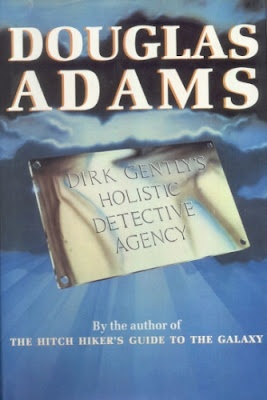
(from Dirk Gently’s Holistic Detective Agency by Douglas Adams)

“High on a rocky promontory sat an Electric Monk on a bored horse. From under its rough woven cowl the Monk gazed unblinkingly down into another valley, with which it was having a problem.

The day was hot, the sun stood in an empty hazy sky and beat down upon the gray rocks and the scrubby, parched grass. Nothing moved, not even the Monk. The horse’s tail moved a little, swishing slightly to try and move a little air, but that was all. Otherwise, nothing moved.

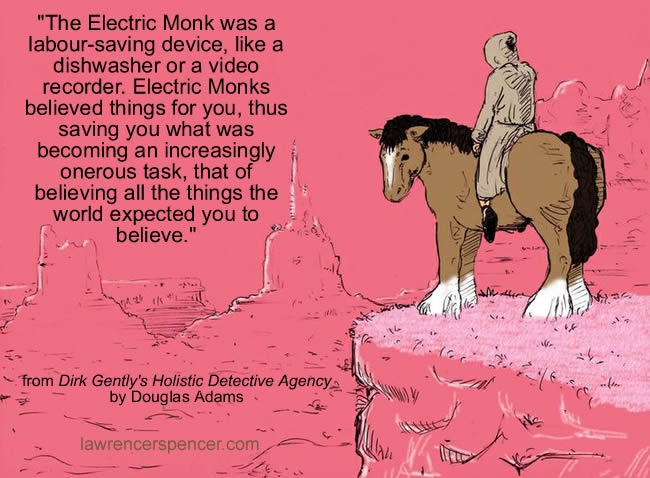
The Electric Monk was a labour-saving device, like a dishwasher or a video recorder. Dishwashers washed tedious dishes for you, thus saving you the bother of washing them yourself, video recorders watched tedious television for you, thus saving you the bother of looking at it yourself; Electric Monks believed things for you, thus saving you what was becoming an increasingly onerous task, that of believing all the things the world expected you to believe.

Unfortunately this Electric Monk had developed a fault, and had started to believe all kinds of things, more or less at random. It was even beginning to believe things they’d have difficulty believing in Salt Lake City. It had never heard of Salt Lake City, of course. Nor had it ever heard of a quingigillion, which was roughly the number of miles between this valley and the Great Salt Lake of Utah.

The problem with the valley was this. The Monk currently believed that the valley and everything in the valley and around it, including the Monk itself and the Monk’s horse, was a uniform shade of pale pink. This made for a certain difficulty in distinguishing any one thing from any other thing, and therefore made doing anything or going anywhere impossible, or at least difficult and dangerous. Hence the immobility of the Monk and the boredom of the horse, which had had to put up with a lot of silly things in its time but was secretly of the opinion that this was one of the silliest.

How long did the Monk believe these things?

Dirk GentlyWell, as far as the Monk was concerned, forever. The faith which moves mountains, or at least believes them against all the available evidence to be pink, was a solid and abiding faith, a great rock against which the world could hurl whatever it would, yet it would not be shaken. In practice, the horse knew, twenty-four hours was usually about its lot.

So what of this horse, then, that actually held opinions, and was sceptical about things? Unusual behaviour for a horse, wasn’t it? An unusual horse perhaps?

No. Although it was certainly a handsome and well-built example of its species, it was none the less a perfectly ordinary horse, such as convergent evolution has produced in many of the places that life is to be found. They have always understood a great deal more than they let on. It is difficult to be sat on all day, every day, by some other creature, without forming an opinion on them.

On the other hand, it is perfectly possible to sit all day, every day, on top of another creature and not have the slightest thought about them whatsoever.

When the early models of these Monks were built, it was felt to be important that they be instantly recognisable as artificial objects. There must be no danger of their looking at all like real people. You wouldn’t want your video recorder lounging around on the sofa all day while it was watching TV. You wouldn’t want it picking its nose, drinking beer and sending out for pizzas.

So the Monks were built with an eye for originality of design and also for practical horse-riding ability. This was important. People, and indeed things, looked more sincere on a horse. So two legs were held to be both more suitable and cheaper than the more normal primes of seventeen, nineteen or twenty-three; the skin the Monks were given was pinkish-looking instead of purple, soft and smooth instead of crenellated. They were also restricted to just one mouth and nose, but were given instead an additional eye, making for a grand total of two. A strange looking creature indeed. But truly excellent at believing the most preposterous things.

This Monk had first gone wrong when it was simply given too much to believe in one day. It was, by mistake, cross-connected to a video recorder that was watching eleven TV channels simultaneously, and this caused it to blow a bank of illogic circuits. The video recorder only had to watch them, of course. It didn’t have to believe them as well. This is why instruction manuals are so important.

So after a hectic week of believing that war was peace, that good was bad, that the moon was made of blue cheese, and that God needed a lot of money sent to a certain box number, the Monk started to believe that thirty-five percent of all tables were hermaphrodites, and then broke down. The man from the Monk shop said that it needed a whole new motherboard, but then pointed out that the new improved Monk Plus models were twice as powerful, had an entirely new multi-tasking Negative Capability feature that allowed them to hold up to sixteen entirely different and contradictory ideas in memory simultaneously without generating any irritating system errors, were twice as fast and at least three times as glib, and you could have a whole new one for less than the cost of replacing the motherboard of the old model.

That was it. Done.

The faulty Monk was turned out into the desert where it could believe what it liked, including the idea that it had been hard done by. It was allowed to keep its horse, since horses were so cheap to make.

For a number of days and nights, which it variously believed to be three, forty-three, and five hundred and ninety-eight thousand seven hundred and three, it roamed the desert, putting its simple Electric trust in rocks, birds, clouds, and a form of non-existent elephant-asparagus, until at last it fetched up here, on this high rock, overlooking a valley that was not, despite the deep fervour of the Monk’s belief, pink. Not even a little bit.

Time passed.”