Category Archives: BULLSHIT

GALADRIELS’ WARNING TO GANDALF

Republished by Blog Post Promoter

History has proven that Stupid Humans have been more devastating to Middle-Earth and Planet Earth, than a billion truckloads of Balrogs and Orcs!  If Gandalf had listened to Galadriels advice, he might not have saved the Hobbits and Stupid Humans from the Balrog at the Bridge of Khazad-dum.  Then, Saruman the White could have been victorious over the Stupid Humans and The Earth might have been saved from pollution and destruction by Stupid Humans!  (No doubt, the Stupid Humans exterminated all the Hobbits too, just like they massacred the Native Americans and all the rest of the indigeounous people of Earth.)

Gandalf is a character in J. R. R. Tolkien’s novels The Hobbit and The Lord of the Rings. In these stories, Gandalf appears as a wizard, member and later the head (after Saruman’s betrayal and fall) of the order known as the Istari, as well as leader of the Fellowship of the Ring and the army of the West. In The Lord of the Rings, he is initially known as Gandalf the Grey, but returns from death as Gandalf the White.

Balrogs are fictional demonic beings who appear in J. R. R. Tolkien’s Middle-earth legendarium. Such creatures first appeared in print in his novel The Lord of the Rings, though they figured in earlier writings that posthumously appeared in The Silmarillion and other books. Balrogs are described as tall and menacing with the ability to shroud themselves in fire, darkness, and shadow. They frequently appeared armed with fiery whips “of many thongs”, and occasionally used long swords. In Tolkien’s later conception, they could not be casually destroyed—significant power was required. Only dragons rivaled their capacity for ferocity and destruction,and during the First Age of Middle-earth, they were among the most feared of Morgoth’s forces.

Galadriel is a character created by J.R.R. Tolkien, appearing in his Middle-earth legendarium. She appears in The Lord of the Rings, The Silmarillion, and Unfinished Tales.  She was a royal Elf of both the Noldor and the Teleri, being a grandchild of both King Finwë and King Olwë, and was also close kin of King Ingwë of the Vanyar through her grandmother Indis. She was one of the leaders in the rebellion of the Noldor and their flight from Valinor during the First Age, and she was the only prominent Noldo to return at the end of the Third Age. Towards the end of her stay in Middle-earth she was co-ruler of Lothlórien with her husband, Lord Celeborn, and was referred to variously as the Lady of Lórien, the Lady of the Galadhrim, the Lady of Light, or the Lady of the Golden Wood. Her daughter Celebrían was the wife of Elrond and mother of Arwen, Elladan and Elrohir.  Tolkien describes Galadriel as “the mightiest and fairest of all the Elves that remained in Middle-earth” (after the death of Gil-galad) and the “greatest of elven women”.

Saruman the White is a fictional character and a major antagonist in J. R. R. Tolkien’s fantasy novel The Lord of the Rings. He is leader of the Istari, wizards sent to Middle-earth in human form by the godlike Valar to challenge Sauron, the main antagonist of the novel, but eventually desires Sauron’s power for himself and tries to help the Dark Lord take over Middle-earth. His schemes feature prominently in the second volume, The Two Towers, and at the end of the third volume, The Return of the King. His earlier history is given briefly in the posthumously published The Silmarillion and Unfinished Tales.  Saruman is one of several characters in the book illustrating the corruption of power; his desire for knowledge and order leads to his fall, and he rejects the chance of redemption when it is offered. The name Saruman means “man of skill”;he serves as an example of technology and modernity being overthrown by forces more in tune with nature.

Orcs are a race of creatures who are used as soldiers and henchmen by both the greater and lesser villains of The Silmarillion and The Lord of the Rings — Morgoth, Sauron and Saruman. The Orcs also work independently as the common antagonists in The Hobbit, though in that work they are more often called Goblins. Although not entirely dim-witted and occasionally crafty, they are portrayed as miserable beings, hating everyone including themselves and their masters, whom they serve out of fear. They make no beautiful things, but rather design cunning devices made to hurt and destroy.

THESE ARE THE TIMES THAT TRY MEN’S SOULS

Republished by Blog Post Promoter

“These are the times that try men’s souls.” — Thomas Paine, 1776

Recently I have been re-reading the writings of Thomas Paine.  He’s the guy that sparked the American Revolution in 1776.  He started a viral protest against the insanely oppressive government of England, which was the most powerful nation on Earth at that time.  How did he do it?  He published a little pamphlet called “Common Sense” and started passing it out to fellow citizens  like George Washington, Ben Franklin, John Adams and thousands of others.  This, and many other protest in history such as those of Mohandas Gandhi in India and Martin Luther King in the US have been effective, in spite of overwhelming opposition.

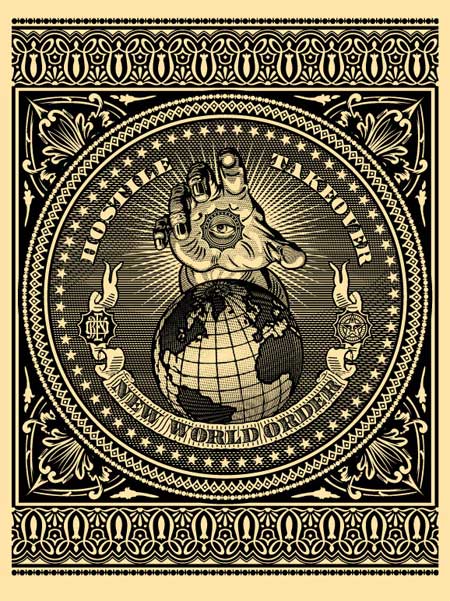
Viral protests against government injustice and corporate criminals can be effective. Even the most powerful nations on Earth can’t control the whole population against their collective will. Many have tried and failed.  The current “New World Order” movement is succeeding at global control at an alarming rate. The day the entire population is subject to the will of a few criminals in government and commerce we are doomed. That time has come. The American colonists didn’t have the Internet. But, they also didn’t have global government capable of controlling all the media, the military, our private lives and the economy.  If we want to remain free we’ll have to communicate with each other and act as though our current lives and our future lives depend upon it.

Here is a recent video from The Guardian that illustrates the message in the present moment.

THE HAMMER OF WITCHES HOLOCAUST

Republished by Blog Post Promoter

the_stake_of_the_witches_by_frenchfox-d3316dkIn the book and film “The DaVinci Code” by Dan Brown, there is a reference made to an ancient book called The Malleus Maleficarum (Latin for “The Hammer of Witches”, or “Hexenhammer” in German). Here is a free PDF copy of the book.

Malleus_maleficarumAt the height of its popularity, The Malleus Maleficarum was surpassed in public notoriety only by The Bible.

Because Catholicism is patriarchal (ruled by men) it has historically and systematically expunged the so called “pagan” concepts of the “Divine Feminine” from the western world.  The Female Creator Goddess (Gaia) was the foundation of spirituality for thousands of years before the state legalization of “Christianity” as a religious cult by The First Council of Nicaea (a council of Christian bishops convened in Nicaea in Bithynia by the Roman Emperor Constantine I in AD 325.

One of the favored methods of eliminating or minimizing the idea of the Feminine Creator (or the legend of Mary Magdalen as the wife of Jesus whose daughter was the origin of the “Royal Blood” claimed by the Queen of England, and others) was to declare any women who could THINK to be a “witch”, and therefore “evil”.

It set forth, as well, many of the modern misconceptions and fears concerning witches and the influence of witchcraft. The questions, definitions, and accusations it set forth in regard to witches, which were reinforced by its use during the Inquisition, came to be widely regarded as irrefutable truth.

Those beliefs are held even today by a majority of Christians in regard to practitioners of the modern “revived” religion of Witchcraft, or Wicca. And while the Malleus itself is largely unknown in modern times, its effects have proved long lasting.

The authors of the Malleus addressed those voices in no uncertain terms, stating:  “Whether the Belief that there are such Beings as Witches is so Essential a Part of the Catholic Faith that Obstinacy to maintain the Opposite Opinion manifestly savors of Heresy.”

malleusdover_500-400x400The immediate, and lasting, popularity of the Malleus essentially silenced those voices. It made very real the threat of one being branded a heretic, simply by virtue of one’s questioning of the existence of witches and, thus, the validity of the Inquisition. It set into the general Christian consciousness, for all time, a belief in the existence of witches as a real and valid threat to the Christian world. It is a belief which is held to this day.

It must be noted that during the Inquisition, few, if any, real, verifiable, witches were ever discovered or tried. Often the very accusation was enough to see one branded a witch, tried by the Inquisitors’ Court, and burned alive at the stake.

Old women, Midwives, Jews, Poets. Gypsies…anyone who did not fit within the contemporary view of pious Christians were suspect, and easily branded “Witch”. Usually to devastating effect.

It must also be noted that the crime of Witchcraft was not the only crime of which one could be accused during the Inquisition. By questioning any part of Catholic belief, one could be branded a heretic.

Scientists were branded heretics by virtue of repudiating certain tenets of Christian belief (most notably Galileo, whose theories on the nature of planets and gravitational fields was initially branded heretical).

Writers who challenged the Church were arrested for heresy (sometimes formerly accepted writers whose works had become unpopular). Anyone who questioned the validity of any part of Catholic belief did so at their own risk. The Malleus Maleficarum played an important role in bringing such Canonical law into being, as often the charge of heresy carried along with it suspicions of witchcraft.

It must be remembered that the Malleus is a work of its time. Science had only just begun to make any real advances. At that time nearly any unexplainable illness or malady would often be attributed to magic, and thus the activity of witches. It was a way for ordinary people to make sense of the world around them.

The Malleus drew upon those beliefs, and, by its very existence, reinforced them and brought them into the codified belief system of the Catholic Church. In many ways, it could be said that it helped to validate the Inquisition itself.

While the Malleus itself cannot be blamed for the Inquisition or the horrors inflicted upon mankind by the Inquisitors, it certainly played an important role. Thus has it been said that The Malleus Maleficarum is one of the most blood-soaked works in human history, in that its very existence reinforced and validated Catholic beliefs which led to the prosecution, torture, and murder, of tens of thousands of innocent people.

The lasting effect of the Malleus upon the world can only be measured in the lives of the hundreds of thousands of men, women, and even children, who suffered, and died, at the hands of the Inquisitors during the Inquisition.

At the height of its popularity, The Malleus Maleficarum was surpassed in public notoriety only by The Bible. Its effects were even felt in the New World, where the last gasp of the Inquisition was felt in the English settlements in America (most notably in Salem, Massachusetts during the Salem Witch Trials).

Estimates of the death toll during the Inquisition worldwide range from 600,000 to as high as 9,000,000 (over its 250 year long course); either is a chilling number when one realizes that nearly all of the accused were women, and consisted primarily of outcasts and other suspicious persons.

It is beyond the scope of this article to adequately examine the role of the Malleus in world history, or its lasting effects.

At the very least, The Malleus Maleficarum (The Witch Hammer) offers to us an intriguing glimpse into the Medieval mind, and perhaps gives us a taste of what it might have been like to have lived in those times.” – Wicasta Lovelace

Summation of the Malleus Maleficarum

The Dominican monks Heinrich Kramer and James Sprenger assembled many fairy tales and magic stories, nightmares, hearsay, confessions and accusations and put this all together as factual information in what became the handbook for the witch hunters, examiners, torturers and executioners, called the Malleus Maleficarum, a title which was translated as Hammer of Witches.

It was published in 1487, but two years previously the authors had secured a bull from Pope Innocent VIII, authorizing them to continue the witch hunt in the Alps which they had already instituted against the opposition from clergy and secular authorities. They reprinted the bull of December 5, 1484 to make it appear that the whole book enjoyed papal sanction.

Anybody with a grudge or suspicion, very young children included, could accuse anyone of witchcraft and be listened to with attention; anyone who wanted someone else’s property or wife could accuse; any loner, any old person living alone, anyone with a misformity, physical or mental problem was likely to be accused.

Open hunting season was declared on women, especially herb gatherers, midwives, widows and spinsters. Women who had no man to supervise them were of course highly suspicious.