Republished by Blog Post Promoter

(Photo credit: TheBlue26 on Flickr)

Republished by Blog Post Promoter
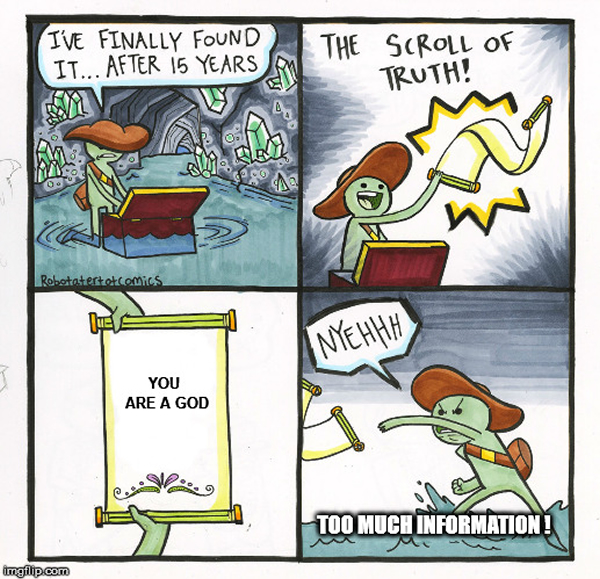 MEME [noun]
1. a cultural item that is transmitted by repetition and replication in a manner analogous to the biological transmission of genes.
2. a cultural item in the form of an image, video, phrase, etc., that is spread via the Internet and often altered in a creative or humorous way.
Etymology: 1976, introduced by evolutionary biologist Richard Dawkins in “The Selfish Gene,” coined by him from Greek sources, e.g. mimeisthai, “to imitate” (see mime), and intended to echo gene.
Republished by Blog Post Promoter
“You may remember a science fiction movie starring Charlton Heston called “Soylent Green”. (Winner Best Science Fiction Film of Year, 1973 – Saturn Award, Academy of Science Fiction, Fantasy and Horror Films )
In the movie the character played by Heston discovers that the green pellets being served to people as food each day were being produced from the recycled remains of dead human bodies, making everyone into unwitting cannibals! Is this type of food production just science fiction?
Today, public relation campaigns and catchy slogans notwithstanding, we have a new food chain. For reasons of efficiency and economics, many cattlemen feed their animals anything. Repeat: anything.
Environmental reporters, Satchell and Hedges, tell us: “Agricultural refuse such as corncobs, rice hulls, fruit and vegetable peelings, along with grain byproducts from retail production of baked goods, cereals, and beer, have long been used to fatten cattle.”
The authors continue, “In addition, some 40 billion pounds a year of slaughterhouse wastes like blood, bone, and viscera, as well as the remains of millions of dead cats and dogs passed along by veterinarians and animal shelters, are rendered annually into livestock feed–in the process turning cattle and hogs, which are natural herbivores, into unwitting carnivores.”
Many of America’s once proud cattlemen have not only turned herbivores into carnivores, but have also turned their cows into cannibals!”
— excerpt from THE OZ FACTORS by Lawrence R. Spencer
Republished by Blog Post Promoter
 “It occurred to me at some point this fall that I had written similar deaths in at least two of my books, and popular fiction is heaped with other examples of the same thing. Have you set up a moral dilemma you don’t know how to solve? Is the protagonist sexually attracted to a woman who is much too young
  for him, shall we say? Need a quick fix? Easiest thing in the world. ‘When the story starts going sour, bring on the man with the gun.’ Raymond Chandler said that, or something like it — close enough for government work, kemo sabe.
Murder is the worst kind of pornography, murder is “let me do what I want” taken to its final extreme. I believe that even make-believe murders should be taken seriously; maybe that’s another idea I got last summer. Perhaps I got it while Mattie was struggling in my arms, gushing blood from her smashed head and dying blind, still crying out for her daughter as she left ”
~ Stephen King, Bag of Bones
Republished by Blog Post Promoter
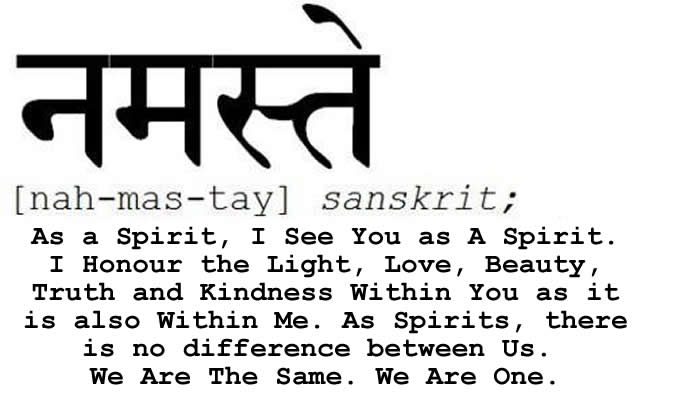 Namaste (/ˈnɑːməsteɪ/ NAH-məs-tay; Hindi: [nəməsteː]; Devanagari: नमस्ते; formal: Namaskar/Namaskaram) is a common spoken valediction or salutation originating from the Hindus and Buddhists in the Indian Subcontinent and also in Japan. It is a customary greeting when individuals meet, and a valediction upon their parting. A non-contact form of salutation is traditionally preferred in India and Nepal; Namaste is the most common form of such a salutation. When spoken to another person, it is commonly accompanied by a slight bow made with hands pressed together, palms touching and fingers pointed upwards, in front of the chest.