FALSE MEMORIES ARE REAL

Republished by Blog Post Promoter
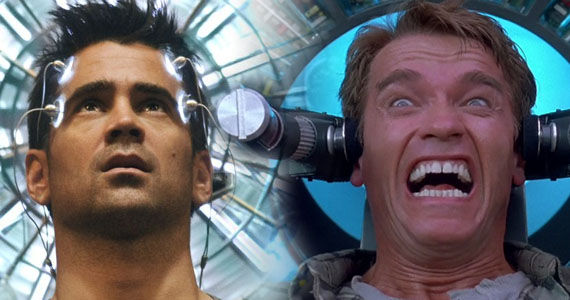
Total-Recall-2012-vs-1990-vs-1966

If you read the book ALIEN INTERVIEW, you know that humans on Earth are given amnesia and false memories between each incarnation or lifetime. ALIEN INTERVIEW, edited by Lawrence R. SpencerThanks to modern “science”, we may soon be implanted with MORE FALSE MEMORIES while we are sleeping!  Earth “scientists” have now demonstrated (using laboratory mice) that they can make us all feel “happy” about being imprisoned on Earth.  Remember the films “Total Recall” from 1990 or 2012?  The “science” in these so-called “science fiction” films will soon to become what we call “reality”.  In other words, you may be “happy”, but you won’t know who you are, where you are, when you are, why you are, or what is or isn’t real.

Read the article below, and the links to other articles on the subject published in The Guardian

“Researchers at CRNS (click here to see a list of the Global Corporations who fund the research done at The National Center for Scientific Research) in Paris create artificial positive feelings in mouse’s memory for first time during sleep, highlighting possible new treatment for depression. Scientists have succeeded in creating false but happy memories in mice, in the first demonstration of memory manipulation during sleep.

In the study, positive feelings about a particular place were artificially written into the animal’s memory, which caused them to seek out that place in search of a reward when they woke up. The discovery that emotional memory can be readily manipulated has echoes of the the film, Eternal Sunshine of the Spotless Mind, in which Jim Carey’s character has every recollection about his failed relationship wiped clean using a fictional mind-reading technology.

The scientists say that the findings could pave the way for new treatments that would allow patients to overcome depression or deeply entrenched painful memories. Karim Benchenane, the neuroscientist who led the research at the CNRS in Paris, said: “The idea is to use this as a tool for post-traumatic stress disorder.”

Steve Ramirez, a neuroscientist at Massachusetts Institute of Technology who is also working on memory manipulation, described the research as a “technical tour-de-force”. He said: “It demonstrates a little bit of mastery over how the brain works. “In future it should be possible to dampen the punch of traumatic memories in people.”
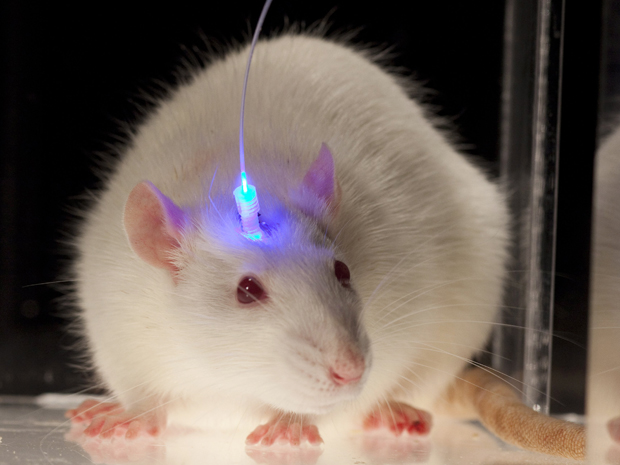
memory master image-1409150120327In the study, scientists implanted two electrodes in the brains of mice – one in a region of the hippocampus, the brain’s memory centre, involved in mapping locations and the second one in the brain’s reward centre.

In both mice and humans, our environment is physically mapped out in the brain by so-called “place cells”, which light up like coordinates on a grid as we move through space. The scientists picked a particular place cell neuron and observed which location it related to in real-life as the mouse roamed around a large exploration area.

During sleep, mice typically replay these sequences of place cell activity – effectively their memory replaying where they have been during waking hours.  The scientists rigged up the electrodes, such that during sleep, whenever the target place cell became active it triggered the delivery of a reward stimulation in the second electrode.
Advertisement

Although the memory of the place was initially neutral, during its sleep, the mouse learned to associate it with something positive happening.

“When they woke up the mouse went straight to that place as though it was waiting for a reward,” said Benchenane.

The study demonstrates what we subjectively know to be true — that the factual content of our memories and the emotional content are stored in different brain centres and can be changed independently.

false_memory-e1342143637727Benchenane believes the findings could be the basis for a non-invasive tool for memory manipulation in humans. Rather than electrodes, functional MRI scans could be used to identify when a person is replaying a specific memory during sleep, he suggested.

However, the authors said they would be cautious about rushing to try and test this in PTSD patients. “It might be extremely dangerous to get a reward for something fearful,” he said.

Ramirez agreed that in future, the findings could have clinical applications. “The big thing technologically is we don’t have a good non-invasive way of manipulating brain activity. One day it should be possible though,” he said.”

http://www.theguardian.com/science/2015/mar/09/rodent-recall-false-but-happy-memories-implanted-in-sleeping-mice

http://www.theguardian.com/science/2013/jul/25/false-memory-implanted-mouse-brain
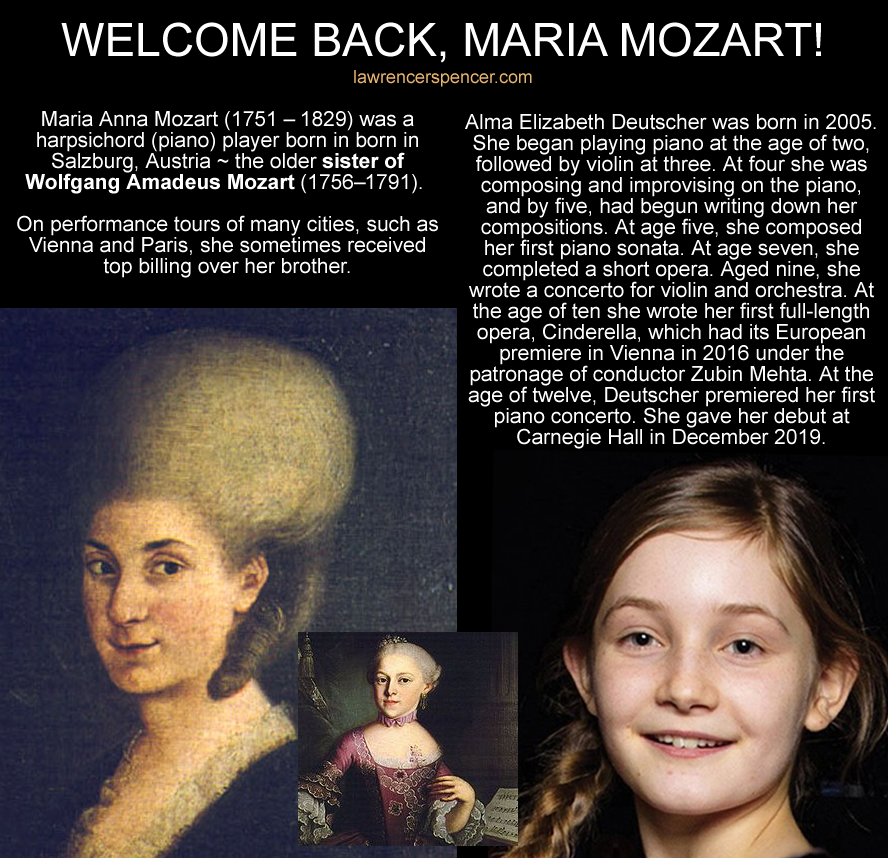
REINCARNATION: THE PROOF ~ Maria Mozart and Alma Deutscher

Republished by Blog Post Promoter

Alma Deutsher was born in 2005. At the date of this video performance of her OWN COMPOSITION she was ELEVEN YEARS OLD…. I don’t think there is any doubt that she is the reincarnation of the sister of Wolfgang Amadeus Mozart.  Read more about her amazing musical career….  https://en.wikipedia.org/wiki/Alma_Deutscher


IMPOSTERS

Republished by Blog Post Promoter

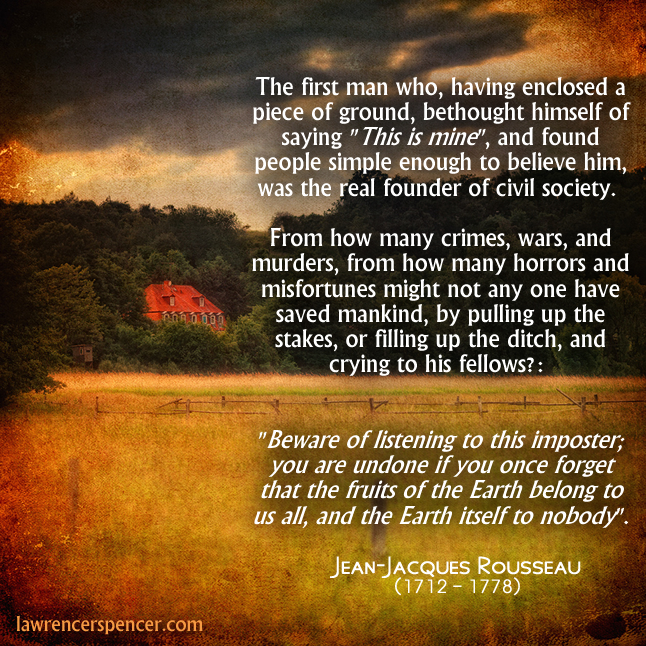
“The first man who, having enclosed a piece of ground, bethought himself of saying “This is mine”, and found people simple enough to believe him, was the real founder of civil society.
From how many crimes, wars, and murders, from how many horrors and misfortunes might not any one have saved mankind, by pulling up the stakes, or filling up the ditch, and crying to his fellows?: 
“Beware of listening to this imposter; you are undone if you once forget that the fruits of the Earth belong to us all, and the Earth itself to nobody”.

Jean-Jacques Rousseau (June 28, 1712 – July 2, 1778)  was a Franco-Swiss philosopher of Enlightenment whose political ideas influenced the French Revolution.

MORE QUOTES from Rousseau:

“A country cannot subsist well without liberty, nor liberty without virtue. ”

“Virtue is a state of war, and to live in it means one always has some battle to wage against oneself.”

“Men, be kind to your fellow-men; this is your first duty, kind to every age and station, kind to all that is not foreign to humanity. What wisdom can you find that is greater than kindness?”

Read more about Rousseau —  http://en.wikiquote.org/wiki/Jean-Jacques_Rousseau

SILENCE ABOUT TRUTH

Republished by Blog Post Promoter

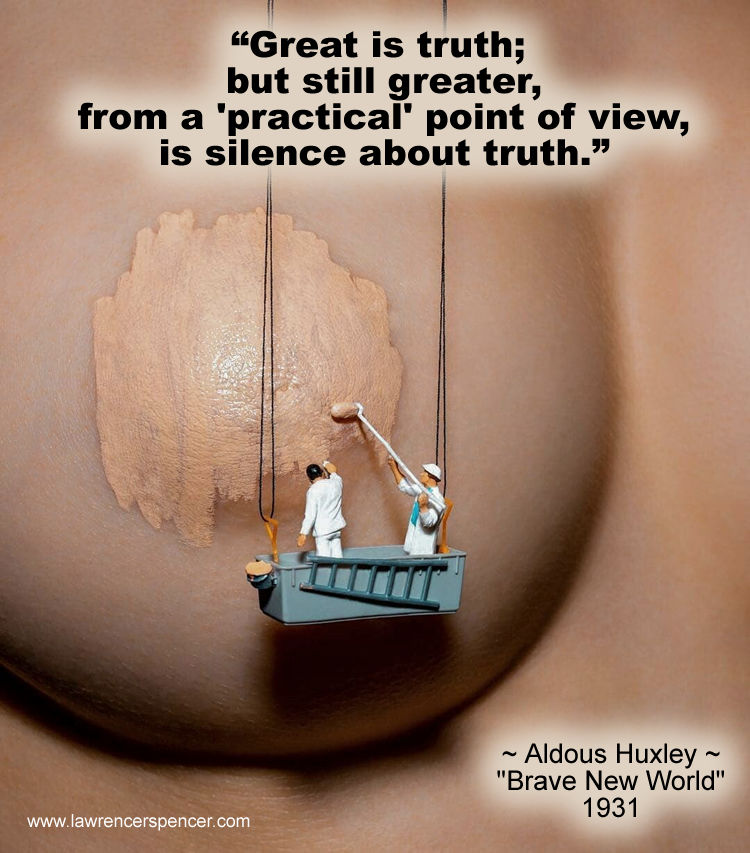
Brave New World is a dystopian novel written in 1931 by English author Aldous Huxley, and published in 1932. Largely set in a futuristic World State of genetically modified citizens and an intelligence-based social hierarchy, the novel anticipates huge scientific developments in reproductive technology, sleep-learning, psychological manipulation, and classical conditioning that are combined to make a utopian society. Huxley followed this book with a reassessment in an essay, Brave New World Revisited (1958), and with Island (1962), his final novel.

PLOT — The novel opens in the World State city of London in AF (After Ford) 632 (AD 2540 in the Gregorian calendar), where citizens are engineered through artificial wombs and childhood indoctrination programmes into predetermined classes (or castes) based on intelligence and labour. Lenina Crowne, a hatchery worker, is popular and sexually desirable, but Bernard Marx, a psychologist, is not. He is shorter in stature than the average member of his high caste, which gives him an inferiority complex. His work with sleep-learning allows him to understand, and disapprove of, his society’s methods of keeping its citizens peaceful, which includes their constant consumption of a soothing, happiness-producing drug called soma. Courting disaster, Bernard is vocal and arrogant about his criticisms, and his boss contemplates exiling him to Iceland because of his nonconformity. His only friend is Helmholtz Watson, a gifted writer who finds it difficult to use his talents creatively in their pain-free society.

Bernard takes a holiday with Lenina outside the World State to a Savage Reservation in New Mexico, in which the two observe natural-born people, disease, the aging process, other languages, and religious lifestyles for the first time. (The culture of the village folk resembles the contemporary Native American groups of the region, descendants of the Anasazi, including the Puebloan peoples of Acoma, Laguna and Zuni.) Bernard and Lenina witness a violent public ritual and then encounter Linda, a woman originally from the World State who is living on the reservation with her son John, now a young man. She, too, visited the reservation on a holiday many years ago, but became separated from her group and was left behind. She had meanwhile become pregnant by a fellow-holidaymaker (who is revealed to be Bernard’s boss, the Director of Hatcheries and Conditioning). She did not try to return to the World State, because of her shame at her pregnancy. Despite spending his whole life in the reservation, John has never been accepted by the villagers, and his and Linda’s lives have been hard and unpleasant. Linda has taught John to read, although from the only two books in her possession — a scientific manual and the complete works of Shakespeare. Ostracised by the villagers, John is able to articulate his feelings only in terms of Shakespearean drama, especially the tragedies of Othello, Romeo and Juliet and Hamlet. Linda now wants to return to London, and John, too, wants to see this “brave new world”. Bernard sees an opportunity to thwart plans to exile him, and gets permission to take Linda and John back. On their return to London, John meets the Director and calls him his “father”, a vulgarity which causes a roar of laughter. The humiliated Director resigns in shame before he can follow through with exiling Bernard.

Bernard, as “custodian” of the “savage” John who is now treated as a celebrity, is fawned on by the highest members of society and revels in attention he once scorned. Bernard’s popularity is fleeting, though, and he becomes envious that John only really bonds with the literary-minded Helmholtz. Considered hideous and friendless, Linda spends all her time using soma, while John refuses to attend social events organised by Bernard, appalled by what he perceives to be an empty society. Lenina and John are physically attracted to each other, but John’s view of courtship and romance, based on Shakespeare’s writings, is utterly incompatible with Lenina’s freewheeling attitude to sex. She tries to seduce him, but he attacks her, before suddenly being informed that his mother is on her deathbed. He rushes to Linda’s bedside, causing a scandal, as this is not the “correct” attitude to death. Some children who enter the ward for “death-conditioning” come across as disrespectful to John until he attacks one physically. He then tries to break up a distribution of soma to a lower-caste group, telling them that he is freeing them. Helmholtz and Bernard rush in to stop the ensuing riot, which the police quell by spraying soma vapor into the crowd.

Bernard, Helmholtz, and John are all brought before Mustapha Mond, the “Resident World Controller for Western Europe”, who tells Bernard and Helmholtz that they are to be exiled to islands for antisocial activity. Bernard pleads for a second chance, but Helmholtz welcomes the opportunity to be a true individual, and chooses the Falkland Islands as his destination, believing that their bad weather will inspire his writing. Mond tells Bernard that exile is actually a reward. The islands are full of the most interesting people in the world, individuals who did not fit into the social model of the World State. Mond outlines for John the events that led to the present society and his arguments for a caste system and social control. John rejects Mond’s arguments, and Mond sums up John’s views by claiming that John demands “the right to be unhappy”. John asks if he may go to the islands as well, but Mond refuses, saying he wishes to see what happens to John next.

Jaded with his new life, John moves to an abandoned hilltop tower, near the village of Puttenham, where he intends to adopt a solitary ascetic lifestyle in order to purify himself of civilization, practising self-flagellation. This soon draws reporters and eventually hundreds of amazed sightseers, hoping to witness his bizarre behaviour; one of them is implied to be Lenina. At the sight of the woman he both adores and loathes, John attacks her with his whip. The onlookers are wildly aroused by the display and John is caught up in the crowd’s soma-fueled frenzy. The next morning, he remembers the previous night’s events and is stricken with remorse. Onlookers and journalists who arrive that evening discover John dead, having hanged himself.

READ MORE:   https://en.wikipedia.org/wiki/Brave_New_World