Republished by Blog Post Promoter
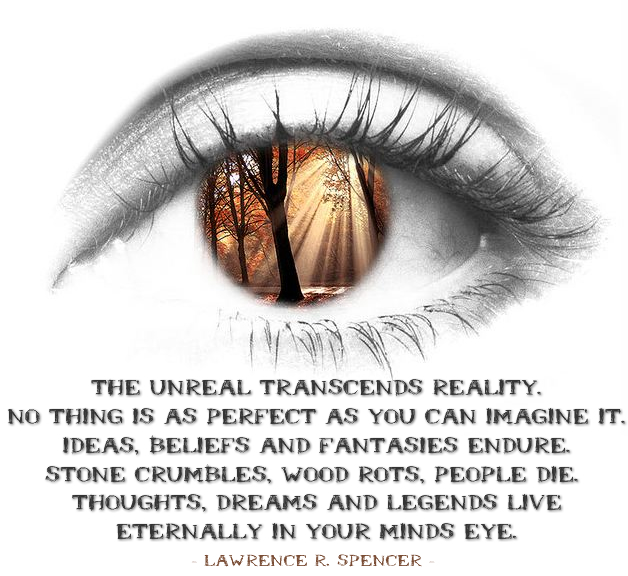

Universes are comprised of thoughts, ideas, dreams, illusions, delusions, which may also include stars, space, time, energy and objects. Or not. These are the universes of the author Lawrence R. Spencer, and others for whom he has an affinity.
Republished by Blog Post Promoter
Republished by Blog Post Promoter
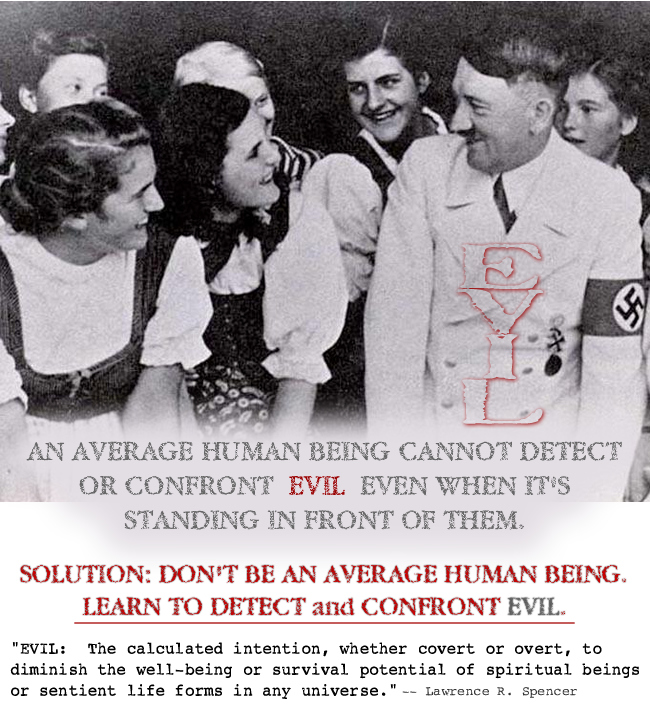 In retrospect it is obvious that Pope Pope Alexander VI (90 million Native Americans killed), Moa Zedong, (60 million killed), Joseph Stalin, (40 million killed), Adolph Hitler (30 million killed) and Genghis Khan (10 million killed) were psychopathic mass-murdering thieves. In the present age the mass-murdering thieves wear 3-piece suits and ties. They are Banksters and Politicians and Priests of Western “civilization”.
One of the greatest weaknesses and sources of stupidity for any human being is the inability to detect and confront “evil”. Up close, they may appear to be “friendly” or “benevolent”. They disguise themselves as “leaders” and “public servants”. In nature, for example, a gazelle in Africa is always wary and on the alert for lions or Chitas lurking in the bush, ready to spring on them and EAT them! Human being do not seem to possess the basic survival instinct or awareness that PREDATORS, such as BANKERS, POLITICIANS, PRIESTS AND WAR MONGERS, are lurking all around them. Viscous psychopathic, mass-murdering human beings are no different that Lions and Chitas! They NEED YOU for their FOOD! They need your energy, your work, your body, our support, you money and your fear and your total obedience in order to survive. Just because these vultures are “disguised in human bodies” does not mean they are not predators!
If you feel oppressed, burdened and overwhelmed by taxes, lies, the 5 o’clock news, corporate propaganda, etc., then you need to start looking for EVIL in your life. If you want to survive, you must detect, avoid or destroy the EVIL in your life before it destroys YOU!

Republished by Blog Post Promoter

Republished by Blog Post Promoter
 (painting by Thomas Couture: Romans of the decadence)
It’s hard to argue with the ages old philosophy of hedonism. http://en.wikipedia.org/wiki/Hedonism
We are confronted on Earth with the reality that we are mortal. We inhabit a body of fragile flesh that will die. We live on a Prison Planet. We are surrounded by perpetual pain: death, taxes and with religious and scientific superstitions that ensure our perpetual stupidity. The idea of “freedom” to which we feel entitled as a “natural right” of Caucasian Conquers of the “barbarians” of North America, Africa, the Middle East, etc., has been stolen from us by Rothschild Private Banks who own the private military / police force and politicians they control. We are the “peasants”. We obey, we do the heavy lifting, we do the menial work, we pay taxes, we kill each other on battle fields of perpetual warfare, and we die a certain an eternal death. As spiritual entities we have been given amnesia. We do not remember Who We Really Are, or where we came from, or who brought us to this planet. We are isolated and forgotten on a infinitesimally tiny speck of dust on the fringe of a remote galaxy. We are lost….forever, and ever. So, when faced the the brutal reality of our insignificantly abysmal existence, it seems that the only “logical” option is to “get drunk and screw and party till you die”. (and start all over again when you are reincarnated as a “stinky baby”…..ad infinitum).
noun: hedonism
1) the pursuit of pleasure; sensual self-indulgence.
synonyms: self-indulgence, pleasure-seeking, self-gratification, lotus-eating, sybaritism;
intemperance, immoderation, extravagance, luxury, high living
2) the ethical theory that pleasure (in the sense of the satisfaction of desires) is the highest good and proper aim of human life.
Republished by Blog Post Promoter