Republished by Blog Post Promoter
CHAPTER 3: THE CALABASH CONUNDRUM
The evening of my return from my visit with Dr. Dodgson I was warmly greeted by my companion, Dr. Watson, when he returned after his day spent attending patients at his office. I was looking forward to his return, as I wished to share my experiences and newly learned methodologies with him.
While I related the events of my recent visit with Professor Dodgson, I began searching for my favorite Calabash pipe so that I might enjoy smoking it while visiting with Watson. My discourse gradually deteriorated as my attention was more frantically drawn away from the discussion by my search.
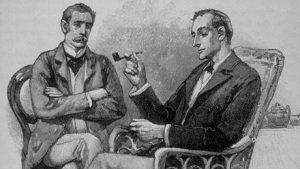 Eventually I paused my narrative altogether as it became evident that the pipe was nowhere to be found in our apartments. I realized that I must have inadvertently left the pipe at the home of Mr. Dodgson, as I had not smoked it during my return trip, or since arriving in London. However, I clearly recalled smoking it while visiting with him which had been only one day hence.
I continued and eventually concluded my discourse upon the various episodes of my visit while smoking a good old briar. Watson was thoroughly interested to learn the outcome of my investigation into the validity, or fallaciousness, of the incident so recently reports about Dodgson in the Times.
I reported my findings to him, with which he seemed to be not the least bit surprised, though understandably irritated at the irresponsibility demonstrated by the press in reporting, as a matter as fact, events that were based solely upon speculation – a habitual reoccurrence which remains so popular with the masses. This sort of sensationalized spittle had become, I regret to observe, a common method to sell newspapers.
The morning following Dr. Watson departed as was his routine, to attend the various ailments of his medical constituency. As it was an unusually bright day, clear for the season in London, I determined to walk to the nearby telegraph office to send a message to Dodgson to inquire about my misplaced Calabash.
My telegram read as follows:
“C. Dodgson, Christ Church, Oxford. Left my Calabash pipe in your quarters on my visit. Please bring same with you on Sunday next to share supper with myself and Dr. Watson. RSVP. Yours, S. Holmes 221B Baker St., London Nw1”
The following day I received confirmation of his intention to dine with us on Sunday:
“S. Holmes, 221B Baker Street, London Nw1. Your Calabash I do possess, will dine with you on Sunday next. C. Dodgson.”
His poetic phrasing on his response was appropriate for a telegram, I thought, delighted to know that my pipe would soon be recovered and that I was to share an enjoyable meeting with my new friend once again. This time, Watson would be in attendance.
In the afternoon of the Sunday following Mr. Dodgson arrived at our flat more than three hours later than I had expected, although not specific time had been set for his arrival. I opened the door myself when I heard his foot upon the stair, anticipating his knock upon the door.
When I opened the door, Mr. Dodgson stood before me. However, he looked at me as though I were a stranger. Then, without acknowledging my cordial greeting and the hand I had extended to shake his, he peered cautiously around the doorway, and with visible astonishment. He did not cross the threshold, but rather vacantly extended a small paper bundle toward me, which I presumed contained my pipe.
“Why, whatever is the matter Charles?”, I said. “You look as though you think someone may be going to attack you! Please, please, come in my friend. I am most pleased to see you again.”
Still hesitating, he looked at me at last and asked me a most peculiar question, which took me quite by surprise.
“Who are you, sir?”, he said.
“Why, you know perfectly well who I am Charles. I am Sherlock Holmes. You have come all the way from Christ Church, at my invitation, to have supper with us and to return the Calabash pipe I left at your quarters when I visited you”, I said with genuine concern for his mental condition. I was sure that some ill had befallen him during his travel. Or, perhaps a seizure, of which he had informed me that he had occasionally suffered.
“Watson!”, I turned and shouted into the apartment. “Come here. Our guest has arrived, but something seems to be amiss with him.
“Don’t worry my friend Dr. Watson is within. He is a medical doctor and will give you any assistance you may need”, I said with cautious concern.
“Holmes?”, he said. “You cannot possible be Sherlock Holmes! You are an obvious imposter, sir! I have just returned from a visit with the creator of the Sherlock Holmes character, Mr. Arthur Doyle, who has a medical practice at 1 Bush Villas in Elm Grove, Southsea.”, he told me. “Therefore, you cannot possibly be a living person and a fictitious character simultaneously!”
I was singularly nonplused and stood back slightly from the threshold of the door in astonishment as this bizarre accusation.
“My dear fellow”, I said, with a growing certainly that the man was suffering a delirium of some sort, “are you quite alright? Please come in. Sit down and let the good doctor have a look at you”.
“I assure you, sir, that I am quite alright. It is you whose behavior is in question here, not mine”, he asserted earnestly. “I ask you again — who are you?”, he demanded to know more emphatically than before.
As he seemed to be quite resolute in this accusation and made no sign of entering into the apartment I stepped forward on to the landing, beckoning Watson to follow me.
“Mr. Doyle is an author of some considerable renown”, continued Dr. Dodgson, insistently. “He explained to me that he created the character of the fictional detective, Sherlock Holmes, whom he modeled after a one of his former university professors, a Mr. Joseph Bell. Therefore, whoever you are, you are most certainly none other than a man who has presumed to capitalize upon the fictional figure of Sherlock Holmes by taking up residence at the very address in London attributed to be the fictitious address of the protagonist of his stories!”, he said with discernable agitation.
Without allowing me to respond he continued with his deluded accusations becoming increasing more agitated all the while.
“When you visited me at Christ Church, I was certain that you were Author Doyle himself, playing a mischievous prank on me. I immediately credited that he was acting out a characterization of the person of a fictional character from one of his own stories as a method of bringing greater authenticity to his writing. This I assumed, because no other logical explanation could possibly present itself. However, when I received your telegram, I responded, not to the fictional address on Baker Street, but to Mr. Doyle’s real address 1 Bush Villas in Elm Grove, Southsea.”
“Dr. Doyle immediately responded to me by telegram, explaining that I had been duped by an imposter, and that he, in fact, although he was aware of my writing, had never met me in person. Furthermore, he explained, that to his knowledge, no one of his acquaintance resided at Baker Street. Indeed, he did not realize that a residence existed at this address.
After having received this rather alarming news, I determined to come around myself to investigate.”, he said. “Therefore, sir, I repeat my question to you once again: who are you?”, he concluded indignantly, withdrawing a pace from the threshold. “If I do not receive a satisfactory answer forthwith, I shall summon a constable to assist me in settling the matter!”
I cannot recall an incident in my entire life that was so utterly confounding as this! I was dumbfounded! By this time Dr. Watson was standing beside me, just inside the door, having overheard the majority of the bizarre accusation leveled against me, and indeed Watson as well. Watson, likewise, remained speechless, neither of us knowing what to make of this, or how to respond!
Watson and I glanced at each other, and then back on Mr. Dodgson, who remained impatiently awaiting a response outside the door.
After a few moments of casting about in my mind for a reply that would offer a reasonable resolution to the bizarre situation, I set upon a course that I hoped to expose more light on this mystery.
“This is not an encouraging opening for a conversation.”, I replied. “I hardly know, sir, just at present — at least I know who I was when I got up this morning, but I think I must have been changed several times since then.”, I said, hoping to entice further information from my visitor.
“What do you mean by that?”, said the Mr. Dodgson sternly. “Explain yourself!’
” I am afraid, sir, that I cannot explain myself”, said I “because I am not myself, you see.”
“I do not see,” said Mr. Dodgson.
“I’m afraid I can’t put it to you more clearly,” I replied politely, “for I cannot understand it myself as yet; and being so many different people in a single day is very confusing”, I said stepping slowly away from the entrance as I spoke, and motioning our visitor with my hand to enter.
“However, I am quite certain that in solving a problem of this sort, the grand thing is to be able to reason backward. That is a very useful accomplishment, and a very easy one, but people do not practice it much. In the everyday affairs of life it is more useful to reason forward, and so the other comes to be neglected. There are fifty who can reason synthetically for one who can reason analytically.”, I postulated, hoping that my attempt at applying scientific method to the problem would appeal to the rational sensibilities which Mr. Dodgson so famously possessed.
As I had hoped, Mr. Dodgson become somewhat less agitated than before at this remark. I therefore proceeded with my appeal to his rationality.
“This is indeed a three pipe problem, to be certain.”, I said. “I beg your kind indulgence for a few moments. Can we not discuss the matter over our supper, which our landlady has so sumptuously provided for us within? Surely, there is nothing to be gained by allowing it to be wasted. And we share a common predicament in that neither of us has a solution to the enigma presented by the information you received from Mr. Doyle, nor by his strange accusations, would you not agree?”, I asked.
He looked somewhat less agitated by my logical posturing, but nonetheless, remained unwilling to enter into the apartment.
“Therefore, would you be kind enough to indulge me with answers to a few questions while we eat? We will leave the door standing open, so that you may depart at your discretion, should you deem it necessary”, I said, bowing toward the interior of our apartment while backing away from the door.
“During the interim, let us send to fetch a constable to be sent up who can verify the identities of both myself and Dr. Watson”, I said.
I rang for Mrs. Hudson to have my boy, Wiggins, of the Baker Street Irregulars, sent up. I instructed Mr. Dodgson to dispatch the boy, in his own words, to seek out a constable and request that he immediately be brought to this address. He did so and the Wiggins sped off with a copper in hand for his trouble.
This seemed to reassure Dr. Dodgson, and he advanced tentatively to the door, peering in cautiously to inspect the interior. Seeing that the supper dishes were indeed set upon the table, with bread and butter, he entered cautiously.
“You can be assured that no harm will befall you here, as you and I have already become acquainted during my visit to your home. Regardless of my actual identity, please allow me to repay you for the kindness of returning my pipe, by sitting down to supper with Dr. Watson and myself.”
This seemed to reassure him further. Dr. Watson took his coat and hat from him, as well as the package containing the pipe, as we seated ourselves at the table.
As Mr. Charles Dodgson, a.k.a Lewis Carroll, stepped cautiously into the room, he observed that the trappings of the apartment were unusually kept, even for two bachelors.
A considerable stack of letters were stuck to the center of the mantelpiece by a jack knife, beside which were a line of reference books, and a black and white ivory box. The letters “V.R.” were spelled in bullet holes on the wall opposite an arm chair. A table was used as an acid-charred bench of chemicals and chemistry paraphernalia, as well as for relics saved from various criminal investigations. Scientific charts were pinioned on the wall. Bundles of manuscripts were stacked in every corner which in no way appeared to be saved for burning in the fireplace, beside which a chair stood on either side. A lamp stood next to one of the chairs. There were also a side board and a shelf next to the another chair containing the American Encyclopedia.
Two broad windows overlooked the street. There were two bedrooms — one upstairs, and one downstairs. A large airy sitting room, contained the sofa, or settee, an arm chair, and of course, the table which was set for supper. A pipe rack stood within reach on the right of the sofa. The side board was empty.
On the wall was a framed picture of General Gordon with a corresponding bare space upon the opposite wall. An unframed picture of Henry Ward Beecher hung above the Encyclopedias. My violin case leaned in a corner next to a coal scuttle containing pipes and tobacco.
After several long moments of surveying his surroundings our wary guest said, “Altogether these apartments do certainly look as though they could be those of the eccentric London detective, Sherlock Holmes. Certainly no one would contrive such a much lived-in and abused set of rooms as these merely to perpetrate a hoax. Nonetheless, I will require investigation into this queer situation before I am well satisfied that there is sensible meaning in it!”
“I assure you, my friend”, I replied, “we are of a single accord in that sentiment, would you not agree Watson?”.
“Most assuredly”, he said, in a puzzled tone, “most assuredly”.
“Life is infinitely stranger than anything which the mind of man could invent”, I observed aloud, both for the benefit of myself and my companions.
I summoned Mrs. Hudson once again and requested that she bring up a bottle of brandy while we awaited the arrival of a constable. No sooner had the brandy been brought up and served the constable arrived with the boy sent to fetch him. He trudged up the steps, somewhat tediously, and propped himself against the door frame with his hand to catch his breath.
“What’s this all about Mr. Holmes?”, he asked. “This young lad here came running up the street to tell me you were in need of immediate assistance. What appears to be the trouble?”
“Please come in. It is Constable Barrett, if my memory serves me correctly, is it not?”, I said, extending my arm to show the officer into the room.
“Yes, indeed, Mr. Holmes. I am Constable Barrett. I met you some time ago. I was with Inspector Lestrade when you were summoned to examine that bloody carpet I was guarding at the murder scene. I am sorry to say that I was foolish enough to let someone in, and leave them alone while they moved things in the room, before you arrived. You was the one that told Inspector Lestrade to take me into a the back room to make me confess that I had done it, which he did, quite vigorously, I might add.”
“Yes, indeed, I remember the case well. The Prime Minister, and Mr. Hope, the Secretary of State for European Affairs, came to me regarding the matter of a document stolen from Mr. Hope’s dispatch box”, I replied.
“Indeed. That was the very case. Well, as I was saying, when Inspector Lestrade and I came back, I informed you that the unauthorized visitor was a young woman. She had fainted at the sight of the blood, and I went out to get some brandy to revive her, but she had left before I got back. You showed me a photograph of her that you already had in your possession. I recognize her in the photograph as the same person who had been the visitor.”
“Yes, yes, my good fellow”, I said to the constable, as though to assure him that his oversight in the case had been forgiven.
“The case at hand is a also a matter of identity which you may be able to assist us in resolving. Our visitor here is Mr. Dodgson who has travelled from Oxford to share supper with us this afternoon. Would you kindly do us the courtesy of confirming the identity of myself and Dr. Watson to him?”
Constable Barrett blinked, looked first at me, then at Watson, and finally at Mr. Dodgson.
“Identity, sir? I fear that I do not understand your question”, he said.
“Let me phrase the question more precisely, constable. Can you verify to this gentleman that I am, indeed, Sherlock Holmes, the consulting detective?”.
“Oh, most certainly sir. You can be as certain of that as I am standing here to tell you so, Mr. Dodgson. Mr. Holmes, here, is one of the finest assets we have at Scotland Yard. As I have mentioned, I can attest to his identity and integrity. That is for certain”, he said bowing courteously to Dodgson.
“Have you any further questions to ask of the constable Mr. Dodgson?”, I asked.
Charles Dodgson looked blankly about himself, then around the room, and at the men awaiting his reply. He then arose to go into the bathroom where he examined his own face in the shaving mirror which hung upon the wall. Having satisfied himself as to the reality of his situation he finally replied, unsteadily, “No further questions”.
I thanked the constable for his prompt assistance. He doffed his hat and departed happily. The three of us finally sat down to eat the meal which Mrs. Hudson had so carefully prepared for us. I am quite certain that Mr. Dodgson felt as though he had been invited to attend a tea party not unlike the one at which Alice became tired of being bombarded with riddles, with the exception that he played the part of the March Hare, I was the Mad Hatter, and Mr. Watson was the Dormouse.
__________________________
READ CHAPTER ONE
READ CHAPTER TWO
READ THE ENTIRE BOOK:


 Many a man would have even blazoned such irregularities as I was guilty of; but from the high views that I had set before me, I regarded and hid them with an almost morbid sense of shame. It was thus rather the exacting nature of my aspirations than any particular degradation in my faults, that made me what I was, and, with even a deeper trench than in the majority of men, severed in me those provinces of good and ill which divide and compound man’s dual nature.


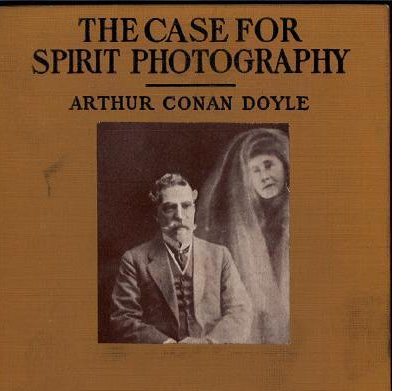 Spiritualism: In Search of Proof of Spirits
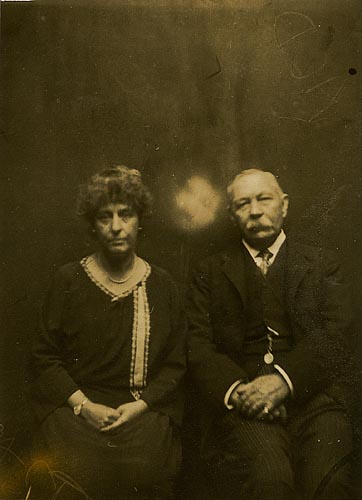 “I hope to make it clear to any unprejudiced mind that there is overwhelming evidence that we have in Mr. Hope, a man endowed with most singular powers, and that, instead of persecuting and misrepresenting him, it would be wiser if we took a sympathetic view of his remarkable work, which has brought consolation to the afflicted, and conviction to many who had lost all belief in the independent life of the spirit.”