Category Archives: POETIC NONSENSE

Poetry by Lawrence R. Spencer. Poetic nonsense by Lawrence R. Spencer and others. Haiku poems by Lawrence R. Spencer.

THE WAY or NO WAY?

Republished by Blog Post Promoter
THE TAO

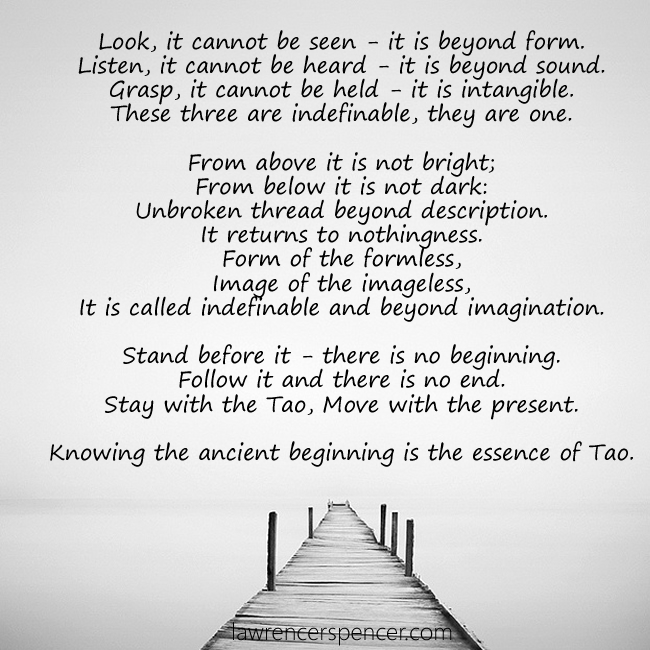
Tao or Dao is a concept signifying ‘way’, ‘path’, ‘route’, or sometimes more loosely, ‘doctrine’ or ‘principle’, or as a verb, speak.  Within these contexts Tao signifies the primordial essence or fundamental nature of existence. Tao is thus “eternally nameless”, or Immortal Spiritual Being, and to be distinguished from the countless ‘named’ things which are considered to be its manifestations, as the space, energy and forms of, and within, the physical universe, and other universes.

The Tao Te ChingDaodejing, or Dao De Jing (道德經: 道 dào “way”; 德  “virtue”; 經 jīng “classic” or “text”) is simply referred to as the Laozi. According to tradition, it was written around 6th century BC by the sage Laozi (or Lao Tzu, “Old Master”), a record-keeper at the Zhou Dynasty court, by whose name the text is known in China. The text’s true authorship and date of composition or compilation are still debated, although the oldest excavated text dates back to the late 4th century BC.

Many different translations, versions and interpretations of The Tao have been produced through the past 2,500 years, or so, since the original appearance.  Like any “religion”, the “opinions” and “interpretations” of “priests” MODIFY and INTRODUCE FALSE IDEAS into the original.  Therefore, I suggest that anyone who wishes to sincerely study The Tao as a body of wisdom, study many difference translations before you decide whether or not any of the many versions of this book point to “the way” or “no way”.  
Here is a link to a website containing many different translations, and COMPARISONS between translations

DOORS OF PERCEPTION

Republished by Blog Post Promoter

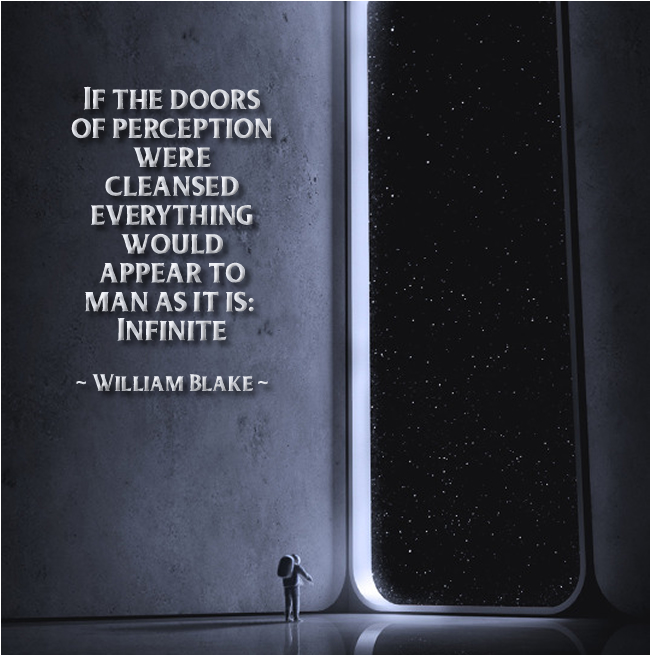
the door of perceptionHuman beings are able to perceive only about one three-hundreds of one percent of the total electromagnetic spectrum on Earth.  Without the blindness imposed by biological bodies, the Beings who animate the body may be able to perceive the entire spectrum of energy, and beyond the finite energy of the physical universe. — LRS

_________________________________

William Blake (28 November 1757 – 12 August 1827) was an English poet, painter, and printmaker. Largely unrecognized during his lifetime, Blake is now considered a seminal figure in the history of the poetry and visual arts.

THE PERFECT MAN

Republished by Blog Post Promoter

Mankind remains virtually unchanged, in essence or fundamental behavior, during the past 2,400 years.  There is a great deal in Aristotle’s description of “the perfect man” to recommend as a path for living now, just as there was during his lifetime ca. 350 B.C.E..

Aristotle (384 BCE — 322 BCE) was a Greek philosopher, a student of Plato and teacher of Alexander the Great. His writings cover many subjects, including physics, metaphysics, poetry, theater, music, logic, rhetoric, linguistics, politics, government, ethics, biology, and zoology. Together with Plato and Socrates (Plato’s teacher), Aristotle is one of the most important founding figures in Western philosophy. Aristotle’s writings were the first to create a comprehensive system of Western philosophy, encompassing morality and aesthetics, logic and science, politics and metaphysics.

LET IT BE PREDETERMINED

Republished by Blog Post Promoter

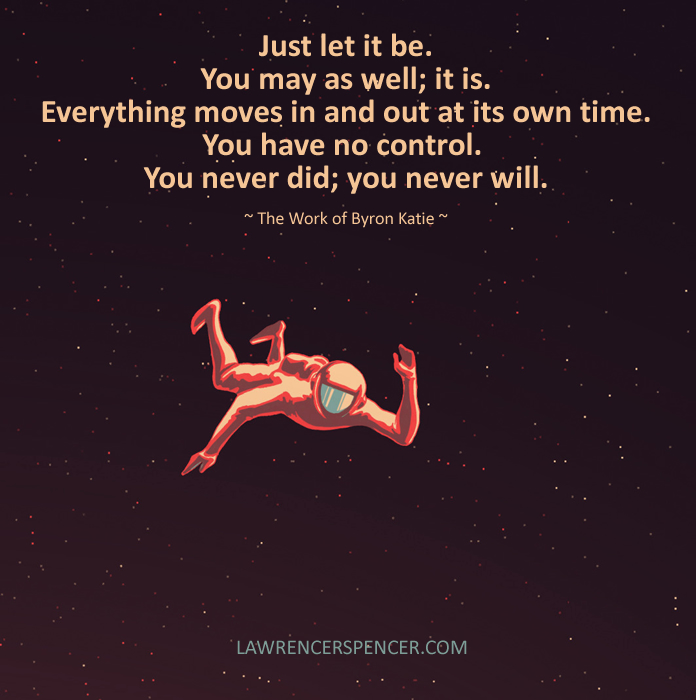
LET IT BEFatalism: noun —  resignation, stoicism, acceptance of the inevitable;

Stoicism: noun — the endurance of pain or hardship without a display of feelings and without complaint.   synonyms: patience, forbearance, resignation, fortitude, endurance, acceptance, tolerance

Predeterminism: nounthe idea that all events are determined in advance.[Predeterminism is the philosophy that all events of history, past, present and future, have been already decided or are already known (by God, fate, or some other force), including human actions.

Predestination; nouna doctrine or theory common to many of the prevalent religions such as Christianity, Islam Buddhism and Hinduism. Some of the features of it apparently seem identical with each other in every religion but the spirit of this concept generally varies in all to cause the bewilderment in the human community as to which of these explanations is based on truth.