Republished by Blog Post Promoter
BEING WHO YOU ARE
IS AN ABILITY
TO CREATE, PERCEIVE AND
MAINTAIN A UNIVERSE
WITHIN YOURSELF.
______________
Lawrence R. Spencer

Poetry by Lawrence R. Spencer. Poetic nonsense by Lawrence R. Spencer and others. Haiku poems by Lawrence R. Spencer.
Republished by Blog Post Promoter
BEING WHO YOU ARE
IS AN ABILITY
TO CREATE, PERCEIVE AND
MAINTAIN A UNIVERSE
WITHIN YOURSELF.
______________
Lawrence R. Spencer
Republished by Blog Post Promoter
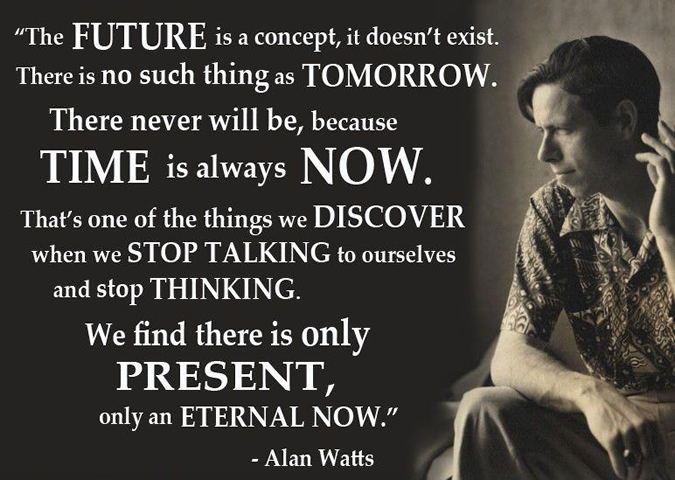
Alan Wilson Watts (6 January 1915 – 16 November 1973) was a British-born philosopher, writer, and speaker, best known as an interpreter and populariser of Eastern philosophy for a Western audience. Born in Chislehurst, he moved to the United States in 1938 and began Zen training in New York. Pursuing a career, he attended Seabury-Western Theological Seminary, where he received a master’s degree in theology. Watts became an Episcopal priest but left the ministry in 1950 and moved to California, where he joined the faculty of the American Academy of Asian Studies.
Living on the West Coast, Watts gained a large following in the San Francisco Bay Area while working as a volunteer programmer at KPFA, a Pacifica Radio station in Berkeley. Watts wrote more than 25 books and articles on subjects important to Eastern and Western religion, introducing the then-burgeoning youth culture to The Way of Zen (1957), one of the first bestselling books on Buddhism. In Psychotherapy East and West (1961), Watts proposed that Buddhism could be thought of as a form of psychotherapy and not a religion. He also explored human consciousness, in the essay “The New Alchemy” (1958), and in the book The Joyous Cosmology (1962).
Republished by Blog Post Promoter

Republished by Blog Post Promoter
 “The Secret of The Thrice-Greatest Hermes (the three parts of the wisdom — alchemy, astrology, and theurgy — is a text purporting to reveal the secret of the primordial No-Thing and its diverse transmutations, passed down to humankind through an entity described as a combination of the Greek messenger of the gods, Hermes, and the Egyptian god Thoth, who guided souls to the afterlife.)
It was revealed in a letter written by the Greek philosopher and teacher, Aristotle to his student, Alexander the Great, who perceived himself as god-like, and yet remained mortal. Aristotle, hoping to pass his own investigation into the Mystery of Mysteries to his student, related this story of his adventures:
“Here is that which the priest Sagijus of Nabulus has dictated concerning the entrance
of Balinas into the hidden chamber… After my entrance into the chamber I came up to an old man sitting on a golden throne. He was holding an emerald tablet in one hand.
And behold the following, engraved in Cyriac, the primordial language of Cyrus The Great, was written thereon: It contains an accurate commentary that cannot be doubted. It states:
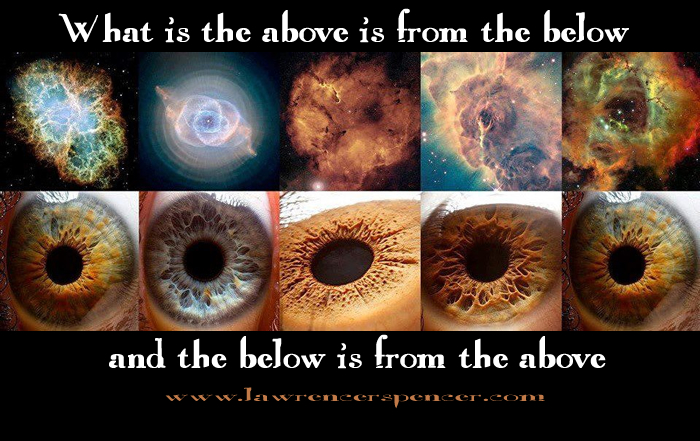
“What is the above is from the below and the below is from the above. The work of Wonders is from The One.”
— from the book MORTALITY MECHANICS MANUAL, by Lawrence R. Spencer

Republished by Blog Post Promoter
Home-made musical instruments have never sounded so good! Leonard Solomon is a master of the one-man-show musical genre. (and a pretty damn good juggler too!)