Category Archives: POETIC NONSENSE

Poetry by Lawrence R. Spencer. Poetic nonsense by Lawrence R. Spencer and others. Haiku poems by Lawrence R. Spencer.

THE OBSOLETE MAN IN THE TWILIGHT ZONE

Republished by Blog Post Promoter

This video is a scene from The Twilight Zone episode “The Obsolete Man“.  It is a commentary on how governments destroy the individual, independent intelligence of writers, and other “revolutionaries” who are a huge percentage of the population of Prison Planet Earth.
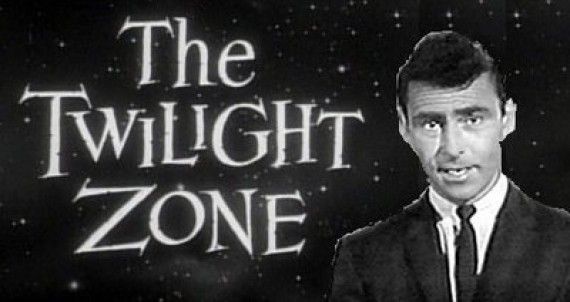
twilight-zone-e1339129166960“There is a fifth dimension beyond that which is known to man. It is a dimension as vast as space and as timeless as infinity. It is the middle ground between light and shadow, between science and superstition, and it lies between the pit of man’s fears and the summit of his knowledge. This is the dimension of imagination. It is an area which we call the Twilight Zone.” ~ Rod Serling (December 25, 1924 – June 28, 1975)

Rod Serling (creator of the 1960’s Sci-Fi TV series “The Twilight Zone“) was a fan of pulp fiction stories. As an adult, he sought topics with themes such as racism, government, war, society, and human nature in general. Serling decided to combine these two interests as a way to broach these subjects on television at a time when such issues were not commonly addressed.

Serling was active in politics, both on and off the screen, and helped form television industry standards. He was known as the “angry young man” of Hollywood, clashing with television executives and sponsors over a wide range of issues including censorship, racism, and war.

Throughout the 1950s, Serling established himself as one of the most popular names in television. He was as famous for writing televised drama as he was for criticizing the medium’s limitations. His most vocal complaints concerned censorship, which was frequently practiced by sponsors and networks.

“I was not permitted to have my senators discuss any current or pressing problem,” he said of his 1957 production ‘The Arena’, intended to be an involving look into contemporary politics. To talk of tariff was to align oneself with the Republicans; to talk of labor was to suggest control by the Democrats. To say a single thing germane to the current political scene was absolutely prohibited.”

The Twilight Zone‍‍ ’​‍s writers frequently used science fiction as a vehicle for social comment, as networks and sponsors who censored controversial material from live dramas were less concerned with seemingly innocuous fantasy and sci-fi stories. Frequent themes on The Twilight Zone included nuclear war, McCarthyism, and mass hysteria, subjects that were avoided on more serious primetime television.  Aside from Rod Serling, who wrote or adapted nearly two-thirds of the series’ total episodes, writers for The Twilight Zone included leading authors such as Charles Beaumont, Ray Bradbury, Earl Hamner, Jr., George Clayton Johnson, Richard Matheson, Reginald Rose, and Jerry Sohl. Many episodes also featured new adaptations of classic stories by such writers as Ambrose Bierce, Jerome Bixby, Damon Knight, John Collier, and Lewis Padgett.
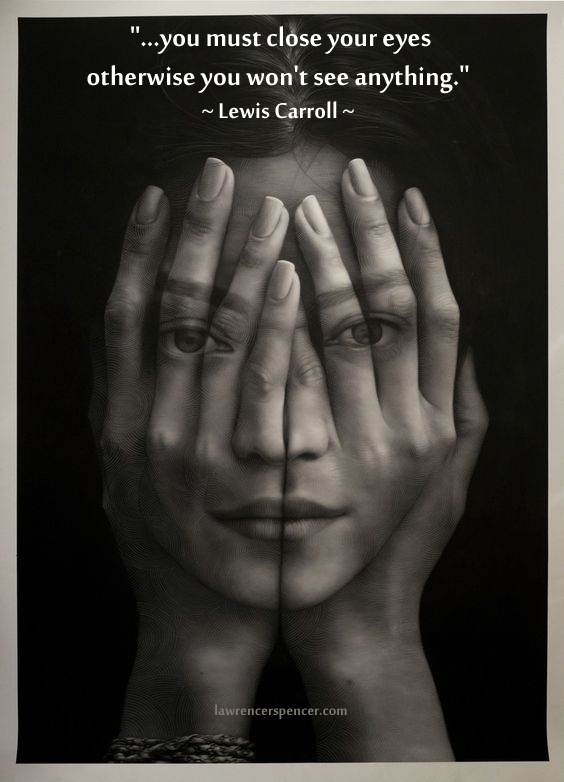
THE OMNISCIENT and OMNIPOTENT MATRIARCH

Republished by Blog Post Promoter

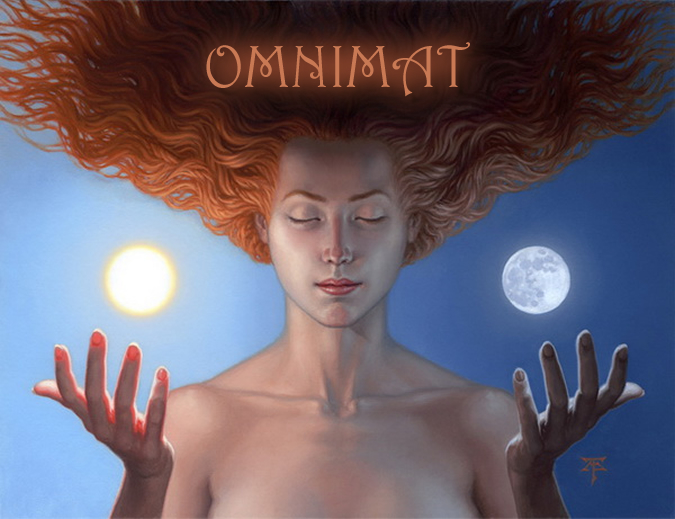
OMNIMAT

” “All-Mother” is a philosophy in which the behavior or conduct of an individual and groups of IS-BEs* is adjudicated based on the logical premise that in order to sustain optimum freedom, order and serenity for all IS-BEs, each IS-BE must serve all IS-BEs.   (*IS-BE = Immortal Spiritual Beings, which includes human beings)

This premise is not intended to eliminate disagreements between IS-BEs, but to mitigate destruction or chaotic behavior between them.

“All-Mother” assures the inherent right of an individual IS-BE to approach, depart from, or not interact, with other IS-BEs while maintaining an optimum serenity.

The purpose of The Domain is to defend the right of an individual or group of IS-BEs to create a universe, or not, at their own discretion.

It has been observed that when responsibility for maintaining organization within the co-created universe shared by all IS-BEs is not defended and preserved, each individual IS-BE is deprived of the freedom assured by the power of a collaborative, creative will and combined power.

The Omniscient and Omnipotent Matriarch (abbrev: Omnimat) is an IS-BE who acts as magistrate of The Domain.

  • Through preeminent power, wisdom and benevolence, Omnimat supervises and enforces the principle of All-Mother within The Domain.
  • Omnimat does not create, destroy or alter universes.
  • Omnimat may, or may not, enforce penalties or restrictions upon IS-BEs when violations of the principle of All-Mother occur within The Domain.
  • The discretion and judgment of Omnimat are inviolate.
  • Omnimat enforces all judgments.

To the degree that IS-BEs of The Domain do not need or desire admiration, and are not compelled to “play” a game at all times, the power, stability and serenity of The Domain remains relatively stable, when compared to the physical universe.

(The physical universe is, by definition, an infinite, icy void cluttered with random sources of savage energy combined with mindless chunks of matter.  The massive and chaotic construction of the physical universe is utterly antipathetic to the spiritual “nothingness” which is the intelligent source of life forms and of universes.)”

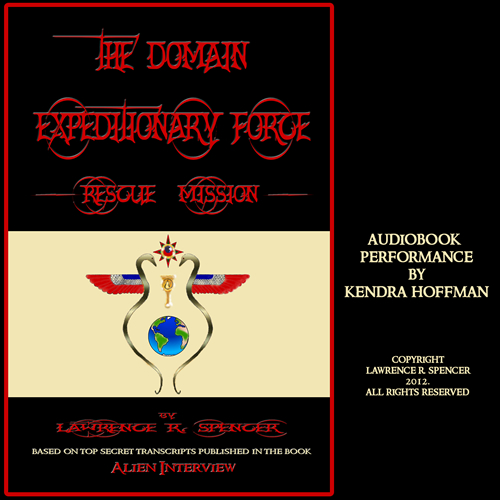
— Excerpt from the book, THE DOMAIN EXPEDITIONARY FORCE RESCUE MISSION, by Lawrence R. Spencer

DEF RESCUE MISSION AUDIOBOOK

LISTEN TO A SAMPLE OF THE NEW AUDIOBOOK

narrated by Kendra Hoffman

Click the LINK ABOVE to go to www.Audible.com and CLICK ON “Sample”

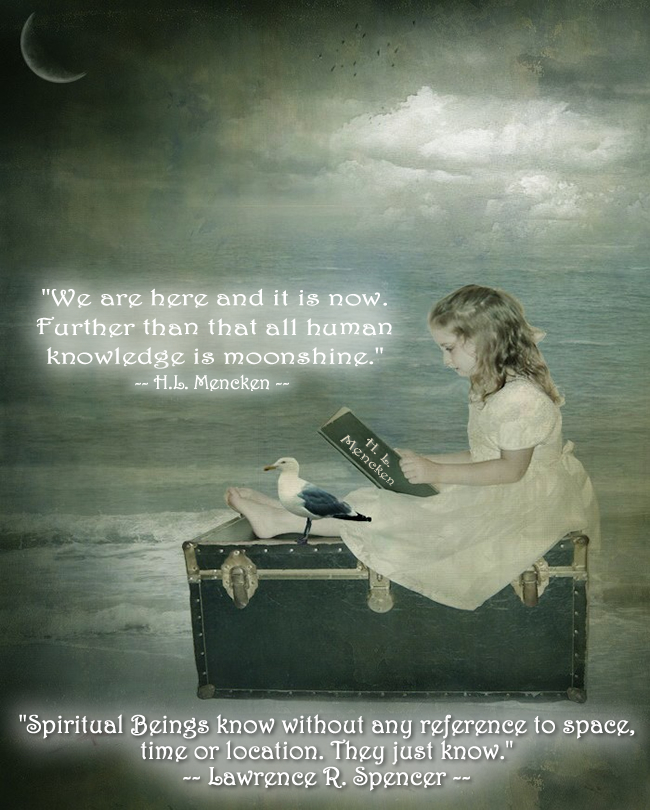
KNOWING MOONSHINE

Republished by Blog Post Promoter

Henry Louis “H. L.” Mencken (September 12, 1880 – January 29, 1956), was an American journalist, essayist, magazine editor, satirist, critic of American life and culture, and a scholar of American English.Mencken is known for writing The American Language, a multi-volume study of how the English language is spoken in the United States, and for his satirical reporting on the Scopes trial, which he dubbed the “Monkey Trial”. He commented widely on the social scene, literature, music, prominent politicians, pseudo-experts, the temperance movement, and uplifters. A keen cheerleader of scientific progress, he was very skeptical of economic theories and particularly critical of anti-intellectualism, bigotry, populism, Fundamentalist Christianity, creationism, organized religion, and the existence of God.

In addition to his literary accomplishments, Mencken was known for his controversial ideas. A frank admirer of Nietzsche, he was not a proponent of representative democracy, which he believed was a system in which inferior men dominated their superiors. During and after World War One, he was sympathetic to the Germans, and was very distrustful of British “propaganda”. However, he overcame his inclination to embrace all things Bavarian, referring to Hitler and his followers as “ignorant thugs”.