I love to listen to audio books! It allows me to “read” a book while doing other things, like driving, walking, shopping, washing dishes, vacuuming the floor, doing the laundry, feeding the cat, working out at the gym, sitting outside on the patio, and other “mindless” activities that require very little attention. I listen to one audio book every week, or more. You can get a very affordable monthly subscription from www.Audible.com. Every month you can download one or more books and listen to them on your phone, iPod, iPad, computer, or MP3 player.
Perceive or constitute the difference in or between.
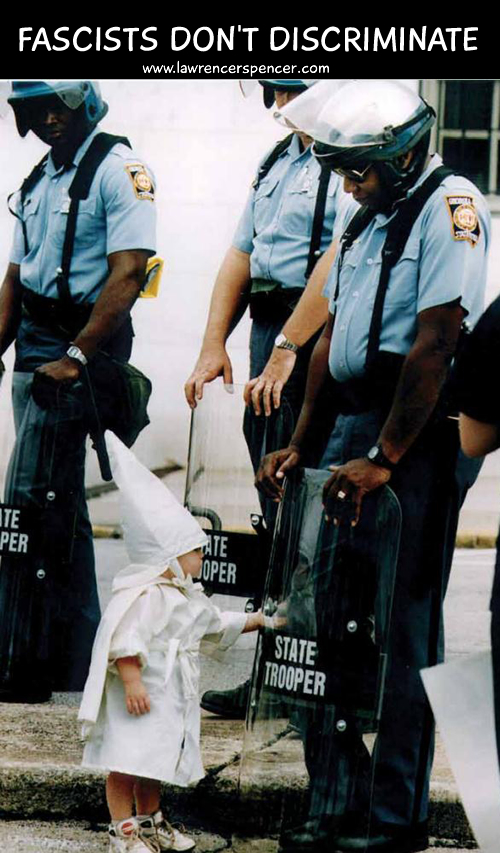
Definition of the word:fascism
1 often capitalized: a political philosophy, movement, or regime (as that of the Fascisti) that exalts nation and often race above the individual and that stands for a centralized autocratic government headed by a dictatorial leader, severe economic and social regimentation, and forcible suppression of opposition
2 : a tendency toward or actual exercise of strong autocratic or dictatorial control <early instances of army fascism and brutality — J. W. Aldridge>
Origin of fascism
Italian fascismo, from fascio bundle, fasces, group, from Latin fascis bundle & fasces fasces
Aldous Huxley – Speech at UC Berkeley, The Ultimate Revolution — 1962.
Aldous Leonard Huxley (26 July 1894 – 22 November 1963)
His brother, Jullian Huxley, was the head of the Rockefeller Eugenics Program, the founder of UNESCO, that later became Agenda 21.
Aldous Huxley author of Brave New World speaking at U.C. Berkeley in 1962. Aldous Huxley uses this speaking opportunity to outline his vision for the ‘ultimate revolution’, a scientific dictatorship where people will be conditioned to enjoy their servitude, and will pose little opposition to the ‘ruling oligarchy’, as he puts it. He also takes a moment to compare his book, “Brave New World,” to George Orwell’s “1984” and considers the technique in the latter too outdated for actual implementation.
“There will be, in the next generation or so, a pharmacological method of making people love their servitude, and producing dictatorship without tears, so to speak, producing a kind of painless concentration camp for entire societies, so that people will in fact have their liberties taken away from them, but will rather enjoy it, because they will be distracted from any desire to rebel by propaganda or brainwashing, or brainwashing enhanced by pharmacological methods. And this seems to be the final revolution.” — Aldous Huxley, Tavistock Group, California Medical School, 1961
Brave New World is a novel written in 1931 by Aldous Huxley and published in 1932. Set in London of AD 2540 (632 A.F. – “After Ford” – in the book), the novel anticipates developments in reproductive technology, sleep-learning, psychological manipulation, and operant conditioning that combine to profoundly change society. Huxley answered this book with a reassessment in an essay, Brave New World Revisited (1958) and with his final work, a novel titled Island (1962).
In 1999, the Modern Library ranked Brave New World fifth on its list of the 100 best English-language novels of the 20th century.