Category Archives: INSIDE THE BOOK

Inside the book, Vermeer: Portraits of A Lifetime. Analysis of all the paintings of Johannes Vermeer. The book reveals for the first time that the women featured in the paintings of Johannes Vermeer were members of his own family, his daughters, his wife and mother-in-law, Maria Thins.

OZ FACTOR # 9: AGREEMENT

Republished by Blog Post Promoter


Wicked Witches of Reality                          The Oz Factors

1/ We’ve Got to Verify It

2/ Are you a good witch?

3/ The Hour Glass

4/ Which way do we go?

5/ She Fell From a Star

6/ The Ruby Slippers

7/ We’re Not In Kansas Anymore

8/ Who’s Them?

                 9/ Doesn’t Anybody Believe Me?

10/ You Ain’t Using Your Head

11/ Over The Rainbow

12/ Seeing Reason

__________________

Doesn’t anybody believe me?“–Dorothy

Of course we believe you, Dorothy…“–Uncle Henry  (from the 1937 film The Wizard of Oz)

Is reality really real?

As Dorothy discovered when she returned back to Kansas, her friends and family did not agree that the Land of Oz was “reality”.

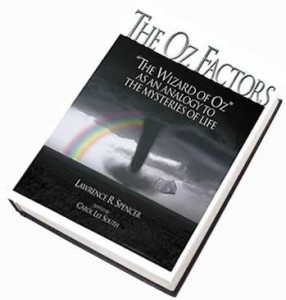
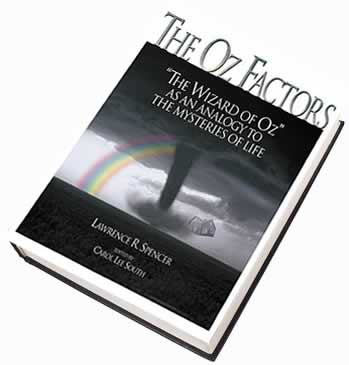
Conversely, gaining agreement from one’s friends does not guarantee that the information agreed upon is true or workable or survival. Agreement is not necessarily reality. Although Man seems to crave agreement with his fellows, the fact that “everyone agrees that the world is flat” or that “the sun revolves around the Earth”, does not make it a reality.The Oz Factors cover

History has shown that agreements among people have very frequently proven to be disastrous.

Example: Adolph Hitler gained the complete, unabated agreement of the majority of the German population before he led them into total self-destruction.

Lots of people agree when fast food franchise advertisements tell them that cheeseburgers, fries and milk shakes are good for them. We were, and still are, told, based on “medical research” that these foods contain nutrients from all the “four basic food groups”. This doesn’t change the fact that you get fat, develop hardened arteries and die an early death from heart disease or cancer if you keep eating cheeseburgers, fries and shakes.

Oz Factors_LULUThe unprecedented multi-billion dollar profit margins earned by the beef and dairy industry and sugar growers in cooperation with the fast food restaurant cartels have a heavy influence on “truth in advertising”. In addition, the quality of information we receive, as consumers, from the American Medical Association regarding “the science of nutrition” is directly influenced by fast food commercial interests.

Only one generation ago the Japanese people were nearly free of heart disease and cancer. In just 20 short years, since they have openly adopted the Standard American Diet (SAD)–cheeseburgers/French fries/milk shakes and liquid caffeine-filled sugar water called cola–the incidence of heart disease and cancer among the Japanese people has skyrocketed. The Japanese agreement with Western lifestyles is killing them.

Reality is often heavily influenced by the Oz Factor of agreement. Agreements influence our perception of reality. A child’s perception of his environment, his religious and political ideas and viewpoints about people are often heavily influenced by agreement with his mother and father.

Support independent publishing: Buy this book on Lulu.

Be cautious with whom you agree. Carefully examine ideas and information before you agree. Just because the preacher says, “sex is evil” or the President says, “I’m not a crook”, does not make it reality.  Be careful about agreeing with Wicked Witches and Wizards who promote unworkable solutions. By your own observation decide what is real in the Physical Universe and in Your Own Universe.  Your reality is based on your agreements.”

— ExcerptED from THE OZ FACTORS, by Lawrence R. Spencer, Edited by Carol South

SHERLOCK HOLMES Personal Memoir Chapter One

Republished by Blog Post Promoter

CHAPTER 1: CHARLES OF CHRIST CHURCH

“When I first arrived in the great city, I had neither kith nor kin in England, and was therefore as free as air — or as free as an income of eleven shillings and sixpence a day will permit a man to be. Under such circumstances I naturally gravitated to London, that great cesspool into which all the loungers and idlers of the Empire are irresistibly drained. There I stayed for some time at a private hotel in the Strand, leading a comfortless, meaningless existence, and spending such money as I had, considerably more freely than I ought.”, I thought to myself.

It was a cold morning of the early spring.  We sat after breakfast upon either side of a cheery fire in the old room at Baker Street. A thick fog rolled down between the lines of dun-colored houses, and the opposing windows loomed like dark, shapeless blurs through the heavy yellow wreaths. Our gas was lit and shone on the white cloth and glimmer of china and metal, for the table had not been cleared yet.

As neither Dr. Watson, or myself, had any other pressing matters before us, and no prospect of employment to enhance either my interest or livelihood, we spent the afternoon perusing the London Times.  I read nothing except the criminal news and the agony column. The latter is always instructive, most particularly in the observation that violence does, in truth, recoil upon the violent, and the schemer falls into the pit which he digs for another.

Our original acquaintance, when I had been lodged on Montague Street, around the corner from the British Museum, was on Saturday, July 16th.  I had spent the day working in the chemical laboratory at St. Bart’s Hospital. In the morning, I complained to a young medical man named Stamford about not being able to find someone to go halves on some nice rooms I had found in Baker Street.

That very afternoon Stamford brought Dr. Watson into the lab to inquire about sharing the rooms. The next day Watson and I went around together to inspect our potential domicile at 221B Baker Street. We made our arrangements then and there with Mrs. Hudson, the landlady.  Watson began moving in that night, and I the next morning, Monday, July 18th.

Dr. Watson represented himself to me as having served as an Assistant Surgeon of the Army Medical Department, which was attached to the 66th Berkshire Regiment of Foot in Afghanistan. He related to me that he was discharged following an injury received in the line of duty during the infamous British defeat at the Battle of Maiwand, in July of the previous year. Watson related that he was nearly killed in the long and arduous retreat from the battle, but was saved by his orderly, Murray, who threw the doctor on a pack-horse and thus helped to ensure his escape from the field.

Watson is strongly built, of a stature either average or slightly above average, with a thick, strong neck, owing to the fact that he was once an athlete, whom, although a Scot who was educated at the University of Edinburgh, played rugby for Blackheath in south-east London.

I spent nearly half an hour lighting and relighting my pipe while Dr. Watson shuffled through the tabloid pages, grunting occasionally at one trivial report or another.

“I was never a very sociable fellow, Watson, always rather fond of moping about in my rooms”, I complained in a melancholy tone.

Watson grunted impassively from behind the unfolded sheets of the newspaper with little regard for anything other than the distraction provided by a river of typographical trivialities many men frequently employ to dull their empathy.  I will admit that I have most certainly included myself amoung their number on numerous occasions.

Apparently the dampness of my environs had affected my personal blend of Latakia and Cavendish tobaccos, which I have relished as a flavor more pleasing than the finest culinary delicacies of Paris for many years.  Ordinarily, the heat retained by the fine meerschaum bowl of my pipe was sufficient to dry the mixture enough to keep it well lit.  In any case, matches are plentiful and cheap. Suitable pipe tobacco is not.

For some years Watson had taken it upon himself to create adventure stories based upon my criminal investigations, which, upon several occasions, he had accompanied me at my request.  Most frequently, I asked for his assistance when the matter at hand presented a feature of menace which may have required fire arms. For this purpose Dr. Watson seemed inevitably prepared, bearing his service revolver in his pocket, should the occasion for the use of it present itself.  Indeed, I presumed without justification, that his military service qualified him as a proven marksman, though, in point of fact, as an assistance surgeon, he had never fired a gun in defense of his country or himself.

My review of his written accounts of our adventures did not meet with my satisfaction upon any occasion. After reading a few of them I chose to ignore them more frequently than not, demurring of his insistence upon sensationalizing the science of logic and observation which were the only features of my investigations worthy of note, in my own opinion.

I had been silent all the morning, dipping continuously into the advertisement columns of a succession of papers in search of items of professional interest.  Having reflected upon the subject of his scribbling  as I researched the morning papers, with fruitless result, I emerged in no very sweet temper to lecture him upon his literary shortcomings.

“To the man who loves art for its own sake”, I remarked, tossing aside the advertisement sheet of the Daily Telegraph, “it is frequently in its least important and lowliest manifestations that the keenest pleasure is to be derived. It is pleasant to me to observe, Watson, that you have so far grasped this truth that in these little records of my cases which you have been good enough to draw up, and, I am bound to say, occasionally to embellish, you have given prominence not so much to the many causes celebres and sensational trials in which I have figured but rather to those incidents which may have been trivial in themselves, but which have given room for those faculties of deduction and of logical synthesis which I have made my special province.”

“And yet,” said Watson smiling, “I cannot quite hold myself absolved from the charge of sensationalism which has been urged against my records.”

I took up a glowing cinder from the fireplace with tongs and lighted with it my long cherry-wood pipe. I smoked this when I was inclined to a cooler and sweeter smoke than that provided by my briar pipes.

“You have erred in attempting to put color and life into each of your statements instead of confining yourself to the task of placing upon record that severe reasoning from cause to effect which is really the only notable feature about the thing”, I said, puffing ringlets of smoke into the air which merged and gently dissipated upon the ceiling.

“It seems to me that I have done you full justice in the matter,” Watson remarked with some coldness.

“It is not a matter of selfishness or conceit” said I, answering, as was my wont, to his thoughts rather than his words. “If I claim full justice for my art, it is because it is an impersonal thing — a thing beyond myself. Crime is common. Logic is rare. Therefore it is upon the logic rather than upon the crime that you should dwell. You have degraded what should have been a course of lectures into a series of adventure tales.”

“At the same time,” I remarked after a pause, during which I had sat puffing at my pipe and gazing down into the fire, “you can hardly be open to a charge of sensationalism, for out of these cases which you have been so kind as to interest yourself in, a fair proportion do not treat of crime, in its legal sense, at all. The small matter in which I endeavored to help the King of Bohemia, the singular experience of Miss Mary Sutherland, the problem connected with the man with the twisted lip, and the incident of the noble bachelor, were all matters which are outside the pale of the law. But in avoiding the sensational, I fear that you may have bordered on the trivial.”

“The end may have been so,” he answered, “but the methods I hold to have been novel and of interest.”

“Pshaw. My dear fellow, what do the public, the great unobservant public, who could hardly tell a weaver by his tooth or a compositor by his left thumb, care about the finer shades of analysis and deduction?!  But, indeed, if you are trivial I cannot blame you, for the days of the great cases are past”, I said with an earnestly disheartened conviction.

“Man, or at least criminal man, has lost all enterprise and originality. As to my own little practice, it seems to be degenerating into an agency for recovering lost lead pencils and giving advice to young ladies from boarding-schools. I think that I have touched bottom at last.”, I said in a black, disgruntled mood.

For some considerable time we sat wrapped in silence.  I contemplated the flickering embers of the fire, intrigued by the inexplicable, spontaneous conversion of matter into energy for which no reasonable explanation had ever been offered by any of the great minds of science or philosophy.

Watson continued rattling and shuffling through a pile of papers which I had already discarded with overwhelming disinterest.  There was seldom much of any interest to me in the press, unless it reported upon some incident or situation which offered a game of investigation to me.

After some little while, Watson reported to me that he had chanced upon a curious article concerning the mysterious disappearance of a young girl.

“Have you already read it?”, he inquired.

“No, I cannot say that I recall it.  If there is a feature about it that strikes you as being of singular interest, perhaps you will be kind enough to share it with me”, I said.

According to the report, he summarized, a female child of about ten years was reported missing for several hours by her two siblings and a professor of mathematics, currently at Oxford, while enjoying a Sunday outing along the river Thames.  The girls, when interviewed, stated that their sister, Alice Liddell, had been chasing a white rabbit, and had apparently followed it down a rabbit hole and disappeared beneath an enormous elm tree!  The child remained missing for several hours.

Watson read the section of the report which specified certain details of the case he thought I might find relevant, as follows:

“April 19th. The Reverend Charles Lutwidge Dodgson and the Reverend Robinson Duckworth rowed in a boat up the River Thames with three young girls: Lorina Charlotte Liddell (aged 13), Alice Pleasance Liddell (aged 10)and Edith Mary Liddell (aged 8). The three girls are the daughters of Henry George Liddell, the Vice-Chancellor of Oxford University and Dean of Christ Church as well as headmaster of Westminster School. The journey had started at Godstow, a hamlet on the River Thames northwest of the centre of Oxford.”

“Naturally”, Watson said, paraphrasing the report, “the family of the child, upon news of the incident, were highly distressed.  The professor in question, a Mr. Dodgson, has not been detained by authorities, but several unnamed persons have asserted suspicion of pedophilia against this man!”  Watson paused as he completed reading the remaining portion of the article.

“How very curious”, he remarked, placing the paper next to his chair, and pulling out his own smoking pipe, tobacco and tools. “The siblings of the child insist that all parties involved are entirely innocent.  They assert that their sister is at fault for chasing a strange rabbit.  Indeed, they claimed that the rabbit was wearing a waistcoat, and examining a pocket watch when they last saw it!

Furthermore, the child in question, Alice, when questioned by the press, stated emphatically that much ado was being made of nothing, and that the entire incident was merely a story conjured by Mr. Dodgson as an innocent amusement!  Certainly, the entire matter is nothing more than a sensational hoax, perpetrated by the Times editor as an attraction to gullible persons to read the paper. Typical behavior of the press!  Reprehensible, I should say” , he concluded.

I pondered and smoked over the matter for several moments, mesmerized by droplets of rain streaming down the panes of glass which faced westward from my upstairs rooms at 221 B Baker Street.

“Certainly”, I observed to Watson, “this report demonstrates that the magistrates investigating the case are mentally incompetent.  The family, powerless to press charges in the matter, as there is no evidence of foul play, and no harm having been done, are powerless to prosecute.”

Nevertheless, I seized upon this peculiar report as an opportunity to busy myself with a new investigation. My curiosity pressed me to make an inquiry with the constabulary under whose jurisdiction the matter had been attended.

However, before turning to those moral and mental aspects of the matter which present the greatest difficulties, I reminded myself, the inquirer must begin by mastering more elementary problems.  After all, it is a capital mistake to theorize before you have all the evidence.  It biases the judgment.  To that end I posted a telegram that very afternoon to the constabulary at Oxford to whom I was known personally through our cooperation upon several cases in that area.

The following morning I received a reply from which I discovered that Mr. Dodgson was a bachelor Anglican clergyman.  Moreover, and most importantly, a comfortable livelihood was provided him through his talent as a mathematician, which had won him the Christ Church Mathematical Lectureship.

No formal charges had been filed against Mr. Dodgson or Reverend Robinson Duckworth by the girl’s father, the Vice-Chancellor. However, the telegram implied that the inferred scandal of sexual indiscretion fomented by the newspaper report remained a topic of discussion upon the campuses of the university as well as in the community at large, and had alerted the constabulary to maintain an informal interest in the matter.

Contrasted with this supplemental information, the scandalous implications regarding his behavior, as described in the Times report, were becoming more intriguing to me by the moment!  The most singular feature of the case, for me, was not the possibility of indiscretion but rather that no further mention whatever had been made of the rabbit!

Having no further information available to me, and disdaining contact with the press, as was my usual practice, I determined that my most effective method of investigation was to go around to visit professor Dodgson at his offices at Christ Church.

As for the matter of Mr. Dodgson’s integrity, rather than assuming that an impropriety might have occurred, it seemed more likely to me that his ignorance was as remarkable as his knowledge. As a mathematician he is undoubtedly astute, given his position as a professor. However, an unmarried man of his position should most certainly understand that his culpability for the temporary disappearance of this child placed him at the greatest risk socially!  The penchant for society to persecute such a person, even a clergyman, in the absence of evidence of his innocence, is certainly a matter of gravity, if not sensibility.

I might easily have dismissed the matter entirely if it were not for an abiding curiosity on my part to reconcile the singular incongruities in the report. How could a young girl, and not her siblings, disappear down a rabbit hole for several hours, having been observed, reportedly, in pursuit of a rabbit wearing a waistcoat and possessing a pocket watch?  Further, why would the children assert that the incident was merely a story conjured by Mr. Dodgson for their amusement, when the adults in attendance at the scene treated the matter with so much earnestness that the police and press were summoned?

— END OF CHAPTER ONE —

To Continue reading “Sherlock Holmes: My Life”,  click here to go to the site of the publisher to order or download a copy of the book

Support independent publishing: Buy this book on Lulu.

Read Chapter Two here:  https://lawrencerspencer.com/2011/01/22/sherlock-holmes-my-life-chapter-two/

J.P. MORGAN: MURDERER, COWARD, THIEF, FEDERAL RESERVE BANKER

Republished by Blog Post Promoter

JP Morgan: Thief, murderer, cowardTHE SINKING OF THE TITANIC (OWNED BY J.P. MORGAN) WAS THE TIP OF THE ICEBERG.  THE TITANIC SINKING EXECUTED 4 OF  THE GREATEST CRIMINAL PLOTS IN HISTORY — ALL AT THE SAME TIME!

1) HE MURDERED ALL OF HIS BUSINESS COMPETITION AT THE SAME TIME — THE 3 WEALTHIEST MEN IN THE WORLD — ALL OF WHOM OPPOSED THE FEDERAL RESERVE ACT THAT WOULD GIVE MORGAN CONTROL OF THE ENTIRE MONEY SUPPLY OF THE UNITED STATES.

2) SQUASHED THE INVENTION OF “FREE ENERGY” BY NICOLA TESLA ENSURING MORGAN CONTROL OF ELECTRICITY REVENUE FOREVER.

3) GUARANTEED THE PASSAGE OF THE “FEDERAL RESERVE ACT” TO ESTABLISH HIS PRIVATE BANK AND CONTROL ALL OF THE GOLD, MONEY SUPPLY AND PROPERTY OF THE UNITED STATES.

4) SAVE HIS ‘WHITE STAR’ SHIP LINE FROM BANKRUPTCY BY COLLECTING A FRAUDULENT INSURANCE PAYMENT ON THE TITANIC.

PHOTO RIGHT — 1st Row: JP Morgan, Joseph Bruce Ismay, John Jacob Astor and Benjamin Guggenheim. 2nd Row: The Federal Reserve and the TitanicAs youngsters, we’re all told the infamous story of the Titanic, the supposedly indestructible ship that sunk on its maiden voyage. We’re all familiar with the story: the ship left Southampton, England, headed for New York City on April 10, 1912.

Four days into the voyage, at 11:40pm on April 14, 1912, the Titanic struck an iceberg and sank at 2:20am, “resulting in the deaths of 1,517 people in one of the deadliest peacetime maritime disasters in history [12].”

Bad luck, we’re all led to believe. No one saw the iceberg and so the infallible ship sank. Bummer…

But few of us ever think that through. Forget, for a moment, the story we’re all fed. Does it make sense? My point is that just because we’re told a story when we’re young, doesn’t mean we should simply accept it as absolute truth.

Let’s take a look at some of the facts surrounding the sinking of the Titanic:

As youngsters, we’re all told the infamous story of the Titanic, the supposedly indestructible ship that sunk on its maiden voyage. We’re all familiar with the story: the ship left Southampton, England, headed for New York City on April 10, 1912. Four days into the voyage, at 11:40pm on April 14, 1912, the Titanic struck an iceberg and sank at 2:20am, “resulting in the deaths of 1,517 people in one of the deadliest peacetime maritime disasters in history [12].”

Bad luck, we’re all led to believe. No one saw the iceberg and so the infallible ship sank. Bummer…

But few of us ever think that through. Forget, for a moment, the story we’re all fed. Does it make sense? My point is that just because we’re told a story when we’re young, doesn’t mean we should simply accept it as absolute truth.

Let’s take a look at some of the facts surrounding the sinking of the Titanic:

1. The unsinkable Titanic sunk…on its maiden voyage. How could this unsinkable ship sink? On its first trip, no less! That alone is quite remarkable/intriguing.

2. “Captain E.J. Smith ignored multiple iceberg warnings from his crew and other ships.” Getting from England to New York as fast as possible was goal number one, at the behest of his boss, Joseph Bruce Ismay, Managing Director of the White Star Line. Ismay had pressure from his boss, J.P. Morgan, owner of White Star Line [3]. By the way, Ismay survived the catastrophe.

3. Speaking of J.P. Morgan, he had his very own private suite and promenade deck on the Titanic. He was supposed to be on that fateful maiden voyage but canceled passage [8]. Coincidence or part of Morgan’s plan?

4. Once the Titanic struck the iceberg, the captain and his crew used white flares to signal distress. Unfortunately,white flares are not the color used to signal distress; red flares are always used to show distress. So the closest ship, the Californian, ignored the flares, assuming it was a celebratory signal, rather than an emergency [7]. Oops…

5. “All ships must carry sufficient lifeboats for the number of passengers on board. The Titanic did not [7].”

6. “About three million rivets were used to hold the sections of the Titanic together. Some rivets have been recovered from the wreck and analysed. The findings show that they were made of sub-standard iron. When the ship hit the iceberg, the force of the impact caused the heads of the rivets to break and the sections of the Titanic to come apart. If quality iron rivets had been used, the ship may not have sunk [7].”

7. “The belief that the ship was unsinkable was, in part, due to the fact that the Titanic had sixteen watertight compartments. However, the compartments did not reach as high as they should have. White Star Line did not want them to go all the way up because this would have reduced living space in first class [7].”

8. Killed on the sinking ship — along with 1,514 other people — were Benjamin Guggenheim, Isa Strauss and John Jacob Astor. Astor was, at the time, believed to be the wealthiest man on the planet. Guggenheim and Strauss weren’t far behind Astor. And these three powerful men opposed the Federal Reserve.

(PHOTO LEFT)  An angry JP Morgan yelling at photographers. He hated having his picture taken.As an aside to the above facts, let’s take a look at an additional dimension to the dynamic between J.P. Morgan and John Jacob Astor. Both Morgan and Astor invested large sums of money in the brilliance of Nikola Tesla, a genius inventor who gained notoriety during the late 19th/early 20th century. Morgan’s primary concern with Tesla was making money. Astor and Tesla, however, were good friends [9].

Col. John Jacob Astor, owner of the Waldorf-Astoria, held his famous dining-room guest [Tesla] in the highest esteem as a personal friend, and kept in close touch with the progress of his investigations. When he heard that his researches were being halted through lack of funds, he made available to Tesla the $30,000 he needed in order to take advantage of Curtis’ offer and build a temporary plant at Colorado Springs[11].”

So what was the big deal about Tesla? Well, “Tesla had claimed to be able to send electrical energy without wires before the turn of the century, and he envisioned people all around the globe sticking rods into the earth to extract that energy — free …. After Tesla admitted to financier J.P. Morgan that an experimental tower on Long Island was meant to send power as well as message, his public career ended …. Corporate moguls who were interested in creating monopolies and metering electrical power blackballed him [10].”

Now let’s take a look at a few of the above facts that, when taken together, may paint quite a different picture of the tragedy of the Titanic:

1. J.P. Morgan owned White Star Line ships. J.P. Morgan was also the main conspirator behind the creation of the Federal reserve banking system. He was supposed to be on the ship but canceled at the last moment.

2. John Jacob Astor, along with Benjamin Guggenheim and Isa Strauss, were three very wealthy and powerful men, all of whom were vehemently against the creation of the Federal Reserve, and were quite outspoken on the matter. Morgan viewed Astor and Co. as a huge obstacle. These three men died when the Titanic — a ship built by J.P. Morgan’s White Star Line — hit that infamous iceberg and sank.

3. J.P. Morgan and John Jacob Astor both funded Nikola Tesla, who created a way to generate an infinite amount of electrical energy. Tesla planned to allow people to access that energy for free, but Morgan squashed Tesla because he wanted to profit from energy, not give it away. Astor, Tesla’s good friend, seemed to have deep pockets for Tesla. Not good for Morgan.

4. Once Astor, Guggenheim and Strauss were dead, there was no more public outcry against the Federal Reserve. It passed congress and was signed into law the following year on December 23, 1913. In addition, now Tesla’s funding was wiped away, his friend in Astor gone.

You must admit, all of this is extremely interesting. Could Morgan have created this plot to kill off his biggest opponents? Did Morgan “whack” Astor because he was getting in his way on too many wealth and power-generating projects?

Admittedly, there are some holes in this interesting theory. For example:

1. Why wouldn’t Morgan have simply had Astor, Guggenheim and Strauss shot? That certainly would have been easier than sinking an entire ship. Then again, then there would have been intense investigations into their murders. When multi-billionaires turn up dead, no stone is left unturned.

2. How could Morgan guarantee Astor, Guggenheim and Strauss would be on the ship? Maybe there were behind-the-scenes events, put in place by Morgan, to ensure those men would be on the ship. We’ll never know.

3. Moreover, how could Morgan be sure Astor, Guggenheim and Strauss would go down with the ship and not get off onto lifeboats? Maybe Morgan knew well of the truly high character of Astor: “Colonel Astor was another of the heroes of the awful night. Effort was made to persuade him to take a place in one of the life-boats, but he emphatically refused to do so until every woman and child on board had been provided for, not excepting the women members of the ship’s company [4].” Apparently, Guggenheim and Strauss did the same.

4. Why would J.P. Morgan have believed that unless Astor, Guggenheim and Strauss were killed, his coveted Federal Reserve Act wouldn’t have passed? It seems strange that these three men would have had the combined political power to diffuse Morgan & Co.’s clandestine plans.

However, even with the doubt these questions raise in this theory, one cannot help but look upon the story of the Titanic with suspicion.

Is it just a coincidence that J.P. Morgan owned White Star Line, the company that produced the supposedly unsinkable Titanic, and that it went down with his enemy, John Jacob Astor, as well as Federal Reserve opposers Guggenheim and Strauss?

And is it merely coincidence that Morgan and Astor both funded Nikola Tesla, whose innovations could have been either the greatest gifts to mankind or the greatest wealth generators for the few, depending upon who controlled them?

Could the Titanic have been the most ingenious assassination in history?

ARTICLE SOURCE  — http://www.truthoffering.com

THE TITANIC INSURANCE SCAM
by John Hamer

In 1908, financier J.P. Morgan planned a brand new class of luxury liners that would enable the wealthy to cross the Atlantic in previously undreamed-of opulence.  The construction of the giant vessels, the ‘Olympic’, the ‘Titanic’ and the ‘Britannic,’ began in 1909 at the Harland and Wolff shipyard in Belfast, Ireland.

Unfortunately for Morgan and his personal bank balance, this money-making venture went a little awry.  The Olympic, the first one of the three sister-ships to be completed was involved in a serious collision with the British Royal Navy cruiser, HMS Hawke in September 1911 in Southampton a few weeks after its maiden voyage and had to be  ‘patched-up’ before returning to Belfast to undergo proper repair work.

In hindsight, it does seem strange that although the Olympic, the first of the ‘sisters’ to enter service, was never given the publicity her younger sister, the Titanic, enjoyed the following year  Why would that be?

In the meantime a Royal Navy inquiry into the accident found the Olympic at fault for the collision and this meant that the owner, White Star Line’s insurance was null and void.  The White Star Line was out of pocket to the tune of at least £800,000 (around $90m today) for repairs and lost revenues.

However, for Morgan and the White Star Line, there was even worse news.
It is believed that the keel of the ship was actually twisted and therefore damaged beyond economic repair, which would have effectively meant the scrapyard. The White Star Line would have been bankrupted, given its precarious financial situation..

According to Robin Gardner’s book, ‘Titanic, the Ship that Never Sank?
the seeds were sown for an audacious insurance scam – the surreptitious switching of the identities of the two ships, Olympic and Titanic.

In his well-documented work, Gardner presents a long series of credible testimonies, indisputable facts and evidence, both written and photographic, that suggest that the two ships were indeed switched with a view to staging an iceberg collision or other unknown fatal event.

According to Gardner, “Almost two months after the Hawke/Olympic collision, the reconverted Titanic, now superficially identical to her sister except for the C deck portholes, quietly left Belfast for Southampton to begin a very successful 25-year career as the Olympic.  Back in the builders’ yard, work progressed steadily on transforming the battered hulk of the Olympic into the Titanic.  The decision to dispose of the damaged vessel would already have been taken. …  Instead of replacing the damaged section of keel, longitudinal bulkheads were installed to brace it”.

How significant then in the light of this statement, that when the wreck of the Titanic was first investigated by Robert Ballard and his crew after its discovery in 1987, the first explorations of the wreckage reportedly showed (completely undocumented in the ships original blueprints) iron support structures in place which appeared to be supporting and bracing the keel.

This was never satisfactorily explained either at the time or subsequently but would certainly be significant if correct and there is absolutely no reason to believe that it is not correct, as it was reported by the puzzled Ballard himself who of course at that time knew nothing (and probably still does not even now) about the alleged switching of the two ships’ identities.

————————————————————————————————–

References:

1. http://www.world-mysteries.com/doug_titanic1.htm

2. http://www.titanic-whitestarships.com/Owners2.htm

3. http://www.rense.com/general70/goodc.htm

4. http://www.logoi.com/notes/titanic/women_children_first.html

5. http://www.pacinst.com/terrorists/chapter5/titanic.html

6. http://www.museumstuff.com/learn/topics/Jesuit_conspiracy_theories::sub::The_Sinking_Of_The_Titanic

7. http://www.historyonthenet.com/Titanic/blame.htm

8. http://hubpages.com/hub/The_Titanic_Historical_Society

9. http://www.reformation.org/nikola-tesla.html

10. Begich & Manning, “Angels Don’t Play This HAARP” p. 12-13

11. O’Neil, “Prodigal Genius” p. 175

12. http://en.wikipedia.org/wiki/RMS_Titanic

ART IS THE PERSONAL EXPERIENCE OF BEAUTY

Republished by Blog Post Promoter

Vermeer: Portraits of A Lifetime

I am very sure that my new book, Vermeer: Portraits of A Lifetime, will be considered by many people to be delusional or heretical.  Many will dismiss my observations and comments because they don’t follow the dictates of  “authoritative research” or the opinions of art “experts”.

This book may threaten persons who have a financial vested interest in the Vermeer paintings that still exist today, as their livelihood or financial well-being depend to some degree on the value currently assigned to the paintings.

Although the monetary value of Vermeer’s paintings have been vastly inflated, in part, due to the mystique created by authorities or speculators, it is not my intention to devaluate them. It is not my intention to invalidate property that was sold or bartered by Vermeer and his wife, Catharina, hundreds of years ago.  Quite the contrary.

My intention is to honor the lives of Johannes, Catharina, their eleven surviving children and Maria Thins, his mother-in-law and patroness.

This book does not represent or endorse any financial, spiritual, religious, political organization or practice or philosophy of any kind.  All personal observations and opinions offered by the author herein are purely and solely personal opinions, with no other source than those noted in the footnotes or appendix.

Any and all individuals or organizations from whom research and/or opinions have been borrowed or sited for referential purposes in this book are not affiliated with and do not in any way acknowledge the validity of or endorse the findings or assertions of the author or publisher of this book.

Finally, this book is not intended for people who have a vested interest, or who “know best”.  Personal observations, whether visual, empathetic or conjectural, of the author about the life and death of Vermeer, 300 years after the fact, are wholly subjective.

EVERYTHING LOGIC

Republished by Blog Post Promoter

A–“WHICH IS THE WAY BACK TO KANSAS?”

“I’d give anything to get out of Oz altogether, but which is the way back to Kansas? I can’t go the way I came.”–Dorothy

“The only person who might know would be the great and wonderful Wizard of Oz himself. He lives in the Emerald City and that’s a long journey from here. Did you bring your broomstick with you?”–Glinda, the Good Witch of the North

“No, I’m afraid I didn’t.”–Dorothy

“Well then, you’ll have to walk. It’s always best to start at the beginning and all you do is follow the Yellow Brick Road.”–Glinda in ‘The Wizard of Oz’

One of the primordial questions Dorothy was trying to answer in ‘The Wizard of Oz’ was, “which is the way back to Kansas?”

Trying to figure out the answers to the mysteries of life here on planet Earth is even harder than Dorothy trying to get back to Kansas–none of us have a broomstick to ride, we don’t have a good witch to ask for directions and there is no Yellow Brick Road to follow.  So, we’re stuck here having to figure it out for ourselves, logically, using the information we have in our environment.

To begin at the beginning, the Land of Oz is a type of Universe. According to Webster’s Dictionary, a universe is defined as: “an area, province or sphere, as of thought or activity, regarded as a distinct, comprehensive system or world.”

The physical reality we all share on Earth and everything throughout the surrounding space is called the Physical Universe (PU).

On the other side of reality is your own imagination, your personal perceptions, viewpoints, dreams, hopes, desires, and creations, which comprise Your Own Universe (YOU).

The Land of Oz can be considered to be a Universe dreamed up by Dorothy, as conceived in the mind of L Frank Baum, the author of the book. (It has been speculated that the author created the “Land of Oz” after glancing at his file cabinet. The two file drawers were labeled “A-N” and “O-Z”. Dorothy could just as easily have been transported by the author’s pen into the imaginary “Land of AN”.)

In the movie version of the story, Dorothy creates the Land of  Oz in a dream, induced by a knock on the head, using remnants of Kansas in the physical universe mixed together with creations from her own universe–which, for Dorothy, existed over the rainbow in the Land of Oz.

Every Universe seems to be made up of its own, peculiar set of Laws. The PHYSICAL UNIVERSE, for example, is built on a set of agreed upon Laws.  A few examples of these Laws are:

The Law of Motion: “For every action, there is an equal and opposite reaction.”

The Food Chain Law: “In order for one life organism to live, another life organism must die.”

The Law of Gravity: “Whatever goes up, must come down.”

The Law of Time: “Time marches on.”

Most of us take the Laws of the Physical Universe for granted because everyone seems to agree with them. However, such laws leave a lot to be desired when compared to the Laws of a Universe we might create for ourselves!

In YOUR OWN UNIVERSE you can create any set of Laws, or have no Laws at all. You can make them, change them or break them. The Laws of YOUR OWN UNIVERSE can be anything or nothing, limited only by your imagination.

In YOUR OWN UNIVERSE, everything you wish comes true, because you are the “wizard” of YOUR OWN UNIVERSE!

In Dorothy’s universe, Scarecrows and trees can talk; witches can be beautiful and fly in magic bubbles; Munchkin girls join the “Lullaby League” and Munchkin boys have a “Lollipop Guild”; horses can change their color; and, Dorothy can dye her eyes to match her gown.

Dorothy’s first awareness of the particular universe she calls the Land of Oz is the realization that she is definitely NOT in Kansas. When she opens the door to her farmhouse, which has just crash-landed in Oz, Dorothy compares her past experience in Kansas with her present experience in Munchkinland. The Technicolor flowers, a good witch in a flying bubble, all the little brightly dressed people, a yellow brick road, etc, are definitely NOT similar to anything she has ever seen in Kansas.

The Land of Oz is an example of what Earth scientists would call an anomaly. For Dorothy, the anomaly is a departure from the usual arrangement of things as compared to her past experiences. In the universe of Oz, everything is so completely different from the universe Dorothy is familiar with in Kansas that she thinks she is lost.

How do you find the way back home when you are lost?

One way is to ask someone for directions. Of course, if you’ve ever been sent on a wild goose chase by a stranger, the experience taught you that it is a good idea to be somewhat selective as to whom you ask for directions. So, how do you know who is a reliable source of directions or information?

Perhaps it would be a good idea to find out something about the person from whom you are asking directions before you act upon what they tell you. Right? (Or, is it left?)

In our example, should Dorothy be asking for directions back to Kansas from the local natives, the Munchkins?

The main reason one would ask a local resident for directions is that one makes the assumption, otherwise known as an hypothesis (which is the first step in creating any scientific theory), that someone who lives in the area will be a reliable source of information and will give correct directions.

Well, in Dorothy’s case, the Munchkins have lots of familiarity with the Land of Oz, but they have no familiarity with Kansas. Fortunately for Dorothy, they are honest enough to tell her that they don’t have a clue where Kansas is, and they pass the buck to the Wizard of Oz, who they believe knows everything. And, based on their familiarity with the Yellow Brick Road and Munchkinland, they are certain that it leads to where the Great Oz lives.

Most would agree that a certainty is better than an assumption. When one has no familiarity based on personal experience or observation, it is best not to assume that one knows the correct directions. So, one asks for information from someone one believe knows–like a scientist, for example–who is supposed to be familiar with the area or subject in question.

Do the local Munchkins or local scientists of Oz give Dorothy the correct directions to help her get back to Kansas?

When Dorothy crash-landed her house in Munchkin City, the Munchkins cowered under the bushes and flowers in terror of retribution for the death of the Wicked Witch of the East from her mean, nasty, ugly sister, the Wicked Witch of the West.

Their benevolent, all-powerful protector, Glinda, the Good Witch of the North, who the Munchkins trust implicitly, is not much help in solving Dorothy’s problem, either. To begin with, Glinda does not have all the information regarding the situation, because she was not even there when Dorothy crashed her house into Munchkin City and inadvertently killed a wicked witch.

Undaunted by her lack of factual information, the first thing Glinda does after coaxing the Munchkins out from their hiding places, is to sing them a song about her assumption, or hypothesis, regarding Dorothy’s crash-landing. She sings: “Come out, come out, wherever you are, and meet the young lady who fell from a star. She fell from the sky, she fell very far, and ‘Kansas’ she says, is the name of the star.”

So, where did Glinda get the idea that Dorothy came from a star? Dorothy never said that she came from a star! But, somehow this all seems very logical to the Munchkins. Even Dorothy doesn’t object to Glinda’s false statement!

In our analogy, Glinda’s assumption that Dorothy fell from a star could be called a scientific theory. The theory proposed by the Good Witch of the North is that Kansas is a star! This theory is based on an assumption derived from an apparent anomaly as measured against her own personal experience and by information received from the Munchkins who are supposed to be a reliable source, but, who did not actually see the house crash because they were all in hiding. In truth, none of them have any familiarity with Kansas or cyclones or farm houses or dogs or little girls, either!

To complicate matters further, Glinda has to put on the appearance that she knows what she’s talking about in front of all her Munchkins followers, even though she is really just making a wild guess. After all, she has a very good job being the protector of the Munchkins, who appear to be utterly defenseless against their enemies, the Wicked Witch sisters. Anyway, Glinda is a good witch, which means she is probably really trying to help, so, they all believe her scientific theory that Dorothy has fallen from a star.

In their cute little minds, the Munchkins have accepted, without question, the logic, which underlies the assumption that is the basis of Glinda’s scientific theory:

SKY equals VERY FAR equals STAR equals KANSAS.

This kind of reasoning process could be called “Everything Logic”; i.e., Everything Equals Everything. This sort of logic might also be the definition of stupidity.

Example: If KANSAS equaled SKY equaled STAR, one could theoretically gaze up into the heavenly firmament to watch Kansas cattle grazing on the twinkling prairies in the stars above.

Unfortunately, much of what we call “science” on planet Earth is based on “Everything Logic”.”

— Excerpted from THE OZ FACTORS, by Lawrence R. Spencer