Category Archives: INSIDE THE BOOK

Inside the book, Vermeer: Portraits of A Lifetime. Analysis of all the paintings of Johannes Vermeer. The book reveals for the first time that the women featured in the paintings of Johannes Vermeer were members of his own family, his daughters, his wife and mother-in-law, Maria Thins.

A FEW THINGS TO DO WHILE YOU’RE DEAD

Republished by Blog Post Promoter
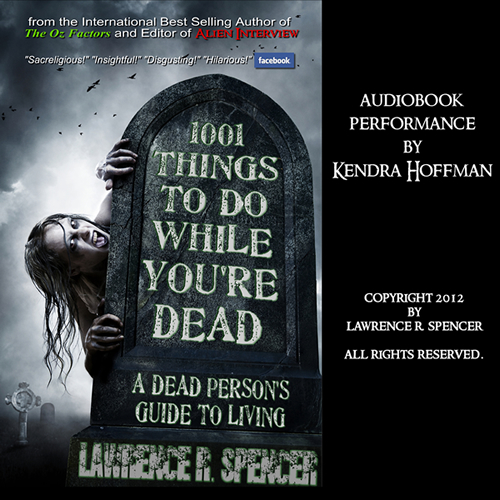
1001 Things to do Audiobook

( Find out how you can download this audiobook FREE! )

Excerpts from the book “1001 THINGS TO DO WHILE YOU’RE DEAD: A Dead Person’s Guide to Living“, by Lawrence R. Spencer

GO TOWARD THE LIGHT!

A lot of people (including a long list of living and dead celebrities) who were pronounced “medically dead” said that they had a “near death experience”. (See Footnote) [i]

Obviously, the medical or scientific definition of “death” could use some review, since it does not include, consider or acknowledge anything having to do with the “spirit” or the “you” that is experiencing having a “life”. This is a rather large and fundamental oversight.

Nonetheless, a very common report from those spirits who “left” their body or “floated above” their body, is that they remained completely aware of their surroundings, other people, conversations, sounds, smells, and other sensory perceptions one would normally experience during life.

Another common report is that they were immediately “drawn” toward a bright light. For a variety of reasons they decided, or where “told” by another disembodied spirit, to go back to the body. After they returned, the body “came back to life”, and they lived happily ever after – at least until they died again and did NOT come back again. At that time, one assumes they decided to go toward the light and that they did NOT come back, as far as we know.

STAY AWAY FROM THE LIGHT!

This is an alternative option to # 1 above. Many persons who have had a “near death experience” after an accident or during surgery or a nearly fatal illness, reported afterward that they felt drawn toward a brilliant white, gold or blue light and experienced warm, loving emotions. Likewise, they felt compelled or commanded to return to take care of someone or some unfinished business. Just as many people experienced shock, pain, fear, anxiety, terror, grief, etc., as one might expect.

Those people decided to stay away from the light and go back to their body. They lived long enough to tell someone about the experience. So, if you want to continue living with a body, this would be the most likely option for you. Otherwise, option #1 is still available, although not necessarily recommended. In this case, you might want to consider the next option:

REMAIN ALERT!

Light, or no light, it may be a good idea to remain alert while you’re dead. If you are paying close attention to what is going on in your vicinity, you may be able to take advantage of the situation or learn something that will be useful to know while you’re dead. You won’t know until you get there, of course, but you can prepare yourself in advance by deciding to remain calm and continue to be aware of what’s happening to you and around you at the moment of death and in the “thereafter”.

ATTEND YOUR OWN FUNERAL.

When your relatives or public officials get around to disposing of your used body you may choose to attend the funeral. This can be complicated, tedious and disturbing to yourself and other funeral guests. Or it can be a great comfort to you and your loved ones. It’s up to you.

If you are concerned that the used body is disposed of properly you should definitely attend to make sure your final wishes have been followed. You may also want to check to see who is really grieving over your absence, and who is only pretending so they can get a share of your estate, and who came for the free food and drinks.

Reverence for the dead is very important. Especially if you’re the one that is dead. One thing is certain – you will never think of funerals the same way again. If you care about what your relatives or the undertaker is going to do with your used body you will want to stay to the end. This includes the burial, cremation, sprinkling of the ashes, donation to the “used parts” laboratory, or whatever is supposed to be done with your used body.

If you plan ahead you can have your body buried in a vegetable garden, a forest, a flower bed, or fed to the fishes in the ocean. It’s a shame to let a perfectly good source of nutrition for plants or other living creatures go to waste!

AVOID YOUR FUNERAL.

If you are squeamish about autopsies, embalming, funeral piers, cremation incinerators, worms, bugs or bacteria you may want to stay away until all that messy, bad smelling business is over and done.

However, funeral directors have become quite masterful, over the past 5,000 years, at making a dead body look as good, or better, than it looked when it was alive. A little formaldehyde, a few strategic injections, a little stuffing, nice clothes, cosmetics, a wig and a comfy, silk-lined coffin, your used body can look better than ever!

This is a good reason to stay away as you may be enticed to start thinking about going back. Obviously, it’s too late. Factually, you never were a body and you definitely are not a body now. So stay focused. The future is where the rest of your life will be lived!”

__________________________________

FOOTNOTE:

[i] Near death experience. Examples of celebrities who reported they had “near death experiences”:

Jane Seymour is an actress most noted for the cult classic movie, “Somewhere in Time,” with actor Christopher Reeves, and the television series “Dr. Quinn, Medicine Woman.” When Jane Seymour was 36 years of age, she had a severe case of the flu and was given an injection of penicillin. She suffered an allergic reaction which led to a near-death experience.

“I literally left my body. I had this feeling that I could see myself on the bed, with people grouped around me. I remember them all trying to resuscitate me. I was above them, in the corner of the room looking down. I saw people putting needles in me, trying to hold me down, doing things. I remember my whole life flashing before my eyes, but I wasn’t thinking about winning Emmys or anything like that. The only thing I cared about was that I wanted to live because I did not want anyone else looking after my children. I was floating up there thinking, “No, I don’t want to die. I’m not ready to leave my kids.” And that was when I said to God, “If you’re there, God, if you really exist and I survive, I will never take your name in vain again.” Although I believe that I “died” for about thirty seconds, I can remember pleading with the doctor to bring me back. I was determined I wasn’t going to die.” She then suddenly found herself back in her body.

Peter Sellers was the comic genius of a generation of actors. He brought brilliant characterizations to numerous films, including “The Mouse That Roared” (1959), “Dr. Strangelove” (1964), “The Pink Panther” (1964), and “Being There” (1979). He was known for his enthusiastic way of totally absorbing himself in his characters, even carrying roles offstage. He also suffered from sad moods between films. While he knew his characters thoroughly, he said that he really did not know who he was. Then Peter Sellers, the brilliant, confused actor, had a near-death experience.

Seated in a Hollywood mockup of a limousine’s back seat while shooting his last great film, “Being There”, he told Shirley MacLaine about his near-death experience, astonished that she did not consider him “bonkers.” Shirley documents their conversation in her book, Out on a Limb. In 1964, during the first of a rapid series of eight heart attacks, when his heart stopped and he was clinically dead, he had an out-of-body experience and saw the bright, loving light:

“Well, I felt myself leave my body. I just floated out of my physical form and I saw them cart my body away to the hospital. I went with it … I wasn’t frightened or anything like that because I was fine; and it was my body that was in trouble.”

The doctor saw that he was dead and massaged his heart vigorously, Meanwhile: “I looked around myself and I saw an incredibly beautiful bright loving white light above me. I wanted to go to that white light more than anything. I’ve never wanted anything more. I know there was love, real love, on the other side of the light which was attracting me so much. It was kind and loving and I remember thinking “That’s God.””

Peter’s out-of-body soul tried to elevate itself toward the light, but he fell short: “Then I saw a hand reach through the light. I tried to touch it, to grab onto it, to clasp it so it could sweep me up and pull me through it.” But just then his heart began beating again, and at that instant the hand’s voice said: “It’s not time. Go back and finish. It’s not time.” As the hand receded he felt himself floating back down to his body, waking up bitterly disappointed.

What effect did his near-death experience have on Sellers? His biographer says that “The act of “dying” became for Peter Sellers the most important experience of his life.” Sellers said of death: “I’ll never fear it again.” Family and friends found him more spiritual and reflective than before.

Actress Elizabeth Taylor spoke about her experience of having “died” on the operating table while undergoing surgery, and of passing through a tunnel towards a brilliant white light. Interviewed by Larry King on CNN’s “Larry King Live,” the legendary Hollywood star related how she had “died” for five minutes on the operating table.

“I was pronounced dead once and actually saw the light. I find it very hard to talk about, actually, because it sounds so corny. It happened in the late ’50s, and I saw Mike (Todd, Taylor’s third husband, who was killed in a plane crash in 1958). When I came to, there were about 11 people in the room. I’d been gone for about five minutes – they had given me up for dead and put my death notice on the wall. I shared this with the people that were in the room next to me. Then after that I told another group of friends, and I thought, “Wow, this sounds really screwy. I think I’d better keep quiet about this.”
Robert Pastorelli is most noted for his starring role in the television series, “Murphy Brown.” At the age of 19, he had a car accident which caused a near-death experience that literally changed how he was living, in a very dramatic way.

“It smashed right into the driver’s door. It hit me so hard it actually knocked the shoes off my feet. My car rolled over about four times on this big highway and the next thing I knew I was in intensive care with a collapsed lung. Every one of my ribs was shattered. I had lacerations to my head and face, and my kidneys, spleen and gall bladder were all ruptured. I was a mess.

“I was in excruciating pain. Then, in the next second, there was no pain. Suddenly I realized I was out of my body. I was floating above myself, looking down at my unconscious body lying in the hospital emergency room with my eyes closed. I could see tubes down my nose and throat. I knew I was dying and I thought, “Well, this must be death.” I even saw a priest giving me the last rites. But it was the most peaceful feeling in the world. Then I saw my father starting to faint out of grief. Two nurses grabbed him and sat him down in a chair across the room.

“When I looked down and saw my father’s pain it had an effect on me. I firmly believe that at that moment I made a decision to live, not die. The next thing I knew I was waking up back in my body. Later, in the recovery room, when I was fully conscious, I told my father what had happened, his fainting and all. He was astounded.”

“Basic Instinct” star, Sharon Stone, has told how she had a “white light experience” during her brain scare. Stone says she almost died after internal bleeding caused by a tear in an artery at the base of her skull. Sharon was interviewed by Katie Couric about her journey into the afterlife.

When it hit me I felt like I’d been shot in the head. That’s the only way I can really describe it. It hit me so hard it knocked me over on the sofa. And Phil was out of town and I called him and said, “I think I had a stroke.” But in all fairness, I’m a person who’s always saying, ” I think I’ve had a stroke, I think I’ve had a heart attack, I think I’ve had a brain hemorrhage …

I had a real journey with this that took me to places both here and beyond that affected me so profoundly that my life will never be the same …

I get to be not afraid of dying and I get to tell other people that it’s a fabulous thing and that death is a gift. And not that you should kill yourself, but that when death comes to you, as it will, that it’s a glorious and beautiful thing. This kind of giant vortex of white light was upon me and I kind of – poof – sort of took off into this glorious, bright, bright, bright white light and I started to see and be met by some of my friends. But it was very fast – whoosh! Suddenly, I was back. I was in my body and I was in the room.î

Gary Busey, once Hollywood’s “bad boy,” was nominated for an Oscar for the movie, “The Buddy Holly Story.” Busey, who fought addiction with drugs and alcohol for several years, was nicknamed “Gary Abusey” by his wife. Busey has had supernatural encounters in which he nearly died three or more times in his life …a drug overdose, cancer, and an accident west of Albuquerque, New Mexico.

But the most tragic experience, and one that changed his life, was a motorcycle accident in 1988. Gary was going about 40-50 miles per hour riding on 750 pounds of cold steel. He was not wearing a helmet when he crashed. He was flung over the top of his cycle, head first into the curb and he cracked his skull. Busey had an NDE while he was dying on the operating table after having brain surgery. During his NDE, he was surrounded by angels. Busey stated that they didn’t appear in the form that people see on Christmas cards. The angels he saw were big balls of light that floated and carried nothing but love and warmth – and this love is unconditional.

Larry Hagman, of “Dallas” and “I Dream of Jeanie” fame, underwent a liver transplant in 1995. Years of heavy drinking resulted in cirrhosis and cancer of the liver. He was only weeks away from certain death at the time of his liver transplant and near-death experience.

Larry describes what he experienced: “I was able to look over the edge. I got a little glimpse of what was the next step. I didn’t see a light some people see, but I had a wonderful feeling of bliss and warmth. The bottom line is “love,” that sounds corny, but it was just lovely, uplifting.”

Rebecca DeMornay starred in the movie thriller, “The Hand That Rocks The Cradle.” When she was 7 years old, she was in Mexico City, Mexico, when she got ill from a peptic ulcer and had what she believes was a near-death experience.

“One night the doctors told my mother that there was only a fifty-fifty chance that I’d make it. I remember that I was tied to three IVs but I recall getting out of bed and looking out of the window: it was snowing. There was an old-fashioned lamppost and barefoot children were dancing around it, singing. I went back to bed and the next morning the crisis was over. In 1983 I started thinking about it: “Does it ever snow in Mexico City? Do they have these strange kind of lampposts there?” I went back to Mexico and I didn’t see those lampposts anywhere. Nor does it ever snow there.”

Donald Sutherland, who played the character, Hawkeye Piece, in the movie version of “Mash”, had a near-death experience when ill with meningitis in 1979.

“Suddenly the pain, fever and acute distress seemed to evaporate. I was floating above my body, surrounded by soft blue light. I began to glide down a long tunnel, away from the bed … but suddenly I found myself back in my body. The doctors told me later that I had actually died for a time.”

Eric Estrada became famous for his starring role in the television series, “Chips.” While filming an episode of “Chips,” he had a terrible motorcycle accident that led to a near-death experience.

“Suddenly I was in a long corridor with bright lights, beautiful music, and a feeling of great peace. But something seemed to be blocking my progress. A voice told me, “You’ve got to go back. You’ve a lot still to do. You’ve achieved success and stardom but you haven’t achieved personal happiness and peace of mind.” After hearing the voice, he returned to his body.

SHERLOCK HOLMES – MY LIFE, Chapter Four

Republished by Blog Post Promoter


READ CHAPTER ONE

READ CHAPTER TWO

READ CHAPTER THREE

CLICK THE LULU BUTTON TO READ THE ENTIRE BOOK:

Support independent publishing: Buy this book on Lulu.

CHAPTER FOUR: A CHARMING CHESHIRE CHEESE


“Would you tell me, please, which way I ought to go from here?”, asked Mr. Dodgson.

“That depends a good deal on where you want to get to”, I replied.

“I don’t much care where…”,  said Mr. Dodgson.

‘Then it doesn’t matter which way you go”, said Watson.

“I have solved many obscure and nefarious cases in my career to date.  However, the singular complexity of the matter which stands before us now — these accusations and alternative explanations, present features of a most illogical and inexplicable nature”, I said, passing the butter dish across to Mr. Dodgson.

“Prey, do have some butter with your bread “, I suggested, “while I ring for our landlady, Mrs. Hudson, to bring up the main course of our meal”, I said, stepping across to pull upon the bell chord to alert our mistress that we were ready to be served.

Momentarily, Mrs. Hudson appeared at the door, huffing with exertion of having carried a large tray of dishes up the stairs. She set the tray upon the sideboard.

“Will there be anything else you require, gentlemen?”, she asked. “If not, then I will retire for the evening. I’ve had a long day of shopping and preparations and cooking and cleaning already. Just leave the dishes outside the door when you have finished, and I will fetch them in the morning”, she said bowing herself out the door.

“Please leave to door open, Mrs. Hudson, if you would be so kind”, I said as she started to close it behind her.

“That will not be necessary, Mr. Holmes”, said Dodgson.  “I feel quite reassured that I am safe with you”.

“Very well then. Good evening to you all then, gentlemen”, she said. She glanced back at me curiously and pushed the door closed, turned and trudged back down the stairs.

The meal was hearty, yet bland, as is the traditional fair for the citizens of London: boiled flesh of some unidentifiable creature, peeled and boiled potatoes with a few carrots, bread, butter, and a pot of tea.  Fortunately, I had taken the trouble to supply ourselves with two bottles of red table wine for the occasion, which enlivened the otherwise nondescript flavor of the food.

As we finished eating our meal, and placing the dishes outside the door, as instructed by Mrs. Hudson, I reviewed the peculiar features of our situation with my companions.

“For the sake of securing the status of my identity, and to respond the most singular accusations brought against us by Dr. Doyle, please let me summarize the possible resolutions to this anomaly. Several possible answers may be postulated, as follow:

1. That I am impersonating a fictional character created by Dr. Doyle in his works of fiction, notwithstanding the testimony of Constable Barrett, who one might argue, is himself a fictional character.  That being the case, all here present must also be fictional characters, including Dr. Dodgson.

2. That I am a real person, from whom Dr. Doyle, as the author of works of fiction, has copied my name, address, actions and characteristics as a source of inspiration for his stories.

3.  That I am a real person, and that the author is an imposter, or a fictional character.  Inasmuch as you visited the alleged gentleman yourself upon this very morning, one would assume that he, like ourselves, is not a fictional character.

4.  That Dr. Watson and I are both fictional characters, including all of our surroundings, environs, apartment, possessions, bodies, memories, expertise and identities: a hypothesis which seems to have been disproven thus far, unless further evidence presents itself to our attention.

5. That Mr. Dodgson and Dr. Doyle are real characters, including all of their surroundings, environs, apartments, possessions, bodies, memories, expertise and identities, and Dr. Watson and I are both impersonating fictional characters, as discussed.

6. An alternative solution may also be proffered: that each and all of what is supposed to be “real”, whether deemed fact or fiction by the observer, are equally illusions. Therefore, neither comprises a definition of reality or fantasy, accept by the subjective opinion of the observers, creators and / or characters”, I concluded.

I paused momentarily to fill my pipe, and allowed sufficient time for the gravity and details of my proposition to be absorbed by Dr. Watson and our guest.  Neither of them had anything further to offer in the argument at the moment. No doubt they were confounded by the apparent absurdity of my arguments. Nonetheless, taking silence as permission to continue, I resumed my deductive analysis.

“I have observed that the lowest and vilest alleys in London do not present a more dreadful record of sin than does the smiling and beautiful countryside”, gentlemen.

“I do not see what you are getting at, Holmes”, said Watson. Mr. Dodgson looked up with equal, but silent, agreement.

“On the contrary, Watson, you can see everything. You fail, however, to reason from what you see. You are too timid in drawing your inferences”, I said, taking a seat in my armchair, and inviting our guest to take a cigar from the box I offered.

“However, before we digress, let me allude to the discussion that Mr. Dodgson and I had when I visited him in is quarters.  He himself mentioned several methods of investigation which he has studied in the alchemical works of Sir Isaac Newton, and in his own mathematical application of portmanteau poetry to the development of mathematical thinking.

“Circumstantial evidence is a very tricky thing.  It may seem to point very straight to one thing, but if you shift your own point of view a little, you may find it pointing in an equally uncompromising manner to something entirely different”, I said while crossing over to the sideboard.

I picked up the manuscript that Mr. Dodgson had given me when I visited him entitled, Alice’s Golden Hour. While flipping through the pages to find a particular passage, I asked Mr. Dodgson a question about his work.

“Might I inquire as to the origin of one of the fictional characters whom Alice meets in Wonderland — The Cheshire Cat?”

“Frankly, I believe the idea came to me from an old expression I learned as a child”, replied Mr. Dodgson after momentarily pondering the question. “I believe it to be derived from a cheese which was sold in Cheshire, near my home. The cheese was molded in the shape of a cat. The cheese was cut from the tail end first, so that the last part eaten was the head of the smiling cat”.

“Very well”, I said. “Let us then observe that you have extracted something from the reality of your childhood, and with a liberal application of your creative imagination have used it to conjure an illusion…an alternative to reality, as it were. Is this not so, Mr. Dodgson?”

“Well, yes, I suppose. However, I fail to see what relevance my fictional tales have to our current situation. Certainly you do not suppose that I am to believe that reality can be conjured from a work of fiction?  The notion is absurd!”, he replied.

“I do not ask you, or anyone, to believe anything whatsoever. Belief is a matter of personal opinion or conviction which cannot be shared by anyone else, accept to the degree that they share a similar opinion.  Some  men believe that the world was created by an omnipotent, invisible being in seven days. People in some aboriginal tribes believe that the world is supported on the back of an enormous elephant which stands upon the shell of a colossal tortoise”, I said, finally arriving at the pages I was looking for in the manuscript.

“As for myself, I believe that what is true for you is true for you, although no other person may agree upon your belief. Regardless, a truth for you, may not be true for others. Is that not a fundamentally sound assumption?”, I asked.

“I suppose you are right Mr. Holmes. It is difficult, if not impossible, to stay apace of your ability to remain logical in the face of a situation which is so absurdly enigmatic. You are proposing that the philosophical paradigm of reality should be considered of equal importance with fiction. How can you ever solve a criminal case, your occupation, if every piece of hard evidence could be a contrivance of imagination on the part of the investigator or of the criminal?”, said Mr. Dodgson.

“Quite the contrary”, I said. “But rather than keeping to my methods alone, let me ask you what meaning you attribute to the following passage in your book”, I said, turning to the page which described in the encounter between Alice and the Cheshire Cat.

“Let me read your own words to you.”

“…she was a little startled by seeing the Cheshire Cat sitting on a bough of a tree a few yards off.

The Cat only grinned when it saw Alice. It looked good-natured, she

thought: still it had VERY long claws and a great many teeth, so she

felt that it ought to be treated with respect.

‘Cheshire Puss,’ she began, rather timidly, as she did not at all know

whether it would like the name: however, it only grinned a little wider.

‘Come, it’s pleased so far,’ thought Alice, and she went on. ‘Would you

tell me, please, which way I ought to go from here?’

‘That depends a good deal on where you want to get to,’ said the Cat.

‘I don’t much care where–‘ said Alice.

‘Then it doesn’t matter which way you go,’ said the Cat.

‘–so long as I get SOMEWHERE,’ Alice added as an explanation.

‘Oh, you’re sure to do that,’ said the Cat, ‘if you only walk long

enough.’

Alice felt that this could not be denied, so she tried another question.

‘What sort of people live about here?’

‘In THAT direction,’ the Cat said, waving its right paw round, ‘lives

a Hatter: and in THAT direction,’ waving the other paw, ‘lives a March

Hare. Visit either you like: they’re both mad.’

‘But I don’t want to go among mad people,’ Alice remarked.

‘Oh, you can’t help that,’ said the Cat: ‘we’re all mad here. I’m mad.

You’re mad.’

‘How do you know I’m mad?’ said Alice.

‘You must be,’ said the Cat, ‘or you wouldn’t have come here.’

Alice didn’t think that proved it at all; however, she went on, ‘And how

do you know that you’re mad?'”

“So, Mr. Dodgson, let me pose the same question to you that young Alice asked of the chimerical cat in your own story: how do you know whether you are mad or not mad? How would you satisfy yourself that I am not mad? How do we know that everyone is mad or not mad?”, I said, rising from my chair to place the manuscript upon the sideboard.

I refilled my pipe once again, in anticipation of the protracted debate that was sure to follow on the heels of these profoundly absurd, yet existential queries and arguments.

Mr. Dodgson did not seem the least bit nonplused by my insinuation  regarding his sanity, or the sanity of all. Rather, he thanked us very cordially for our hospitality, rose from his chair and reached the door to exit the apartment. As he reached the door he turned back to me.

“Mr. Holmes, I will leave the resolution of this mystery entirely in your very capable hands. If anyone were able to solve the questions you pose to me, I assure you that I am not that man. Neither are any of the mentors whom I have studied, including Sir Isaac himself. I trust that you will be kind enough to inform me of your eventual success, if such is possible. Good day to you, gentlemen”.

With that, he departed, clomped down the stairs. Through the window we saw him walk briskly away through a light drizzle of rain in the direction of the train station.

“What do you make of it Holmes?”, asked Watson, who seemed to have been disquieted by our visitor. “I must admit that our meeting with this  gentleman is the most perplexing I have ever had,” he said, resuming his seat in front of the fire.

“Yes. Most perplexing, indeed”, I agreed, taking my own seat and refilling my pipe. “Most perplexing.”

“What do you know of this Dr. Doyle?”, I asked Watson after an interlude of silent contemplation.

“Well, I can’t say that I know anything about the man”, he said. “Have you not heard anything of him?”

“No.  I have not.  However, our friend, Mr. Dodgson seems to know quite a good deal about the fellow. So much so, that he was entirely certain that it is I that perform the part of an imposter in an imaginary play invented by this man!”, I observed.

“Well, my dear fellow, in my professional opinion as a doctor, I am certain that this gentleman is suffering from the residual effects of some narcotic. His own fantastical story, from which you read to us this evening, seems very peculiar indeed!”, said Watson. “And, his behavior is quite inappropriate for a professor of mathematics at Oxford, certainly. Perhaps the allegations suggested in the newspaper, that the man is a pedophile, or a kidnapper, should be investigated more thoroughly”, he suggested.

“Perhaps”, I said. “Let us sleep upon the matter for the moment. In this instance, however, the best way of successfully acting a part is to be it”, I conjectured. ”

___________________________________

Copyright © 2011 by Lawrence R. Spencer. All Rights Reserved.


HYPER-DIMENSION

Republished by Blog Post Promoter

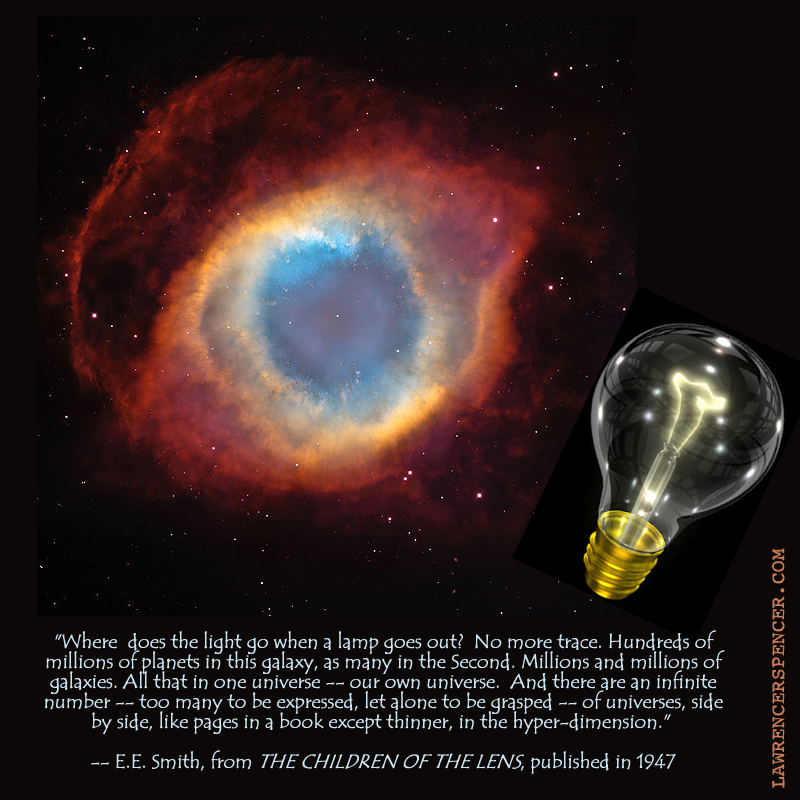
“Where  does the light go when a lamp goes out? No more trace. Hundreds of millions of planets in this galaxy, as many in the Second. Millions and millions of galaxies. All that in one  universe—our own universe.    And there are an infinite number—too many to be expressed, let alone to be  grasped—of universes, side by side, like pages in a book except thinner, in the hyper-dimension.”

— E.E. Smith, from THE CHILDREN OF THE LENS, the final book of the Lensman series originally serialized in the magazine Astounding beginning in 1947.

THE TAO

Republished by Blog Post Promoter

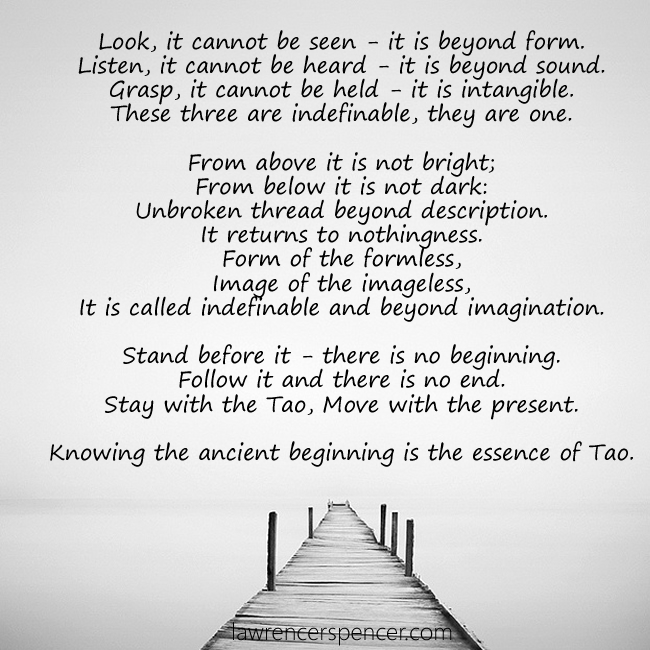
THE TAO

Tao or Dao is a concept signifying ‘way’, ‘path’, ‘route’, or sometimes more loosely, ‘doctrine’ or ‘principle’, or as a verb, speak.  Within these contexts Tao signifies the primordial essence or fundamental nature of existence. Tao is thus “eternally nameless”, or Immortal Spiritual Beings, and to be distinguished from the countless ‘named’ things which are considered to be its manifestations, as the space, energy and forms of, and within, the physical universe, and other universes.

The Tao Te ChingDaodejing, or Dao De Jing (道德經: 道 dào “way”; 德  “virtue”; 經 jīng “classic” or “text”) is simply referred to as the Laozi. According to tradition, it was written around 6th century BC by the sage Laozi (or Lao Tzu, “Old Master”), a record-keeper at the Zhou Dynasty court, by whose name the text is known in China. The text’s true authorship and date of composition or compilation are still debated, although the oldest excavated text dates back to the late 4th century BC.

Many different translations, versions and interpretations of The Tao have been produced through the past 2,500 years, or so, since the original appearance.  Like any “religion”, the “opinions” and “interpretations” of “priests” MODIFY and INTRODUCE FASLE IDEAS into the original.  Therefore, I suggest that anyone who wished to sincerely study The Tao as a Body of Wisdom, study many difference translations in order to DECIDE FOR YOURSELF what is “true” or not.  

Here is a link to a website containing many different translations, and COMPARISONS between translations

SYNOPSIS OF SHERLOCK HOLMES: MY LIFE

Republished by Blog Post Promoter

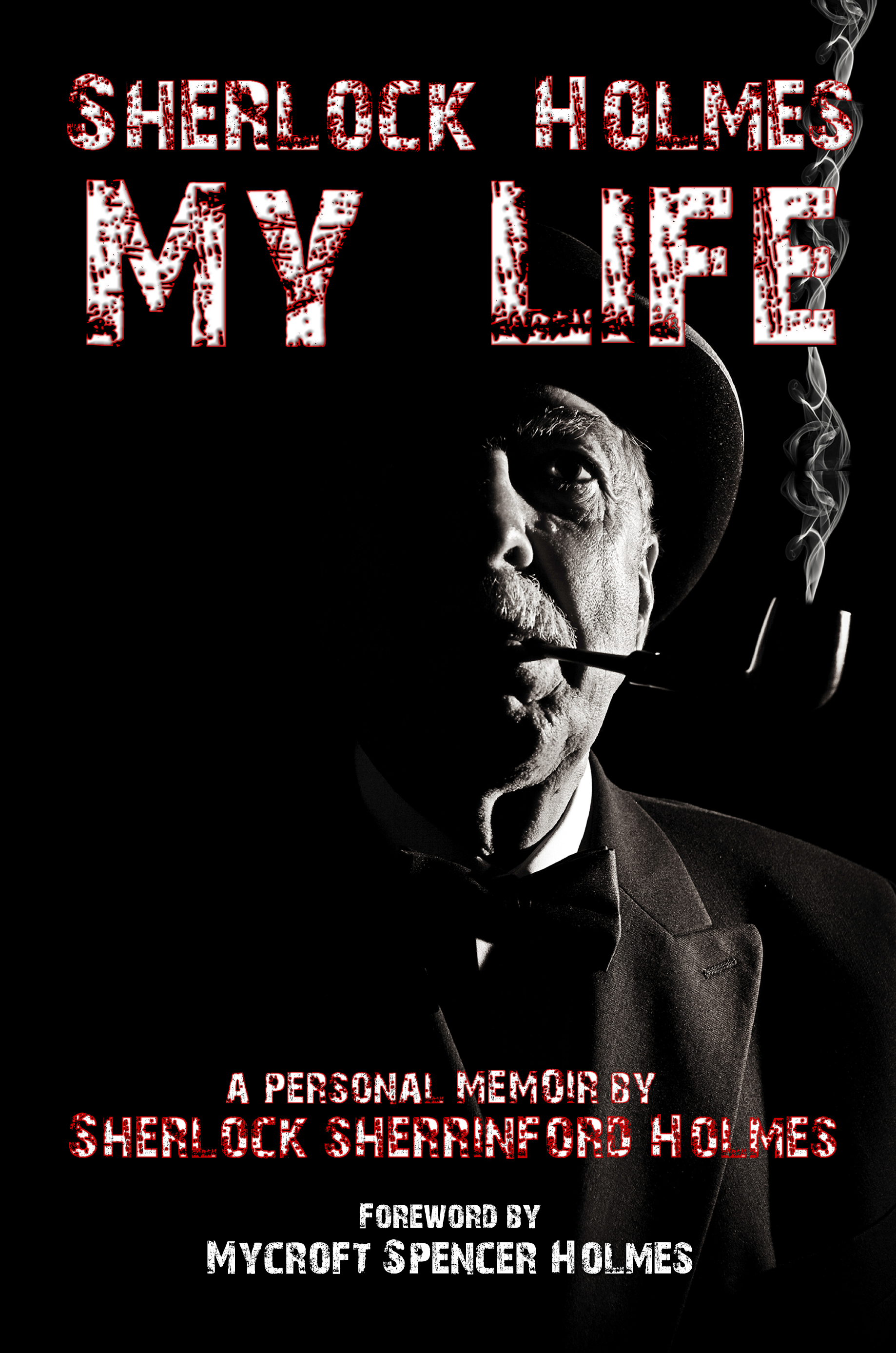
Sherlock Holmes: My Life, is a memoir in which Sherlock Holmes discloses a conspiracy between Dr. Watson, who is proven to be a fraud, and his associate, Dr. Arthur Doyle, to publish his real life adventures as works of fiction. Sherlock solicits the very able assistance of his brother Mycroft Holmes, who is aided by the British Secret Information Services, to help him resolve the most infamous literary fraud in history!

Their investigation of the two Scottish doctors, together with several authors, publishers and politicians who collaborated with them, exposes the scam as well as the farcical claim to knighthood of “Sir” Arthur Doyle and his life as an opportunistic hoaxer.  The insidious plan of Watson and Doyle to erase the real person of Sherlock Holmes inadvertently unveils the true identity of Professor Moriarty.

The actual reasons for the disappearance of Mr. Holmes from public life, after his alleged “death” at the hands of Professor Moriarty in Switzerland, are disclosed for the first time.  While staying as a guest at The Diogenes Club, under the cover of a false identity, Mr. Holmes served for several years in the employment of the Office of The Chancellor of The Exchequer, of which Mycroft was the pre-eminent administrator.  During this singular period in his career Mr. Holmes encountered his most challenging cases.

Remarking retrospectively upon his diverse career during retirement, Mr. Holmes describes the most enigmatic, yet previously unrecorded, adventures of his life: encounters that influenced the literary creations of Charles Dodgson (author of Alice’s Adventures in Wonderland), J.M. Barrie (author of Peter Pan), the American writer Mark Twain, as well as Bram Stoker (author of Dracula) and Robert Louis Stevenson (author of Strange Case of Dr Jekyll and Mr Hyde).

Finally, Mr. Holmes confides intimate personal details of his concoction and use of alchemical potions, his family, and sexual preference. Philosophical reflections upon his past and future are expressed in several poignant personal letters, including one received from his friend the 13th Dalai Lama, and in a reply to an inquiry from the American science fiction writer H.P. Lovecraft.

______________________________________

— An excerpt from the book: SHERLOCK HOLMES: MY LIFE —

“As it pertains to the case before us, as viewed through the perfect lens of hindsight, it is plain to me now that Watson has always treated me, as regards his writing, in a circumspect and covert manner.  Moreover, his constant  supplications to me for permission to publish ‘just one more case’, have often bordered upon beggary!”, I cried.

“I am quite certain that your intuition in the matter is accurate, though highly disturbing to me”, said Mycroft. “Have you never examined any of the published volumes of the stories written about your cases by Dr. Watson?”, he asked.

“No, I must admit that I have never bothered to acquire a single copy, nor has Dr. Watson ever brought a single volume of a published work home with him to Baker Street, now that you mention it?”, I replied, realizing to my own astonishment, the singular improbability of it, especially after so many volumes had been published, and over such a protracted number of years, is remarkable!

“I believe that an examination of the published works of Dr. Watson will add more clarity to our discovery of the facts”, Mycroft said pointedly  with his fork. “Let me be specific, my dear fellow.  Did you, by any chance, read the manuscript of the last of his stories about your investigations?  It is the case regarding the lost letter upon which your assistance was solicited by no less than the Prime Minister.  Watson fictionalized his name as ‘Lord Bellinger’, and that of the Secretary of Foreign Affairs, under the name of Trelawney Hope”.

These were not their actual names of course, as you are keenly aware. Rather, the gentlemen in question were none other than Robert Gascoyne-Cecil who thrice served as Prime Minister, and twice as the Secretary of State for Foreign Affairs.  He was accompanied by the then reigning Prime Minister at the date of the incident, Arthur Balfour”.

I could not deny that the solution of this case was of singular gravity and import to the well-being of Britain.  Of course, Mycroft and his staff had been intimately associated, covertly, with attempts to recover the missing letter in that case.  However, I admitted that I had not seen that book, or any other for that matter, in published form.”

________________________________________

The book may be ordered in printed form, or downloaded as a PDF, from the website of the  publisher: http://stores.lulu.com/pan

Support independent publishing: Buy this book on Lulu.