Category Archives: FREE ADVICE

Free Advice about Life, Universe and Other Stuff from Lawrence R. Spencer

THE WAY or NO WAY?

Republished by Blog Post Promoter
THE TAO

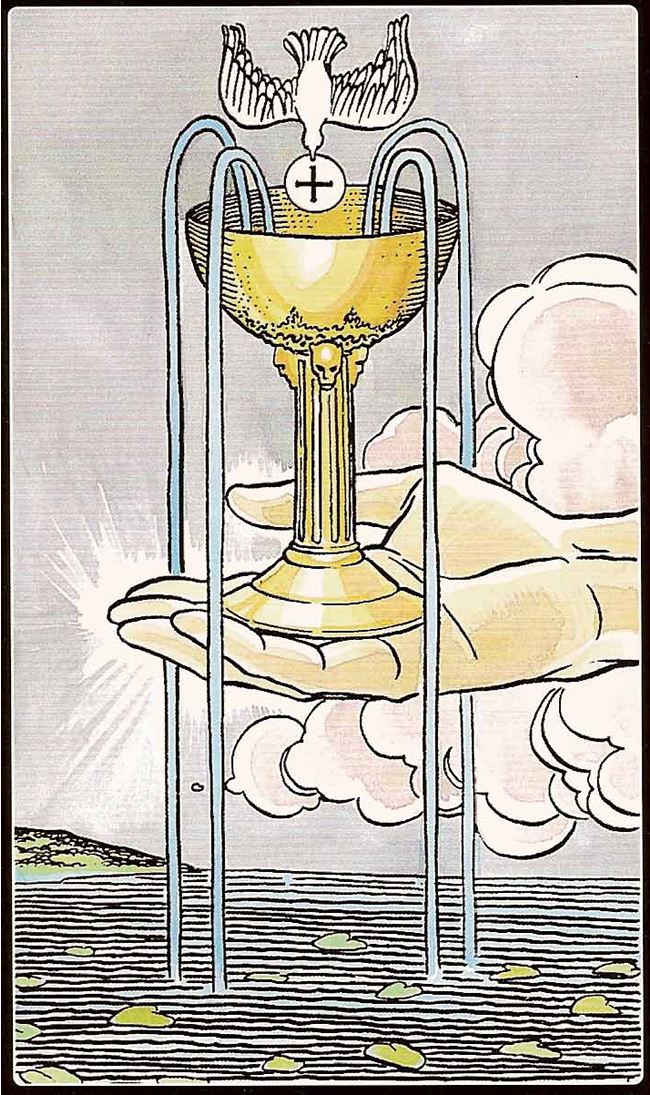
Tao or Dao is a concept signifying ‘way’, ‘path’, ‘route’, or sometimes more loosely, ‘doctrine’ or ‘principle’, or as a verb, speak.  Within these contexts Tao signifies the primordial essence or fundamental nature of existence. Tao is thus “eternally nameless”, or Immortal Spiritual Being, and to be distinguished from the countless ‘named’ things which are considered to be its manifestations, as the space, energy and forms of, and within, the physical universe, and other universes.

The Tao Te ChingDaodejing, or Dao De Jing (道德經: 道 dào “way”; 德  “virtue”; 經 jīng “classic” or “text”) is simply referred to as the Laozi. According to tradition, it was written around 6th century BC by the sage Laozi (or Lao Tzu, “Old Master”), a record-keeper at the Zhou Dynasty court, by whose name the text is known in China. The text’s true authorship and date of composition or compilation are still debated, although the oldest excavated text dates back to the late 4th century BC.

Many different translations, versions and interpretations of The Tao have been produced through the past 2,500 years, or so, since the original appearance.  Like any “religion”, the “opinions” and “interpretations” of “priests” MODIFY and INTRODUCE FALSE IDEAS into the original.  Therefore, I suggest that anyone who wishes to sincerely study The Tao as a body of wisdom, study many difference translations before you decide whether or not any of the many versions of this book point to “the way” or “no way”.  

Here is a link to a website containing many different translations, and COMPARISONS between translations

PARADIGM SHIFT

Republished by Blog Post Promoter

Just because we cannot perceive something, does not mean that it cannot exist.

Science cannot evolve without change, and there is a dire need for change in its fundamental philosophy. The Oxford Dictionary defines Materialism as “the doctrine that nothing exists except matter and its movements and modifications”.

Materialism is the paradigm of scientific philosophy under which the vast majority of contemporary scientists operate. It is essentially the belief that everything can be explained in physical terms, and that there is no need to explore anything further.

Why are most scientists operating within this doctrine when science has already demonstrated many examples of non-physical phenomena? Well, our mainstream science culture certainly tends to reflect materialist values in media such as internet articles and websites, television shows and news, and especially the science curriculum in educational institutions. Since we are all, to a degree, products of our society, it stands to reason that many scientists would hold true to materialism. However, there are many examples of science going beyond the realm of physical reality.

Let’s start with the magnetic force. It cannot be denied that the magnetic force has physical applications and implications, but there is nothing physical about the actual force itself. You can see a magnet, or a magnetically charged metal, but you cannot see what charges it. We can see that a compass points in the north direction. But if the magnetic force itself appeared to us physically in its natural state, does it not stand to reason that the human race would never have had a use for a compass? It is an invisible and non-physical force which affects the physical world.

Light is another example. The light in which we are capable of seeing is just a very small portion of “the electromagnetic spectrum”, which is represented below. the electromagnetic spectrumThe area which is outlined in blue gives a representation of how small that portion is. Radio waves, microwaves, X-rays, UV rays, and gamma rays are all elements of this spectrum as well. Like light waves, we can only see their physical effects, not the radiation itself. For example, you cannot see the UV rays which give you a suntan, you can only see the tan itself. All that we can perceive from the visible light spectrum is the wavelength that it takes when it bounces off physical objects, and we experience this wavelength as a color. Therefore, there is nothing physical about light itself, it simply interacts with physical objects.

The force of gravity is another glaring example. We can see and feel how gravity affects us through its effect on physical objects, but we cannot actually see the force of gravity itself. If we could “see gravity”, then surely someone would have been credited with discovering gravity before Sir Isaac Newton in the 1600’s. Again, a force which in itself is not visible or physical, but has profound effects on the physical world surrounding us.

When you hear modern alternative philosophers use the term “energy” or assert that “everything is energy”, these are some of the types of energies that they are referring to. This theme of non-physical energy only being experienced through their ramifications on physical entities seems to be evident throughout science, yet the idea has little credibility in the scientific community.

The current paradigm of materialism tends to put the physical explanations first, while ignoring the super-physical. This is limiting our range of scientific inquiry. It limits us to only giving scientific due to physical effects, thereby potentially ignoring the cause or origin of a force or entity completely. For example, we do not know if the cause of magnetism, is physical or non-physical, but our current paradigm is only allowing us to explore one option with credibility. We need to open our minds and look at the potential of a non-materialist explanation of such forces.

One thing that bothers modern scientists, is that we have really vague explanations regarding the origins of gravity, magnetism, and light. The best explanation to date regarding the cause of the magnetic force and the photon is that these entities appeared shortly after the “Big Bang”, with all other matter. This is basically like saying, we know they exist, but we do not know why. And since gravity seems to be caused by a moving physical body, gravity would have had to appear when the first physical matter was set in motion in our universe, which is again close to the alleged “Big Bang”.

Materialist scientists, answer me this: How are we supposed to discover the cause or origin of a non-physical entity, like gravity and magnetism, when your fundamental philosophy does not permit you to believe that studying non-physical entities is worthwhile? How do we expect ourselves to advance science to the next paradigm without embracing the idea that more exists than our physical realm?

future scienceAs mentioned, we have not been able to fully explain the effects of gravity, magnetism, and the photon under our current paradigm of thought. It is most certainly time for a new generation of forward-thinking scientists to take a less materialistic approach to explaining these entities instead of taking pages from the old playbook, which has not gotten us far since the time of Einstein.

Could this rationale also be why we have been so unsuccessful at explaining the existence and implications of black holes, as well as the entity that is consciousness?

What amazes me even further, is that materialist scientists, like the rest of us, use technologies which are operational because of these non-physical entities. Basically every one of us have all listened to a radio, had an x-ray done, operated some form of remote control, and used a cell phone or wireless internet. We need such non-physical entities in order to function in today’s society. When is the philosophy upon which our science is based going to catch up to this reality?

So if we change our mindsets and start to take non-physical entities seriously, as a scientific community, this will certainly allow for further exploration of the cause and implications of thoughts, consciousness, and what happens to us after we die. We must shed this outdated notion of materialism in order to maximize our potential in studying these areas of interest.

If you wish to explore the idea of why it is necessary to move past the scientific paradigm of materialism, let Dr. Rupert Sheldrake enlighten you with some theories regarding materialist science in the video below. The fact that his TED talk was not deemed to be “scientific’ enough for the TED indicates that there is a bias towards this methodology of thinking in the scientific world.”

This article is a reprint (with gratitude) from the following link: http://fractalenlightenment.com/33059/issues/its-time-for-a-new-paradigm-of-scientific-thought

THE PERFECT MAN

Republished by Blog Post Promoter

Mankind remains virtually unchanged, in essence or fundamental behavior, during the past 2,400 years.  There is a great deal in Aristotle’s description of “the perfect man” to recommend as a path for living now, just as there was during his lifetime ca. 350 B.C.E..

Aristotle (384 BCE — 322 BCE) was a Greek philosopher, a student of Plato and teacher of Alexander the Great. His writings cover many subjects, including physics, metaphysics, poetry, theater, music, logic, rhetoric, linguistics, politics, government, ethics, biology, and zoology. Together with Plato and Socrates (Plato’s teacher), Aristotle is one of the most important founding figures in Western philosophy. Aristotle’s writings were the first to create a comprehensive system of Western philosophy, encompassing morality and aesthetics, logic and science, politics and metaphysics.

EDWARD GIBBON ON HUMAN HISTORY

Republished by Blog Post Promoter

I heartily recommend that everyone read The History of the Rise and Fall of The Roman Empire, by Edward Gibbon.  Personally, it has given me a perspective on the economic, political and religious vested interests that have driven the materialistic evolution of  Western Civilization.  Understanding our past creates the realization, for me, that we have learned little from history.  A nearly total absence of spiritual self-awareness of the beings who create and inhabit  Western society has been carefully nurtured since the rise of the Greeks and Romans 3,000 years ago.  Corrupt senators, imperialist armies and brutal entertainments of the circus maximus for plebeian mobs still thrive in our daily lives!  —  Lawrence R. Spencer

Here is more information about Edward Gibbon from Wikipedia.org:

“Edward Gibbon (27 April 1737 – 16 January 1794) was an English historian and Member of Parliament. His most important work, The History of the Decline and Fall of the Roman Empire, was published in six volumes between 1776 and 1788. The Decline and Fall is known for the quality and irony of its prose, its use of primary sources, and its open criticism of organized religion.Gibbon’s work has been criticised for its scathing view of Christianity as laid down in chapters XV and XVI. Those chapters were strongly criticised and resulted in the banning of the book in several countries. Gibbon’s alleged crime was disrespecting, and none too lightly, the character of sacred Christian doctrine, by “treat[ing] the Christian church as a phenomenon of general history, not a special case admitting supernatural explanations and disallowing criticism of its adherents”. More specifically, the chapters excoriated the church for “supplanting in an unnecessarily destructive way the great culture that preceded it” and for “the outrage of [practicing] religious intolerance and warfare”. Gibbon, though assumed to be entirely anti-religion, was actually supportive to some extent, insofar as it did not obscure his true endeavour – a history that was not influenced and swayed by official church doctrine. Although the most famous two chapters are heavily ironical and cutting about religion, it is not utterly condemned, and its truth and rightness are upheld however thinly.

Gibbon’s apparent antagonism to Christian doctrine spilled over into the Jewish faith, leading to charges of anti-Semitism. For example, he wrote:

 “Humanity is shocked at the recital of the horrid cruelties which [the Jews] committed in the cities of Egypt, of Cyprus, and of Cyrene, where they dwelt in treacherous friendship with the unsuspecting natives; and we are tempted to applaud the severe retaliation which was exercised by the arms of legions against a race of fanatics, whose dire and credulous superstition seemed to render them the implacable enemies not only of the Roman government, but also of humankind.”

Gibbon is considered to be a son of the Enlightenment and this is reflected in his famous verdict on the history of the Middle Ages: “I have described the triumph of barbarism and religion.” However, politically, he aligned himself with the conservative Edmund Burke’s rejection of the democratic movements of the time as well as with Burke’s dismissal of the “rights of man.”

Gibbon’s work has been praised for its style, his piquant epigrams and its effective irony. Winston Churchill memorably noted, “I set out upon…Gibbon’s Decline and Fall of the Roman Empire [and] was immediately dominated both by the story and the style. …I devoured Gibbon. I rode triumphantly through it from end to end and enjoyed it all.” Churchill modelled much of his own literary style on Gibbon’s. Like Gibbon, he dedicated himself to producing a “vivid historical narrative, ranging widely over period and place and enriched by analysis and reflection.”

Unusually for the 18th century, Gibbon was never content with secondhand accounts when the primary sources were accessible (though most of these were drawn from well-known printed editions). “I have always endeavoured,” he says, “to draw from the fountain-head; that my curiosity, as well as a sense of duty, has always urged me to study the originals; and that, if they have sometimes eluded my search, I have carefully marked the secondary evidence, on whose faith a passage or a fact were reduced to depend.” In this insistence upon the importance of primary sources, Gibbon is considered by many to be one of the first modern historians:

In accuracy, thoroughness, lucidity, and comprehensive grasp of a vast subject, the ‘History’ is unsurpassable. It is the one English history which may be regarded as definitive. …Whatever its shortcomings the book is artistically imposing as well as historically unimpeachable as a vast panorama of a great period.”

REFERENCE: WIKIPEDIA.ORG