Republished by Blog Post Promoter

“IT IS IMPOSSIBLE TO ESTIMATE THE ABILITY OF ARTISTS TO INVENT AN AESTHETIC TO MASK THE PRESENCE OF EVIL.”
— Lawrence R. Spencer, 2012 —

Paintings, photography, aesthetic objects, beautiful communication, and anything I consider to be art, artful, artistic, artsy or whatever.
Art is subjective. It is a quality of communication can be contributed to by the viewer through empathy or agreement with its creator.
Republished by Blog Post Promoter
“IT IS IMPOSSIBLE TO ESTIMATE THE ABILITY OF ARTISTS TO INVENT AN AESTHETIC TO MASK THE PRESENCE OF EVIL.”
— Lawrence R. Spencer, 2012 —
Republished by Blog Post Promoter
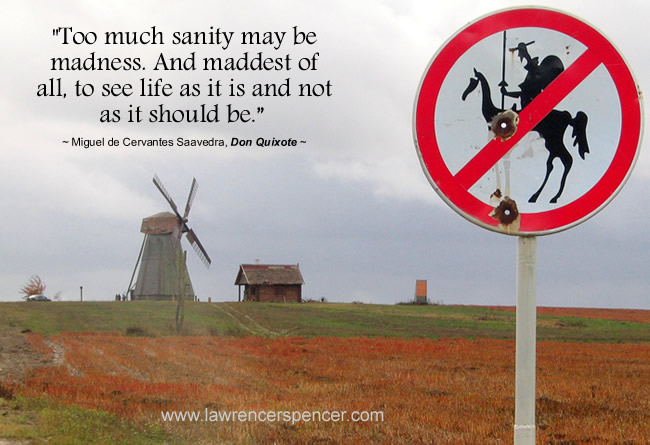 Don Quixote, fully titled The Ingenious Gentleman Don Quixote of La Mancha (Spanish: El ingenioso hidalgo don Quijote de la Mancha), is a Spanish novel by Miguel de Cervantes Saavedra. It follows the adventures of Alonso Quixano, an hidalgo (lower class of Spanish nobility) who reads so many chivalric novels that he decides to set out to revive chivalry, under the name Don Quixote. He recruits a simple farmer, Sancho Panza, as his squire, who often employs a unique, earthly wit in dealing with Don Quixote’s rhetorical orations on antiquated knighthood.
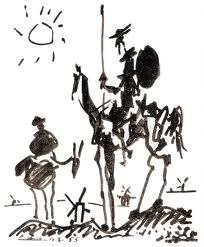 Published in two volumes, in 1605 and 1615, Don Quixote is considered the most influential work of literature from the Spanish Golden Age and the entire Spanish literary canon. As a founding work of modern Western literature, and one of the earliest canonical novels, it regularly appears high on lists of the greatest works of fiction ever published. It has had major influence on the literary community, as evidenced by direct references in Alexandre Dumas’ The Three Musketeers (1844) and Mark Twain’s Adventures of Huckleberry Finn (1884). In a 2002 list, Don Quixote was cited as the “best literary work ever written”, and has been translated into more languages than any book other than the Bible. — (ref: Wikipedia.org)
Republished by Blog Post Promoter
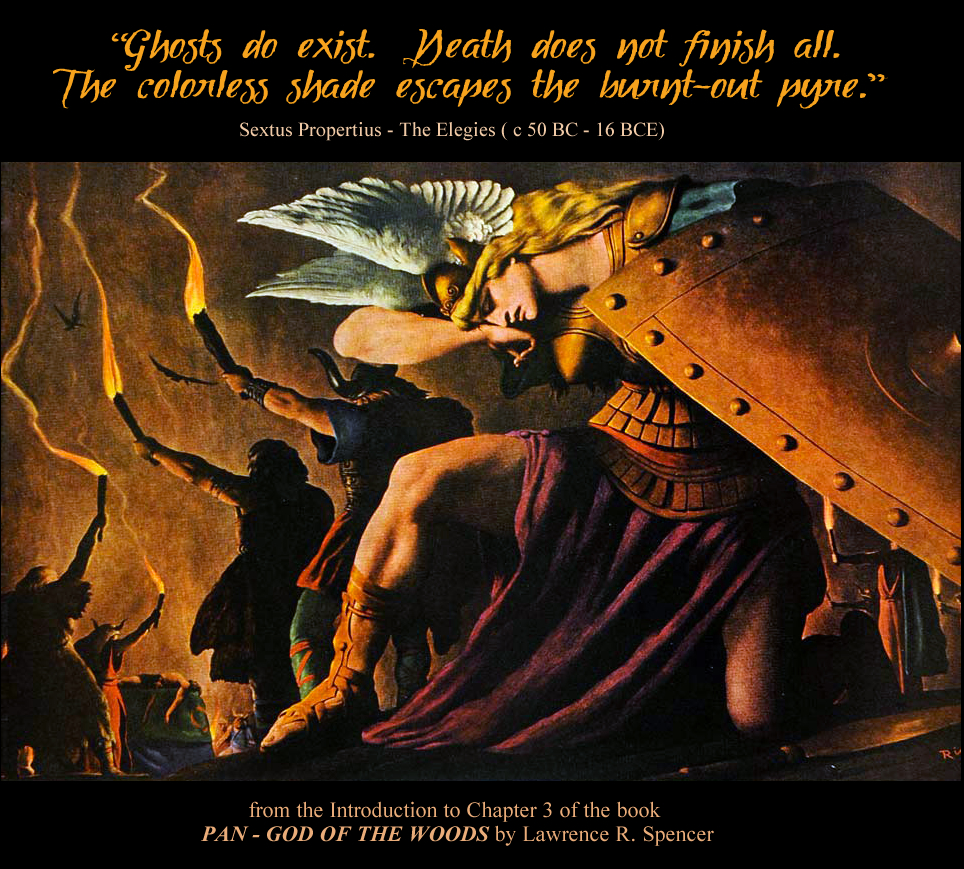
“Ghosts do exist. Death does not finish all. The colorless shade escapes the burnt-out pyre.”
— Sextus Propertius – The Elegies ( c 50 BC – 16 BC )
Republished by Blog Post Promoter

A shepherd has many dogs to control his sheep. And, every shepherd learns to hypnotize his sheep to prevent them from trying to escape. This is because the shepherd is a human who cannot feed themselves. They have no wool to keep themselves warm. His sheep keep him fed and warm. So, he tells the sheep that he loves them, and that he will protect them from harm. He convinces the sheep that they really are NOT sheep. He tells them that they are lions, eagles, men, and even shepherds! The sheep believe the shepherd and fear his dogs. The sheep are content to remain hypnotized, and do not try to escape. The shepherd kills and eats sheep whenever he needs their meat and wool. He encourages the sheep to breed and to grow more wool. The sheep do not remember that they have been hypnotized.
They forget that they are sheep.
Sheep don’t need a shepard and dogs to be content.
Sheep can feed and warm themselves.
_________________________________
Story idea via Arnaldo Lerma at http://www.lermanet2.com/