Republished by Blog Post Promoter
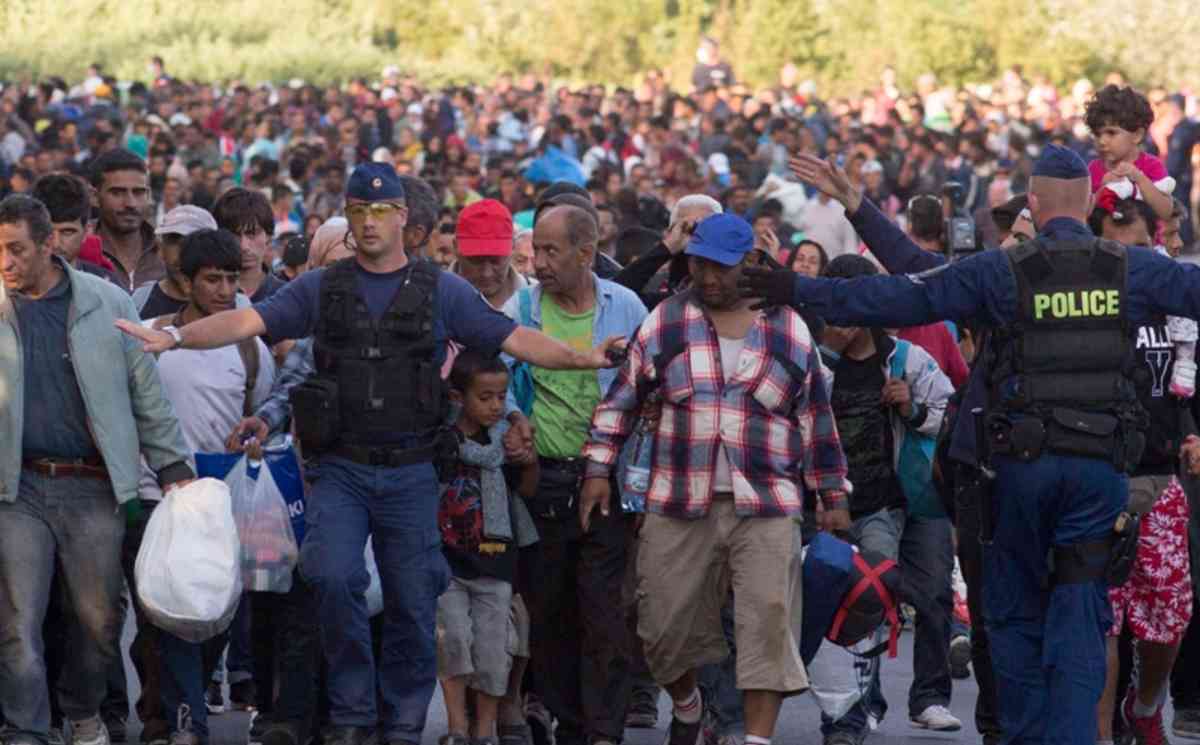
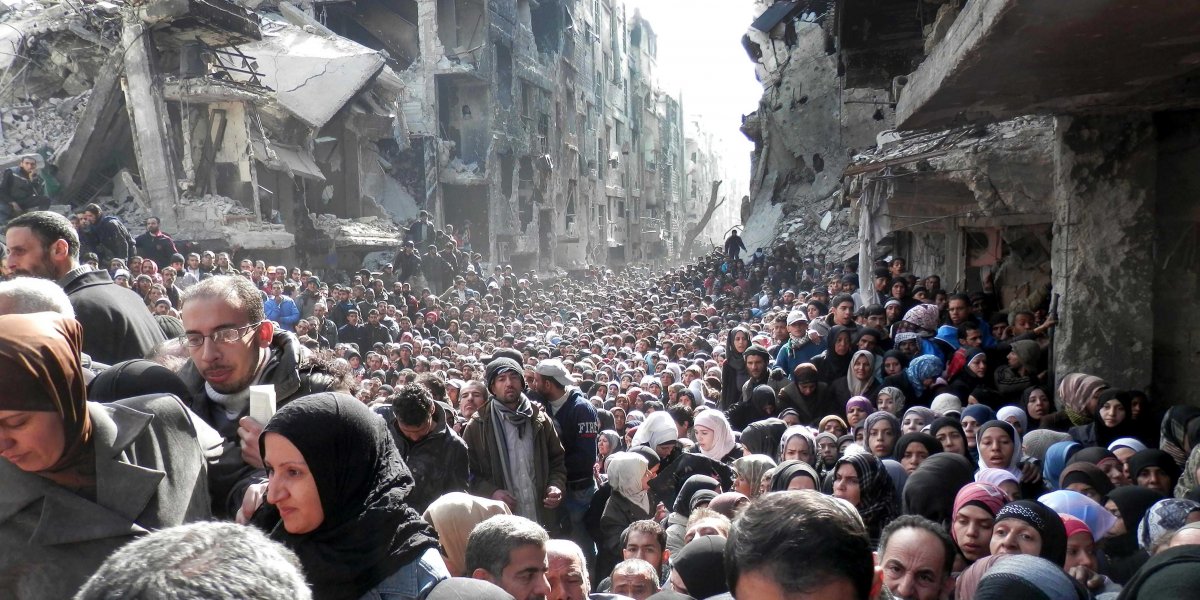 The current “refugee crisis” in Europe is a planned attack against European countries. Refugees are an ancient “weapon of war”. Like using a “human shield” to “defend” oneself from attack, it is a strategy and weapon of cowards and criminals: international bankers and the military / industrial minions of the New World Order. This strategy is described in detail in the book Weapons of Mass Migration: Forced Displacement, Coercion, and Foreign Policy, by think-tank scholar
“At first glance, the U.S. decision to escalate the war in Vietnam in the mid-1960s, China’s position on North Korea’s nuclear program in the late 1990s and early 2000s, and the EU resolution to lift what remained of the arms embargo against Libya in the mid-2000s would appear to share little in common. Yet each of these seemingly unconnected and far-reaching foreign policy decisions resulted at least in part from the exercise of a unique kind of coercion, one predicated on the intentional creation, manipulation, and exploitation of real or threatened mass population movements.
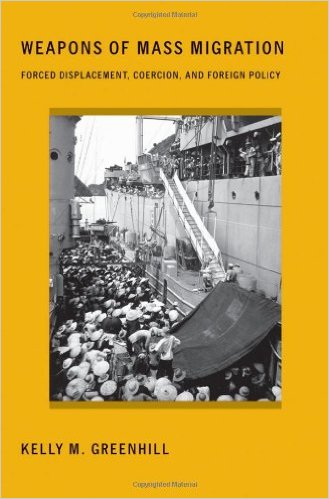 In Weapons of Mass Migration, Kelly M. Greenhill offers the first systematic examination of this widely deployed but largely unrecognized instrument of state influence. She shows both how often this unorthodox brand of coercion has been attempted (more than fifty times in the last half century) and how successful it has been (well over half the time). She also tackles the questions of who employs this policy tool, to what ends, and how and why it ever works. Coercers aim to affect target states’ behavior by exploiting the existence of competing political interests and groups, Greenhill argues, and by manipulating the costs or risks imposed on target state populations.
This “coercion by punishment” strategy can be effected in two ways: the first relies on straightforward threats to overwhelm a target’s capacity to accommodate a refugee or migrant influx; the second, on a kind of norms-enhanced political blackmail that exploits the existence of legal and normative commitments to those fleeing violence, persecution, or privation. The theory is further illustrated and tested in a variety of case studies from Europe, East Asia, and North America. To help potential targets better respond to―and protect themselves against―this kind of unconventional predation, Weapons of Mass Migration also offers practicable policy recommendations for scholars, government officials, and anyone concerned about the true victims of this kind of coercion―the displaced themselves.”
LISTEN TO THE PODCAST BY THE AUTHOR, Kelly M. Greenhill