Republished by Blog Post Promoter
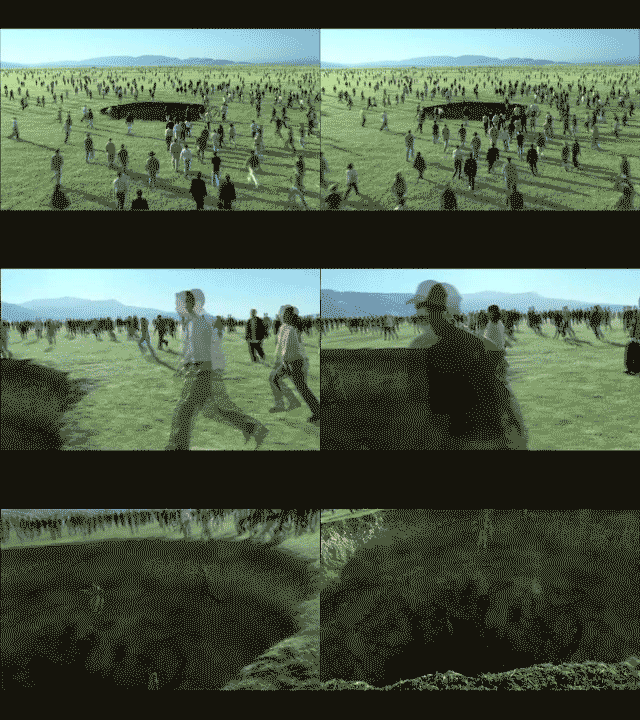 HOW CAN HUNDREDS OF BILLIONS OF PEOPLE BE WRONG? (again, and again, and again, and again….in fact, almost always)
Lemmings became the subject of a popular misconception that they commit mass suicide when they migrate. Actually, it is not a mass suicide, but the result of their migratory behavior. Driven by strong biological urges, some species of lemmings may migrate in large groups when population density becomes too great. They may encounter a body of water along the way, try to swim across and drown. But, it’s accidental death. I can happen to any migratory species, and often does. (especially when there are alligators involved!) Is there any significant difference between human beings and lemmings? Well, for starters, lemmings are MUCH cuter, they don’t DESTROY their environment and they don’t KILL and EAT other animals.
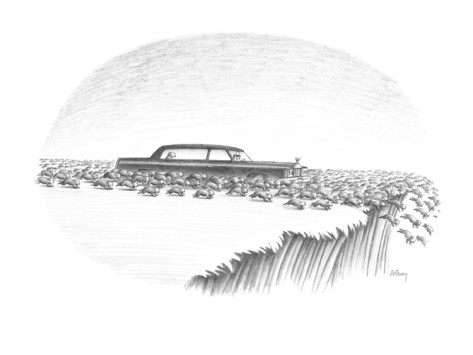 Since about 8,000 BCE — the brief history of Humanity on planet Earth — there have been a total of approximately 107,602,707,791 human beings who have lived and died (give or take…). If you think that re-incarnation is an actual phenomenon, then there is an excellent chance that a LOT of those dead bodies where inhabited by you and me in the past, over and over and over again. (I know it’s a scare thought, but so what? It is what it is, or isn’t according to your own experience.)
During the past 10,000 years or so, most of the powerful “leaders” in the history of humanity were worshiped, endorsed, supported and adored by the majority of the population they led into ruin, death and chaos. Not just mass-murders like Hitler, Stalin, Caesar, Bush and Cheney and other obvious psychopaths, but people like The Royal Families and The Popes of the past and present. These “leaders” who claim they have a “Divine Right To Rule” — empowered directly by the “word of god” — are equally power hungry, greedy and murderous: they’re just more clever at disguising their blood / power lust. In any case, the repeated tendency of “the majority” toward self-destruction should give one pause to consider the possibility that THE MAJORITY of human beings are 1) Simple-minded 2) Cowardly 3) Incredibly gullible 4) Suicidal.
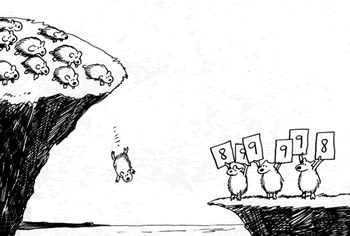
I suggest a couple of things to do the next time you see a herd of people (or lemmings) stampeding toward certain death and disaster, which are the inevitably result of “financial consulting”, “majority rules”, “banking regulations”, “democratic elections”, “popular opinion”, “honor and glory”, “social / political correctness”, “corporate integrity”, “Hollywood entertainment”, “television commercials” and “government warnings”:
 1) STAND BACK SO YOU DON’T GET TRAMPLED
2) HIDE SOMEWHERE “THEY” CAN’T FIND YOU
3) RUN THE OTHER WAY!
4) IF YOU FIND YOURSELF IN AGREEMENT WITH THE “MAJORITY” YOU MIGHT WANT TO GET MORE INFORMATION FROM OTHER SOURCES
5) Or, IF YOU DON’T HAVE ANYTHING BETTER TO DO, GO DOWN TO THE EDGE OF THE ABYSS AND WAVE GOODBYE AS THEY JUMP IN!

 A fast, easy, simple way to set an elephant free from captivity is to allow them to discover and express their own “inner artist”. Every sentient being is a “Creator” (including some humans). Creative ability exists within Everyone. Enable creativity! Admire, and encourage every creative impulse and ability within Your Self and others. We are Creators of Universes! Anyone who tells you otherwise wants you to be a slave…..