Republished by Blog Post Promoter
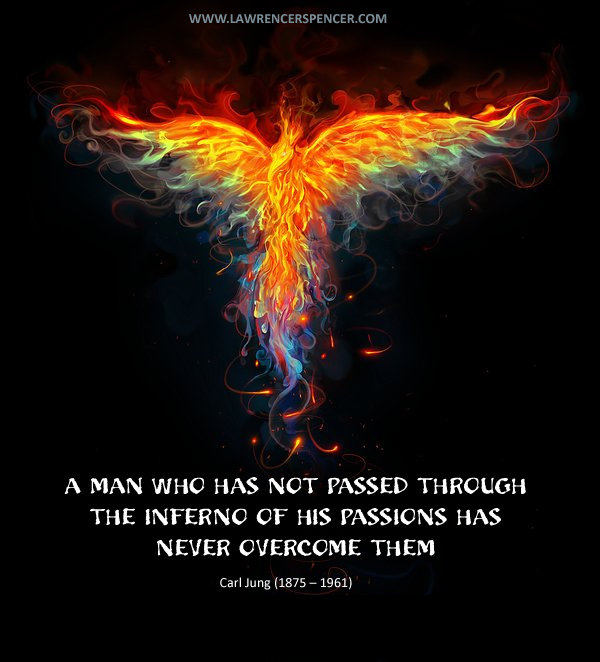
“A man who has not passed through the inferno of his passions has never overcome them.”
— Carl Jung

Republished by Blog Post Promoter
“A man who has not passed through the inferno of his passions has never overcome them.”
— Carl Jung
Republished by Blog Post Promoter
 So what do we do when we’re dead anyway?
Author Lawrence R. Spencer takes a sometimes poignant, sometime humorous look at what we might do when we “cross over”.

Check out all of the other great programming on the Jim Harold Show on the web at http://jimharold.net
Republished by Blog Post Promoter

Republished by Blog Post Promoter

Republished by Blog Post Promoter
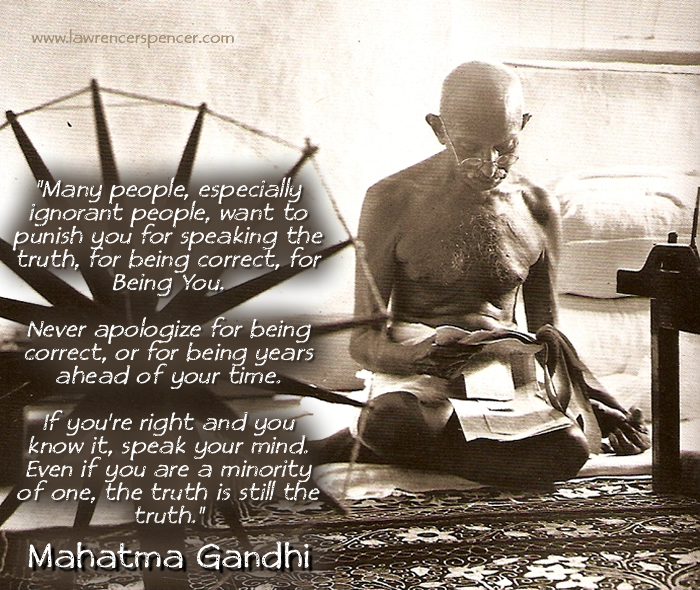
Mohandas Karamchand Gandhi; 2 October 1869 – 30 January 1948), commonly known as Mahatma Gandhi or Bapu (Father of Nation), was the preeminent leader of Indian nationalism in British-ruled India. Employing non-violent civil disobedience, Gandhi led India to independence and inspired movements for non-violence, civil rights and freedom across the world.
The son of a senior government official, Gandhi was born and raised in a Bania community in coastal Gujarat, and trained in law in London. Assuming leadership of the Indian National Congress in 1921, Gandhi led nationwide campaigns for easing poverty, expanding women’s rights, building religious and ethnic amity, ending untouchability, increasing economic self-reliance, and above all for achieving Swaraj—the independence of India from British domination.
In London he committed himself to truthfulness, temperance, chastity, and vegetarianism. His return to India to work as a lawyer was a failure, so he went to South Africa for a quarter century, where he absorbed ideas from many sources, most of them non-Indian. He was exposed to Jain ideas through his mother who, was in contact with Jain monks. Themes from Jainism that Gandhi absorbed included asceticism; compassion for all forms of life; the importance of vows for self-discipline; vegetarianism; fasting for self-purification; mutual tolerance among people of different creeds; and “syadvad”, the idea that all views of truth are partial.
Gandhi strongly favored the emancipation of women, and he went so far as to say that “the women have come to look upon me as one of themselves.” He opposed purdah, child marriage, untouchability, and the extreme oppression of Hindu widows, up to and including sati. He especially recruited women to participate in the salt tax campaigns and the boycott of foreign products. Gandhi’s success in enlisting women in his campaigns, including the salt tax campaign, anti-untouchability campaign and the peasant movement, gave many women a new self-confidence and dignity in the mainstream of Indian public life.
In his last year, unhappy at the partition of India, Gandhi worked to stop the carnage between Muslims, Hindus and Sikhs that raged in the border area between India and Pakistan. He was assassinated on 30 January 1948.
Gandhi’s philosophy was not theoretical but one of pragmatism, that is, practicing his principles in the moment. Asked to give a message to the people, he would respond, “My life is my message.”