Republished by Blog Post Promoter
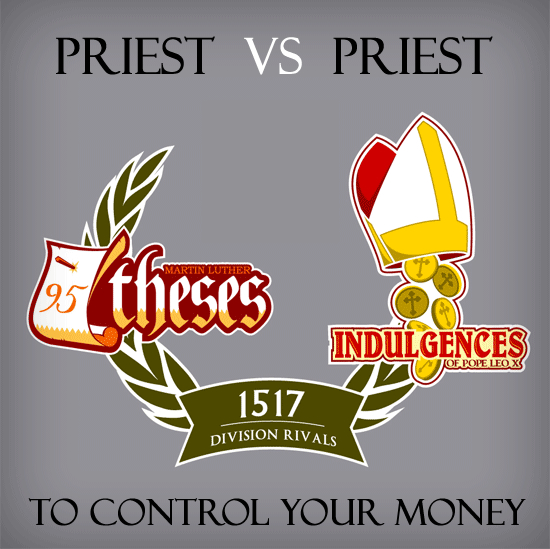
In our “modern age” of “enlightenment, it’s reasonable to assume that human beings would have caught on to the criminal racketeering game called “the church”. Yet, after thousands and thousands of years people still line up to have their minds washed and their money laundered by a multitude of self-anointed “priests”. The criminals and baboons have been at war with each other for control of the souls as a method of legalized theft. The same can be said of nearly every politician who is a “priest” in the “church” of political ideologies and governments. The only difference between a Commissar and a Capitalist is the insignia on their uniforms. The only difference between one priest and another priest is the style of their robes. They all promise you paradise after you die and eternal damnation if you don’t give them all your money while you’re alive.
Regardless of their obvious criminal intent, this racket is still financially supported by millions of gullible human beings, just as sheep, pigs and cows are led to slaughter each day so you can eat their flesh. What you do to other living beings will be done to you. Here is a short history lesson in one of the more popular and famous “Priest vs Priest” scams:
“The Ninety-Five Theses on the Power and Efficacy of Indulgences (Latin: Disputatio pro declaratione virtutis indulgentiarum), commonly known as The Ninety-Five Theses, was written by Martin Luther in 1517 and is widely regarded as the initial catalyst for the Protestant Reformation. The disputation protests against clerical abuses, especially the sale of indulgences.
The background to Luther’s Ninety-Five Theses centers on practices within the Catholic Church regarding baptism and absolution. Significantly, the Theses rejected the validity of indulgences (remissions of temporal punishment due for sins which have already been forgiven). They also view with great cynicism the practice of indulgences being sold, and thus the penance for sin representing a financial transaction rather than genuine contrition. Luther’s Theses argued that the sale of indulgences was a gross violation of the original intention of confession and penance, and that Christians were being falsely told that they could find absolution through the purchase of indulgences.
All Saints’ Church in Wittenberg, Germany, in the Holy Roman Empire, where the Ninety-Five Theses famously appeared, held one of Europe’s largest collections of holy relics. These had been piously collected by Frederick III of Saxony. At that time pious veneration of relics was purported to allow the viewer to receive relief from temporal punishment for sins in purgatory. By 1509 Frederick had over 5,000 relics, purportedly “including vials of the milk of the Virgin Mary, straw from the manger [of Jesus], and the body of one of the innocents massacred by King Herod.”
As part of a fund-raising campaign commissioned by Pope Leo X to finance the renovation of St Peter’s Basilica in Rome, Johann Tetzel, a Dominican priest, began the sale of indulgences in the German lands. Albert of Mainz, the Archbishop of Mainz in Germany, had borrowed heavily to pay for his high church rank and was deeply in debt. He agreed to allow the sale of the indulgences in his territory in exchange for a cut of the proceeds.”
— Wikipedia.org