Republished by Blog Post Promoter

Republished by Blog Post Promoter
Republished by Blog Post Promoter
 Jack Kerouac ( March 12, 1922 – October 21, 1969) was an American novelist and poet of French-Canadian descent. All of his books are in print today, including The Town and the City, On the Road, Doctor Sax, The Dharma Bums, Mexico City Blues, The Subterraneans, Desolation Angels, Visions of Cody, The Sea Is My Brother, and Big Sur.
Visit his website to learn more about his life and writing…. http://jackkerouac.com/
Republished by Blog Post Promoter
Republished by Blog Post Promoter
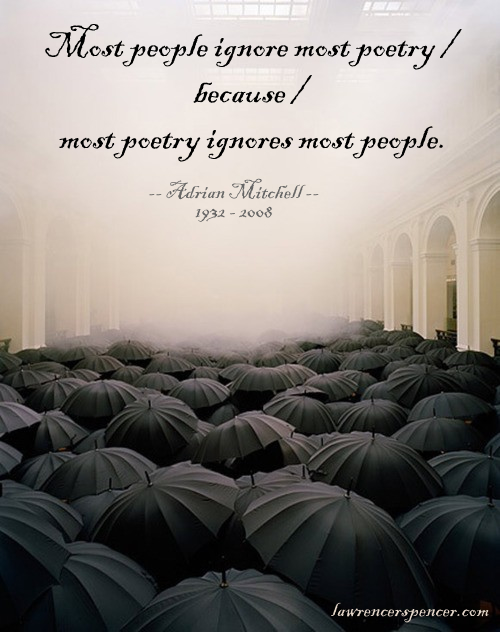
Adrian Mitchell (24 October 1932 – 20 December 2008) was an English poet, novelist and playwright. A former journalist, he became a noted figure on the British anti-authoritarian Left. For almost half a century he was the foremost poet of the country’s anti-Bomb movement. Mitchell sought in his work to counteract the implications of his own assertion that, “Most people ignore most poetry because most poetry ignores most people.” In a National Poetry Day poll in 2005 his poem “Human Beings” was voted the one most people would like to see launched into space. “Most people ignore most poetry / because / most poetry ignores most people.”
Since the Vietnam war nothing has really changed except that war-mongers have become more sophisticated about sanitizing acts of mass-murder with remote controlled drones and smart bombs. More “enemies” are killed per square “peace keeping soldier”. Listen to a poem performed by Adrian Mitchell in the video below. Fill in the word “Vietnam” with the word “Iraq” or “Afghanistan” or “Iran”, etc.. Different year…. same old shit.
Republished by Blog Post Promoter
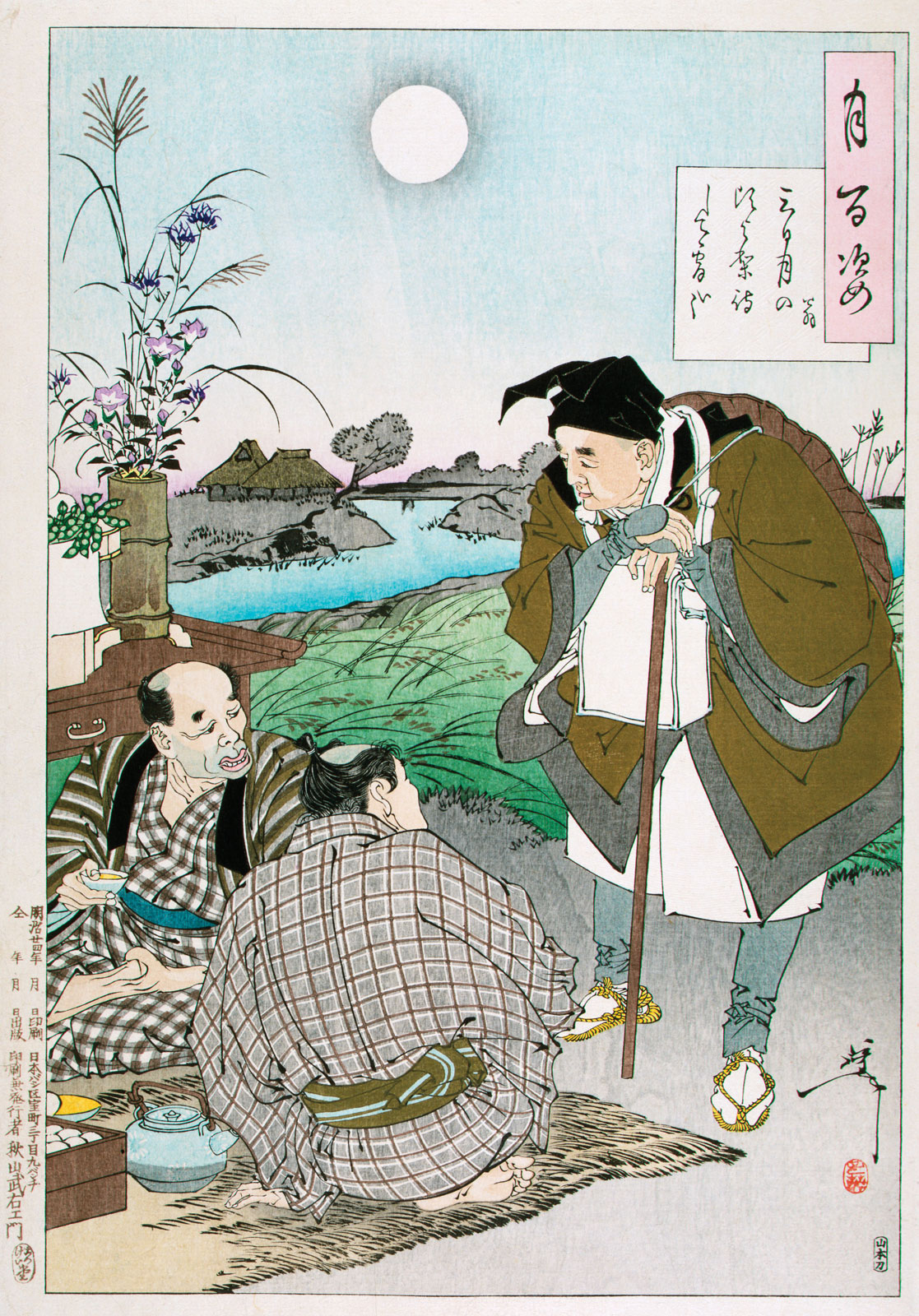
Here are a few of the wonderful *Haiku poems attributed to Bash (they may not have retained their purity in the English translation, but you get the flavour of them):
An old pond!
A frog jumps in-
The sound of water.
____________
The years first day
thoughts and loneliness;
the autumn dusk is here.
____________
Poverty’s child –
he starts to grind the rice,
and gazes at the moon.
____________
A weathered skeleton
in windy fields of memory,
piercing like a knife
____________
*DEFINITION OF HAIKU: Haiku is one of the most important form of traditional Japanese poetry. Haiku is, today, a 17-syllable verse form consisting of three metrical units of 5, 7, and 5 syllables. Since early days, there has been confusion between the three related terms Haiku, Hokku and Haikai. The termhokku literally means “starting verse”, and was the first starting link of a much longer chain of verses known ashaika. Because the hokku set the tone for the rest of the poetic chain, it enjoyed a privileged position in haikaipoetry, and it was not uncommon for a poet to compose ahokku by itself without following up with the rest of the chain.
The name Basho (banana tree) is a sobriquet he adopted around 1681 after moving into a hut with a banana tree alongside. He was called Kinsaku in childhood and Matsuo Munefusa in his later days.