Tag Archives: evolution

TOO MANY HUMANS?

Republished by Blog Post Promoter
the-problem

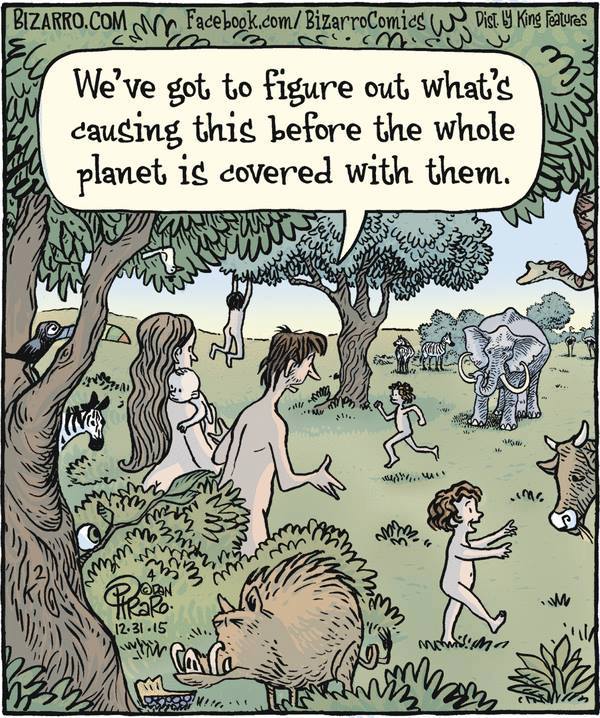
Personally, I don’t think there are too many human beings on this planet> I think there are not supposed to be ANY Homo Sapiens on Earth.  In spite of religious and scientific propaganda that says human “evolved” on Earth there is NO PROOF that this is true.  In fact ALL the actual evidence demonstrates that the species Homo Sapiens suddenly appeared on Earth without ANY biological forbearers.    The exact date is unknown.  Modern Homo Sapiens certainly did not exist on Earth as recently as a mere millions years ago.  A million years in the biological and geological history of Earth is staggeringly SHORT period of time: the blink of an eye.

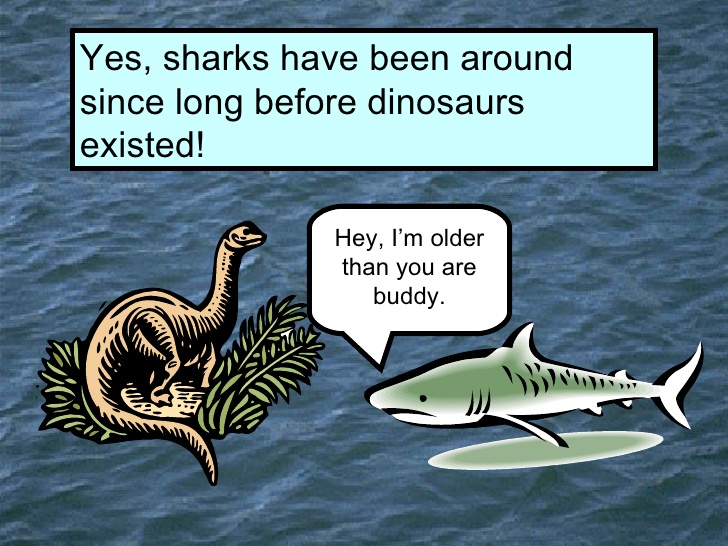
Sharks, for example, who have an average life-span of about 60 years, like humans, have existed in the archeological record for at 400 million years or longer. They existed BEFORE dinosaurs! There is no disagreement that scales found during the Silurian Period, aged 420 million years, are from sharks.  Shark scales from this period have been found in Siberia and Mongolia.

sharkasaursHowever, one of the most obvious bits of evidence that humans are not FROM Earth, and that humans do not BELONG on Earth, is that humans do not have ANY naturally occurring SYBIOTIC RELATIONSHIPS with other life forms that are beneficial to other life forms, i.e. if humans disappeared today ALL other native species of life on Earth would prosper!

So, why are there Homo Sapiens on Earth?  Where did they come from?  One thing is certain:  humans on Earth are NOT and accident of evolution or conception.  Someone, somewhere, sometime, CAUSED it.

— Lawrence R. Spencer. September, 2016

BOOK OF THE DAMNED

Republished by Blog Post Promoter

“I think we’re property.

I should say we belong to something:

That once upon a time, this earth was No-man’s Land, that other worlds explored and colonized here, and fought among themselves for possession, but that now it’s owned by something:

That something owns this earth—all others warned off.

Nothing in our own times—perhaps—because I am thinking of certain notes I have—has ever appeared upon this earth, from somewhere else, so openly as Columbus landed upon San Salvador, or as Hudson sailed up his river. But as to surreptitious visits to this earth, in recent times, or as to emissaries, perhaps, from other worlds, or voyagers who have shown every indication of intent to evade and avoid, we shall have data as convincing as our data of oil or coal-burning aerial super-constructions.

But, in this vast subject, I shall have to do considerable neglecting or disregarding, myself. I don’t see how I can, in this book, take up at all the subject of possible use of humanity to some other mode of existence, or the flattering notion that we can possibly be worth something.

Pigs, geese, and cattle.

First find out that they are owned.

Then find out the whyness of it.”

—-  The Book of the Damned, by Charles Fort, [1919]

__________________________________________

Charles Hoy Fort (August 6, 1874 – May 3, 1932) was an American writer and researcher into anomalous phenomena.
“A procession of the damned.
By ‘the damned’, I mean the excluded.
We shall have a procession of data that Science has excluded.”
– opening lines of The Book of the Damned

“The title of the book referred to what he termed the “damned” data – data which had been damned, or excluded, by modern science because of its not conforming to accepted guidelines. The way Fort saw it,mainstream scientists are trend followers who believe in what is accepted and popular, and never really look for a truth that may be contrary to what they believe. He also compared the close-mindedness of many scientists to that of religious fundamentalists, implying that the supposed “battle” between science and religion is just a smokescreen for the fact that, in his view, science is, in essence, simply a de facto religion. This is a theme that Fort would develop more heavily in his later works, New Lands and Lo! particularly.

Fort was one of the first major writers to deal extensively with paranormal phenomena, and in that aspect at least, The Book of the Damned should be considered an important work. It should be viewed as a formulative work, perhaps understandably, as it is his first major book. Though Fort’s uniquely acerbic writing style is already in evidence, and there are plenty of interesting phenomena to read about, Fort’s theories (as such) are only beginning to be developed.”

Fort’s comment on Darwinism:

“Darwin & Evolution In mere impressionism we take our stand. We have no positive tests nor standards. Realism in art: realism in science – they pass away. In 1859, the thing to do was to accept Darwinism; now many biologists are revolting and trying to conceive of something else. The thing to do was to accept it in its day, but Darwinism of course was never proved: The fittest survive. What is meant by the fittest? Not the strongest; not the cleverest – Weakness and stupidity everywhere survive. There is no way of determining fitness except in that a thing does survive. “Fitness”, then, is only another name for “survival.” Darwinism: That survivors survive.” (Damned, pp. 23-24)

Science-fiction writers of note including Philip K. Dick, Robert Heinlein, and Robert Anton Wilson were  fans of the work of Charles Fort.  (SEE WIKIPEDIA.ORG ARTICLE ABOUT CHARLES FORT)

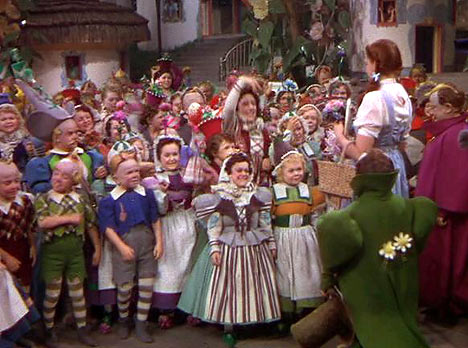
99% of MUNCHKINS ARE EXTINCT (Beetles not)

Republished by Blog Post Promoter

HOW MANY SPECIES OF MUNCHKINS ARE IN THE LAND OF OZ?

“We represent the Lullaby League …”–The Munchkins

“We represent the Lollipop Guild …”–The Munchkins in ‘The Wizard of Oz’

On this planet, there are five major kingdoms of life forms categorized as follows:

1/ Bacteria

2/ One-Celled Organisms

3/ Mushroom, Molds, Fungi

4/ Multi-Cellular Plants

5/ Multi-Cellular Animals

The number of different forms of life–the tremendous variety of life on this planet–is virtually beyond comprehension. Think of how many different kinds of birds you’ve seen. Take a wild guess as to how many species of fish swim in the waters of the world. How many mammals or reptiles might there be, not to mention plants and insects?

Biologists are still trying to count the number of different life organisms on the planet. Consider the probability that an estimated TWO BILLION SPECIES have lived on Earth, of which as many as 99.9 percent are now EXTINCT! So, there probably aren’t that many left, right?

Wrong.

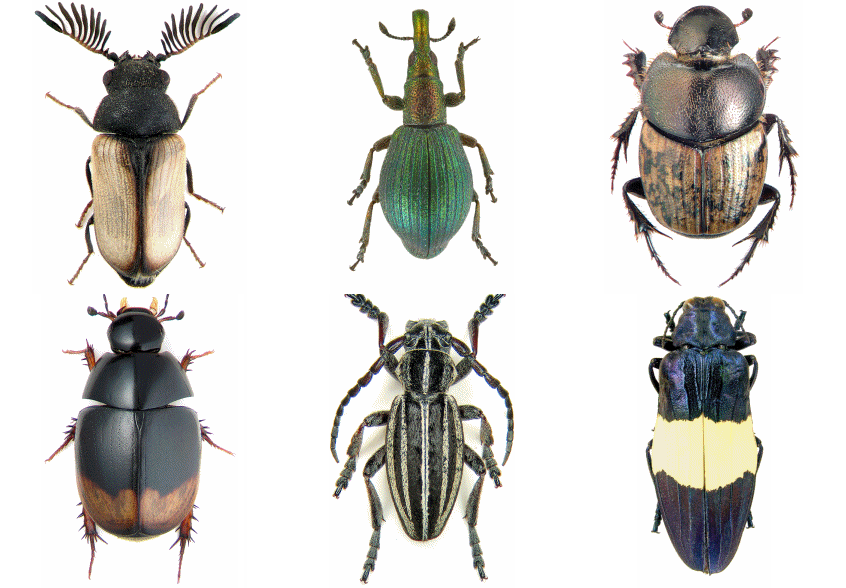
There are still estimated to be about 30,000,000 (thirty million!) different species of organisms still living on Earth. There are estimated to be more than 400,000 species of plants, alone. Do you like bugs? There are more than 1,000,000 species of insects (yes, that’s one million). There are 30,000 different subspecies of spiders! Not to mention the 30,000 species of beetles, 20,000 species of moths and 20,000 species of ants, bees and wasps. Researchers have estimated that for every human being there are one billion insects on Earth!

There are more than 9,000 species of birds, 4,000 species of mammals (1,700 are rodents), 10,000 species of roundworms, 4,000 species of amphibians, 21,000 species of bony fish and 6,000 species of reptiles. Don’t even think about the nearly unfathomable variety of invertebrate life in the oceans. Scientists will be working for a very long time to identify everything that lives in the waters of the world.

That’s just life in the macrocosm of Earth; i.e., just those life forms that we can see easily with the naked eye. How does this apply to the microcosm of relatively invisible animals?
80-beetlesThere are 4,000 known species of bacteria. On the average human body, about 600 million bacteria live on the skin. The skin under your arms carries close to 500,000 bacteria and your forearm is a thriving metropolis that is home to over 12,000 bacteria per square inch! The bacteria population INSIDE your body is too numerous to count.

Then there are all the species of protozoa, algae, fungi and bacteria that eat carbon dioxide and hydrogen and produce methane as a byproduct.

In addition to the vast number of species, consider the fact that each individual cell in any complex organism is, in fact, a separate, distinct life entity. There are about 75 trillion cells in the average human body. The size of a single cell varies from the thickness of a few thousand atoms, to the largest single cell (an ostrich egg), measuring about 20 inches in diameter.
Oz Factors_LULUThe sheer volume and diversity of life forms would seem to defy the probability of any coincidental, circumstantial, accidental or spontaneous development of the unthinkably vast, complex, intricately coordinated, precisely structured, cooperatively balanced, and yet, ingeniously bizarre, incongruously grotesque and downright peculiar variety of life on Earth. (Remember, we aren’t even counting the 99 percent of life forms that USED to live on the planet, which are now extinct!)

Support independent publishing: Buy this book on Lulu.

In the 150 years since Darwin and others have re-proposed the Theory of Evolution, no one has ever demonstrated it to be true. Not a single one of any of this immense number of species have ever successfully interbred and created a fertile reproductive combination of two different species.

The point is this: Darwin’s theory does not provide us with a workable solution. The missing pieces of the puzzle are still missing, namely: where did man and the other life forms on this planet come from?”

_______________________________

— Excerpted from the book, THE OZ FACTORS, by Lawrence R. Spencer

TWO BILLION MISSING SPECIES!

Republished by Blog Post Promoter

Bocydium globulare   “The number of different forms of life–the tremendous variety of life on this planet–is virtually beyond comprehension. Think of how many different kinds of birds you’ve seen. Take a wild guess as to how many species of fish swim in the waters of the world. How many mammals or reptiles might there be, not to mention plants and insects?

Biologists are still trying to count the number of different life organisms on the planet. Consider the probability that an estimated TWO BILLION SPECIES have lived on Earth, of which as many as 99.9 percent are now EXTINCT! So, there probably aren’t that many left, right?

Wrong.

The Oz Factors, by Lawrence R. Spencer  There are still estimated to be about 30,000,000 (thirty million!) different species of organisms still living on Earth. There are estimated to be more than 400,000 species of plants, alone. Do you like bugs? There are more than 1,000,000 species of insects (yes, that’s one million). There are 30,000 different subspecies of spiders! Not to mention the 30,000 species of beetles, 20,000 species of moths and 20,000 species of ants, bees and wasps. Researchers have estimated that for every human being there are one billion insects on Earth!

There are more than 9,000species of birds, 4,000 species of mammals (1,700 are rodents), 10,000 species of roundworms, 4,000 species of amphibians, 21,000 species of bony fish and 6,000 species of reptiles. Don’t even think about the nearly unfathomable variety of invertebrate life in the oceans. Scientists will be working for a very long time to identify everything that lives in the waters of the world.

That’s just life in the macrocosm of Earth; i.e., just those life forms that we can see easily with the naked eye. How does this apply to the microcosm of relatively invisible animals?

There are 4,000 known species of bacteria.

On the average human body, about 600 million bacteria live on the skin. The skin under your arms carries close to 500,000 bacteria and your forearm is a thriving metropolis that is home to over 12,000 bacteria per square inch! The bacteria population INSIDE your body is too numerous to count.

Then there are all the species of protozoa, algae, fungi and bacteria that eat carbon dioxide and hydrogen and produce methane as a byproduct.

In addition to the vast number of species, consider the fact that each individual cell in any complex organism is, in fact, a separate, distinct life entity. There are about 75 trillion cells in the average human body. The size of a single cell varies from the thickness of a few thousand atoms, to the largest single cell (an ostrich egg), measuring about 20 inches in diameter.

The sheer volume and diversity of life forms would seem to defy the probability of any coincidental, circumstantial, accidental or spontaneous development of the unthinkably vast, complex, intricately coordinated, precisely structured, cooperatively balanced, and yet, ingeniously bizarre, incongruously grotesque and downright peculiar variety of life on Earth. (Remember, we aren’t even counting the 99 percent of life forms that USED to live on the planet, which are now extinct!)

In the 150 years since Darwin and others have re-proposed the Theory of Evolution, no one has ever demonstrated it to be true. Not a single one of any of this immense number of species have ever successfully interbred and created a fertile reproductive combination of two different species.

The point is this: Darwin’s theory does not provide us with a workable solution. The missing pieces of the puzzle are still missing, namely: where did man and the other life forms on this planet come from?”  —  Excerpted from the book THE OZ FACTORS, by Lawrence R. Spencer

Support independent publishing: Buy this book on Lulu.

DOWNLOAD THE AUDIOBOOK