Republished by Blog Post Promoter

Poetry by Lawrence R. Spencer. Poetic nonsense by Lawrence R. Spencer and others. Haiku poems by Lawrence R. Spencer.
Republished by Blog Post Promoter
Republished by Blog Post Promoter

“I really love the word propaganda. It describes exactly what “they” are doing. After studying the history of WW II one can understood how powerful propaganda is. How powerful! It is a jungle of lies everywhere. And if you would like to find the truth it is hard work !
The internet is a perfect tool to spread propaganda amongst humanity. Example: Wikipedia. It gives us incorrect and very information superficial. You can not believe one word, except perhaps the dates of birth and death.
Every movie IS propaganda. EVERY! No exceptions. We must be aware of this fact and truth because: only the truth can make us free.
Sometimes there are people who work hard to reveal the truth. They spend years to find the truth between all the lies. But, at the end they can be successful. Then, the entire picture of reality is changed. It is like detective work.
We must learn to USE our minds: to think deeply and to doubt. The mind is the tool. We must also see the differences between hypnotic suggestion inside our mind and the truth. This is very difficult – but possible. Hard work. Not dreaming and creating illusions. – NO it is hard work. We must discover our self. This is the truth – not creating new illusions. After you discover who you really are then you can start to create something new and responsible. Especially responsible. And everyone should think very carefully about what he wants to create and what influence it will have on other beings, the environment and so on.
I am not willing to create new illusions. I want to discover who I am. Our reality is now here on Earth. We are here. This is a fact and we MUST do everything possible to find the truth.”
~ A Comment from A Reader, 10 June, 2015 ~
Republished by Blog Post Promoter
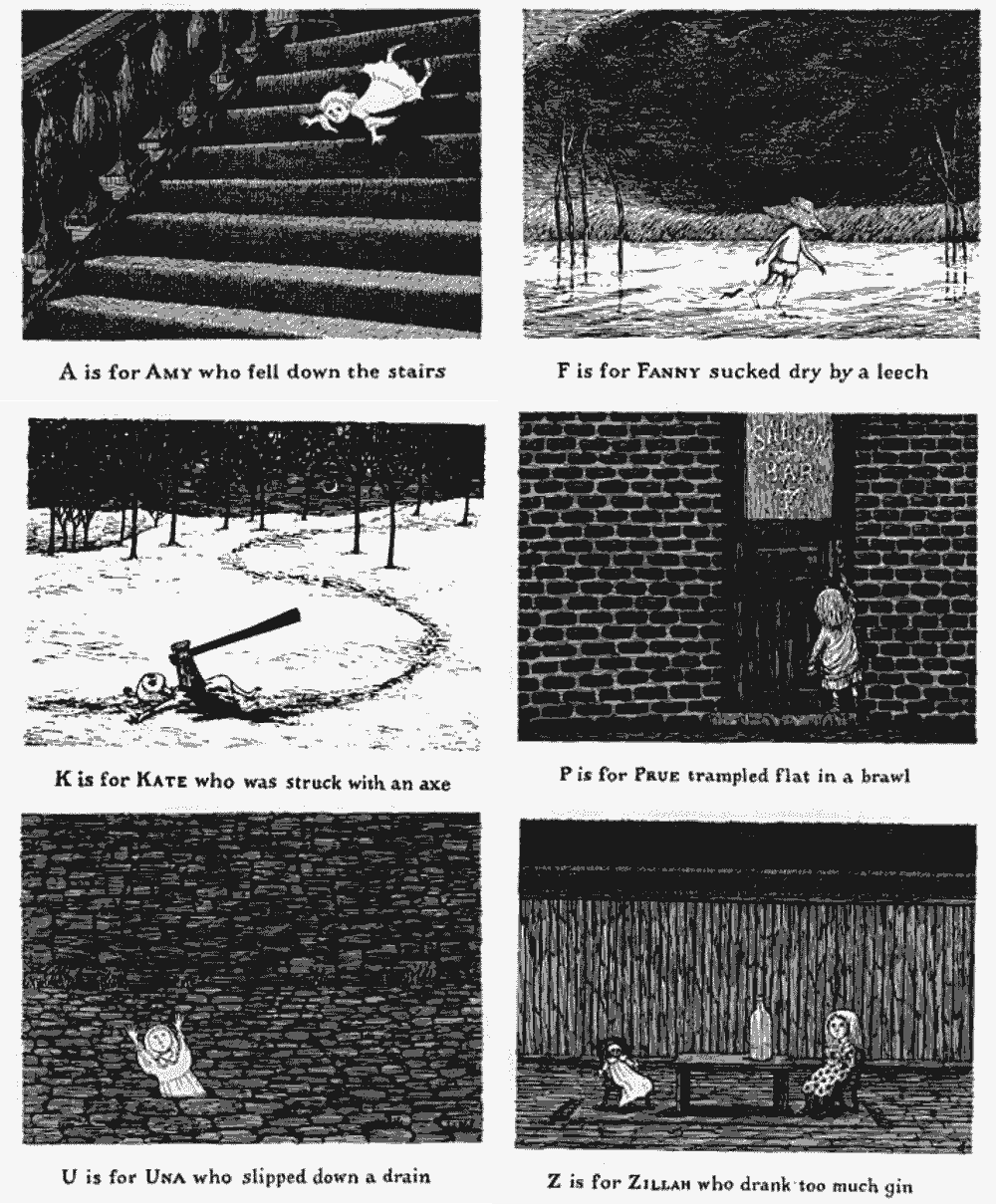
“The Gashlycrumb Tinies is an abecedarian book written by Edward Gorey that was first published in 1963. Gorey tells the tale of 26 children (each representing a letter of the alphabet) and their untimely deaths in rhyming dactylic couplets, accompanied by the author’s distinctive black and white illustrations.” (Wikipedia.org)
Republished by Blog Post Promoter

To consume, or not to consume? This is the question: Whether ’tis Nobler in our minds to suffer The Slings and Arrows of outrageous corporations, Or to withhold our commerce, And by not spending end them?
In a world ruled by Corporations and the government lobbyists they pay for, every day is Black Friday. If you are a consumer, YOU are the one who decides which corporations rule, or not.
Republished by Blog Post Promoter
“ATTEND YOUR OWN FUNERAL.
When your relatives or public officials get around to disposing of your used body you may choose to attend the funeral. This can be complicated, tedious and disturbing to yourself and other funeral guests. Or it can be a great comfort to you and your loved ones. It’s up to you.
If you are concerned that the used body is disposed of properly you should definitely attend to make sure your final wishes have been followed. You may also want to check to see who is really grieving over your absence, and who is only pretending so they can get a share of your estate, and who came for the free food and drinks.
Reverence for the dead is very important. Especially if you’re the one that is dead. One thing is certain – you will never think of funerals the same way again. If you care about what your relatives or the undertaker is going to do with your used body you will want to stay to the end. This includes the burial, cremation, sprinkling of the ashes, donation to the “used parts” laboratory, or whatever is supposed to be done with your used body.
If you plan ahead you can have your body buried in a vegetable garden, a forest, a flower bed, or fed to the fishes in the ocean. It’s a shame to let a perfectly good source of nutrition for plants or other living creatures go to waste!
 AVOID YOUR FUNERAL.
If you are squeamish about autopsies, embalming, funeral piers, cremation incinerators, worms, bugs or bacteria you may want to stay away until all that messy, bad smelling business is over and done.
However, funeral directors have become quite masterful, over the past 5,000 years, at making a dead body look as good, or better, than it looked when it was alive. A little formaldehyde, a few strategic injections, a little stuffing, nice clothes, cosmetics, a wig and a comfy, silk-lined coffin, your used body can look better than ever!
This is a good reason to stay away as you may be enticed to start thinking about going back. Obviously, it’s too late. Factually, you never were a body and you definitely are not a body now. So stay focused. The future is where the rest of your life will be lived!
PRACTICE BEING CUTE.
If you attended your own funeral you are probably suffering from the loss of having a body. More important, you may be thinking that you don’t really have any identity or personality without having a body. How will anyone recognize you without your body?
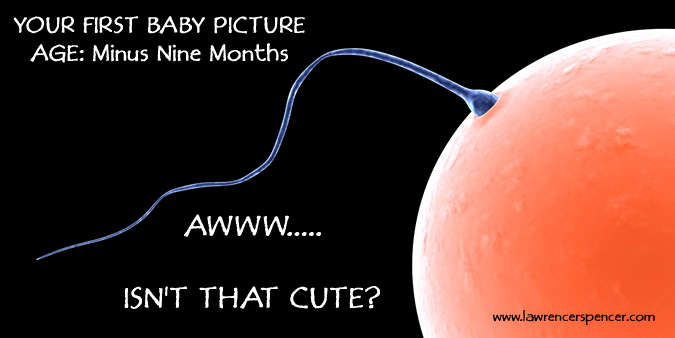
Fortunately, bodies are a nickel a million. Five babies are born every second. So, should you succumb to the ungodly urge to get a new baby body in order to feel a sense of personal identity, you will need to practice being cute.
The only reason people have babies – and keep them – is because they think babies are cute. The same principle applies to all living creatures. So, brush up on looking cute, making cute sounds, doing cute mannerisms, cute smiles, cute laughs, etc.. You’ll need to have your cute skills in top form when and if you get a new body.”
— Excerpt from the book by Lawrence R. Spencer: 1001 THINGS TO DO WHILE YOU’RE DEAD: THE DEAD PERSONS GUIDE TO LIVING
