Republished by Blog Post Promoter
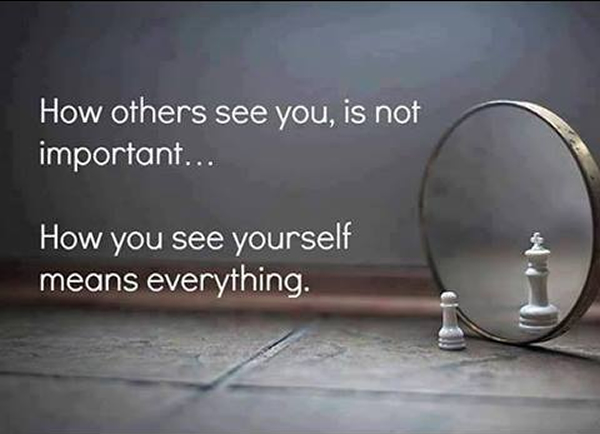
YOU, SEEING YOUR SELF….

Poetry by Lawrence R. Spencer. Poetic nonsense by Lawrence R. Spencer and others. Haiku poems by Lawrence R. Spencer.
Republished by Blog Post Promoter
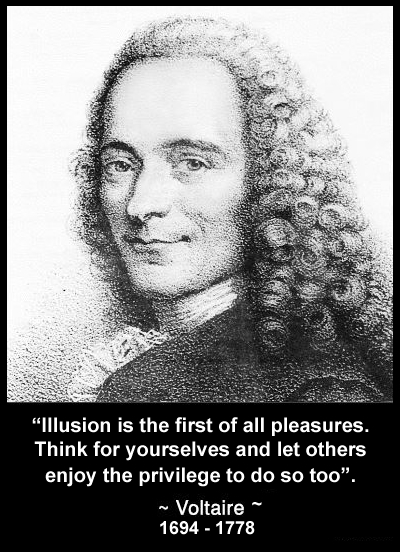
François-Marie Arouet, known by his nom de plume Voltaire, was a French Enlightenment writer, historian and philosopher famous for his wit and for his advocacy of civil liberties, including freedom of religion, freedom of expression, free trade and separation of church and state. Voltaire was a versatile writer, producing works in almost every literary form, including plays, poems, novels, essays, and historical and scientific works. He wrote more than 20,000 letters and more than 2,000 books and pamphlets. He was an outspoken supporter of social reform, despite strict censorship laws with harsh penalties for those who broke them. As a satirical polemicist, he frequently made use of his works to criticize intolerance, religious dogma, and the French institutions of his day. Voltaire was one of several Enlightenment figures (along with Montesquieu, John Locke, Richard Price, Jean-Jacques Rousseau, and Émilie du Châtelet) whose works and ideas influenced important thinkers of both the American and French Revolutions. — http://en.wikipedia.org/wiki/Voltaire
Republished by Blog Post Promoter
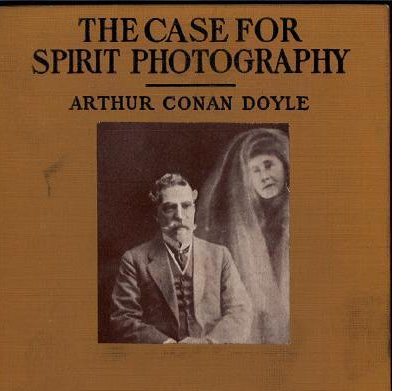 Spiritualism: In Search of Proof of Spirits
During the rise of spiritualism in the mid-1800s and into the early twentieth century, there were mediums who claimed they could speak to the dead and bring forth oddities from the other side of the grave. There were also photographers who produced intriguing psychic photographs of the deceased who were appearing beside loved ones. Arguments ensued about whether or not these paranormal claims were true. Arthur Conan Doyle found that a group of mediums called the “Crew Circle” and one of its members in particular, psychic-medium Billy Hope, had come under strong attack by now legendary ghost investigator, Harry Price, of the Society for Psychical Research. Price was claiming Mr. Hope had switched photographic plates during Price’s investigation of him. Doyle elected to defend Mr. Hope and “maligned members of the Crewe Circle” by publishing evidence in support of the ghost photographs being produced by the group.
Doyle the Spiritualist
Arthur Conan Doyle was a spiritualist who believed that ghosts and spirits could be contacted by use of a psychic-medium. To prove this idea to others, he elected to personally investigate the production of ghost pictures from mediums who were adept at creating this phenomena. His findings were published in 1923 in a book entitled, The Case for Spirit Photography. As of this writing, copies of his book can fetch between $150-300, depending upon condition.
In The Case for Spirit Photography, Arthur Conan Doyle explains his intentions to defend the Crewe Circle, Medium Billy Hope and spirit photography:
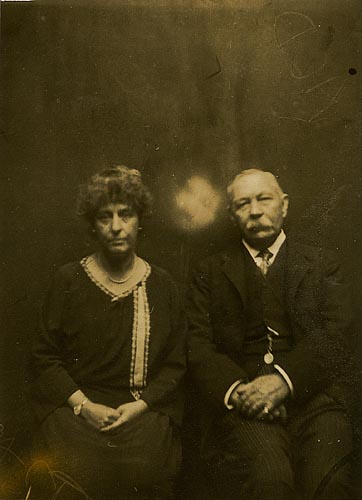 “I hope to make it clear to any unprejudiced mind that there is overwhelming evidence that we have in Mr. Hope, a man endowed with most singular powers, and that, instead of persecuting and misrepresenting him, it would be wiser if we took a sympathetic view of his remarkable work, which has brought consolation to the afflicted, and conviction to many who had lost all belief in the independent life of the spirit.”
Mr. Hope, following on the heels of famed spirit photographer, William Mumler, at the time of Doyle’s investigation, had been producing ghosts in photos for 17 years. He had been tested by the experts of his day who were proficient in photography, science, and investigative journalism. Arthur Conan Doyle tested Mr. Hope and his ghost picture process by purchasing, opening, marking, and inserting his own photographic plates into Hope’s camera. After medium Hope took a picture with the plates, Doyle removed them, developed, and fixed them himself. The pictures would reveal a smoky presence Arthur Conan Doyle called “ectoplasm” – evidence of spirit presence.
Sir Arthur Conan Doyle continues detailing other experiments involving Mr. Hope and the Crewe Circle, including the examination of their character. By the end of the book, we read numerous personal testimonies corroborating Doyle’s conclusions. The testimony of George H. Lethem, at the time serving as Justice of the Peace for the City of Glasgow, was highly credible. Lethem also examined the entire process of the Crewe Circle members and came to the following conclusions about their photographs:
Mr. Hope was never proven a fraud. His process went with him when he left this earth in 1933. Doyle’s book survives today as a positive testimony of Hope’s legacy. The debate about the validity of ghost and spirit photographs still continues to be waged, today, by both skeptics and believers.
After viewing the ghost pictures and evidence that Arthur Conan Doyle puts forth in his book, do you believe he has proven the case for spirit photography? Were the photos just hoaxes or were they real evidence produced by members of the Crewe Circle? You decide…
Republished by Blog Post Promoter
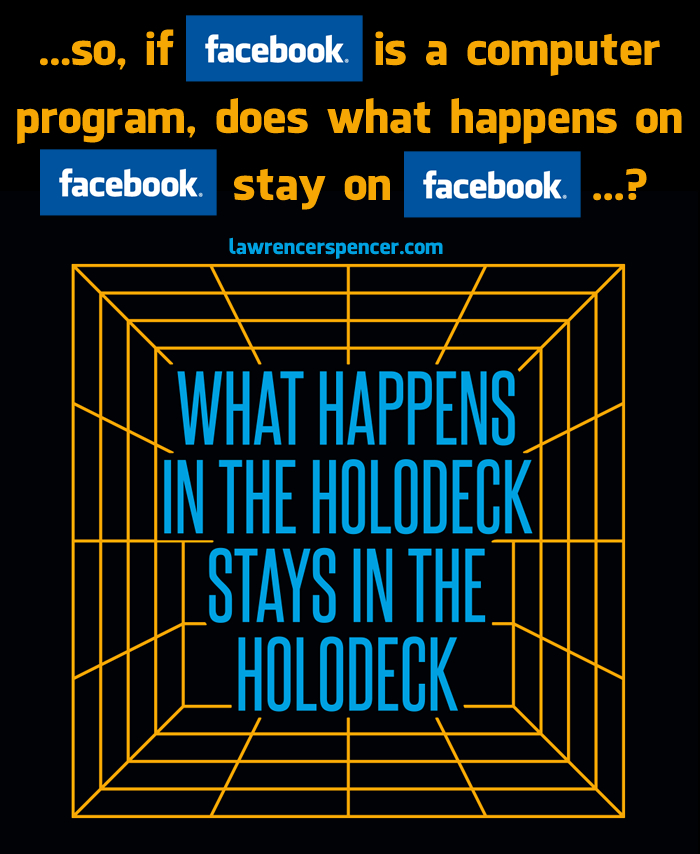 A “holodeck” is an enclosed room in which objects and people are simulated by a combination of transported matter, replicated matter, tractor beams, and shaped force fields onto which holographic images are projected. Most holodeck programs shown in Star Trek episodes run in first person “subjective mode”, in which the user actively interacts with the program and its characters. The user may also employ third-person “objective mode”, in which he or she is “apart” from the actual running of the program and does not interact with it (all of the program’s characters will ignore the user as if he or she was not there. (READ MORE about “Holodeck”)
Virtual reality (VR) or also called Immersive Multimedia is a computer-simulated environment that can simulate physical presence in places in the real world or imagined worlds. (READ MORE about “Virtual Reality”)
Republished by Blog Post Promoter