Republished by Blog Post Promoter



Free Advice about Life, Universe and Other Stuff from Lawrence R. Spencer
Republished by Blog Post Promoter

“The CIA owns everyone of any significance in the major media.”
– William Colby, former CIA director
“We’ll know our disinformation program is complete when everything the American public believes is false.”
– William Casey, CIA Director (from first staff meeting, 1981)
“Deception is a state of mind and the mind of the State.”
– James Angleton, head of CIA counter intelligence from 1954-1974
“I never would have agreed to the formulation of the Central Intelligence Agency back in forty-seven, if I had known it would become the American Gestapo.”
– Harry S. Truman
“The individual is handicapped by coming face-to-face with a conspiracy so monstrous he cannot believe it exists.”
– J. Edgar Hoover, ex-FBI director on the New World Order conspiracy
“If the American people knew what we have done, they would string us up from the lamp posts.”
– George H. W. Bush
” I will splinter the CIA into a thousand pieces and scatter it into the winds.”
– John F. Kennedy
“Fifty men have run America, and that’s a high figure.”
– Joseph Kennedy, father of JFK, in the July 26th, l936 issue of The New York Times
“There is no such thing, at this date of the world’s history, in America, as an independent press. You know it and I know it. There is not one of you who dares to write your honest opinions, and if you did, you know beforehand that it would never appear in print. I am paid weekly for keeping my honest opinion out of the paper I am connected with. Others of you are paid similar weekly salaries for similar things, and any of you who would be so foolish as to write honest opinions would be out on the streets looking for another job. If I allowed my honest opinions to appear in one issue of my paper, before twenty-four hours my occupation would be gone. The business of the journalists is to destroy the truth; to lie outright; to pervert; to vilify; to fawn at the feet of mammon, and to sell his country and his race for his daily bread. You know it and I know it, and what folly is this toasting an independent press? We are the tools and vassals of rich men behind the scenes. We are the jumping jacks, they pull the strings and we dance. Our talents, our possibilities, and our lives are all the property of other men. We are intellectual prostitutes.”
– John Swinton, former New York Times Chief of Staff
Republished by Blog Post Promoter
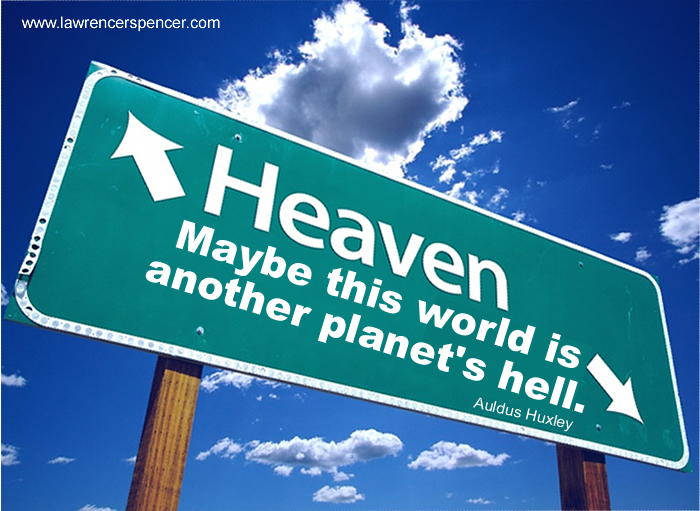 Aldous Huxley, English novelist (1894 – 1963), Author of “Brave New World”
_______________
Seriously, what if Planet Earth really was nothing more than a “hell” established by another planet, or star system, or intergalactic government? It would really explain a lot about the state of affairs on Earth. For example, why are we subjected to continual pain, suffering, death, disease, starvation, chronic war, violence, stupidity, hatred, chaos, greed, earthquakes, tidal waves, volcanoes? These are just a few of a plethora of pandemic pestilences that plague the population on this planet! If you read the Top Secret military transcripts published in the book ALIEN INTERVIEW, you will understand that Earth IS Hell, and the the reasons why.


VISIT THE WEBSITE and BLOG for the book at www.alieninterview.org and www.alieninterview.org/blog
Republished by Blog Post Promoter
This is the second of two back-to-back interviews on VERITAS Radio. Tune in and subscribe at — https://www.veritasradio.com/memberloggedin.php?refer=memberloggedin.php
Republished by Blog Post Promoter
 “Sex at age 90 is like trying to shoot pool with a rope.” — George Burns
“I’m a terrible lover. I’ve actually given a woman an anti-climax.” (Scott Roeben)
“Anyone who says that gratuitous sex is no substitute for gratuitous violence obviously hasn’t had enough gratuitous sex.” (Geoff Spear)
“I love sex. It’s free and doesn’t require special shoes.” (Anonymous)
“Sexual intercourse is kicking death in the ass while singing.” (Charles Bukowski)
“Despite a lifetime of service to the cause of sexual liberation, I have never caught venereal disease, which makes me feel rather like an Arctic explorer who has never had frostbite.” (Germaine Greer)
“I think sex is better than logic, but I can’t prove it.” (Anonymous)
“For me, love is very deep, but sex only has to go a few inches.” (Stacy Nelkin)
“Housework is like bad sex. Every time I do it I swear I will never do it again. Until the next time company comes.” (Marilyn Sokol)
“During sex I fantasize that I’m someone else.” (Richard Lewis)
“There is nothing safe about sex. There never will be.” (Norman Mailer)
“The only difference between friends and lovers is about four minutes.” (Scott Roeben)
“It’s hard to be funny when you have to be clean.” (Mae West)
“There’s nothing inherently dirty about sex, but if you try real hard and use your imagination you can overcome that.” (Lewis Grizzard)
“For flavor, instant sex will never supercede the stuff you have to peel and cook.” (Quentin Crisp)
“Nothing makes you forget about love like sex.” (Staci Beasley)
“I read so many bad things about sex that I had to give up reading.” (Anonymous) sexandsingle.jpg “Sex and golf are the two things you can enjoy even if you’re not good at them.” (Kevin Costner, Tin Cup)
“I’m a great lover, I’ll bet.” (Emo Philips)
“Just saying ‘no’ prevents teenage pregnancy the way ‘Have a nice day’cures chronic depression.” (Faye Wattleton)
“I like my sex the way I play basketball, one on one with as little dribbling as possible.” (Leslie Nielsen)
“I have no luck with women. I once went on a date and asked the woman if she’d brought any protection. She pulled a switchblade on me.” (Scott Roeben)
“Science is a lot like sex. Sometimes something useful comes of it, but that’s not the reason we’re doing it.” (Richard Feynman)
“Sex is identical to comedy in that it involves timing.” (Phyllis Diller)
“One half of the world cannot understand the pleasures of the other.” (Jane Austen)
“If sex doesn’t scare the cat, you’re not doing it right.” (Anonymous)
“Sex is good, but not as good as fresh sweet corn.” (Garrison Keillor)
“I’ve tried several varieties of sex. The conventional position makes me claustrophobic and the others give me a stiff neck or lockjaw.” (Tallulah Bankhead)