Republished by Blog Post Promoter

Paintings, photography, aesthetic objects, beautiful communication, and anything I consider to be art, artful, artistic, artsy or whatever.
Art is subjective. It is a quality of communication can be contributed to by the viewer through empathy or agreement with its creator.
Republished by Blog Post Promoter
Republished by Blog Post Promoter
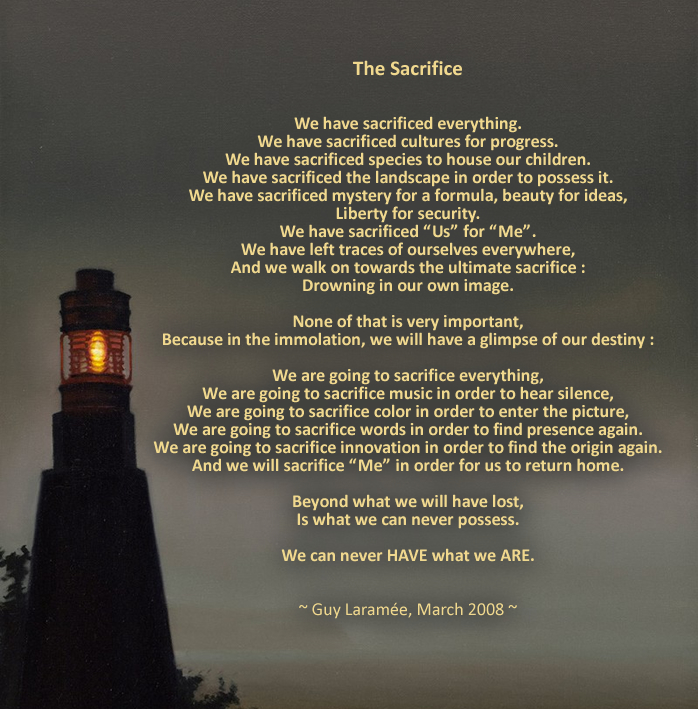 “The erosion of cultures – and of “culture” as a whole – is the theme that runs through the last 25 years of my artistic practice. Cultures emerge, become obsolete, and are replaced by new ones. With the vanishing of cultures, some people are displaced and destroyed. We are currently told that the paper book is bound to die. The library, as a place, is finished. One might ask so what? Do we really believe that “new technologies” will change anything concerning our existential dilemma, our human condition? And even if we could change the content of all the books on earth, would this change anything in relation to the domination of analytical knowledge over intuitive knowledge? What is it in ourselves that insists on grabbing, on casting the flow of experience into concepts?
 When I was younger, I was very upset with the ideologies of progress. I wanted to destroy them by showing that we are still primitives. I had the profound intuition that as a species, we had not evolved that much. Now I see that our belief in progress stems from our fascination with the content of consciousness. Despite appearances, our current obsession for changing the forms in which we access culture is but a manifestation of this fascination.
My work, in 3D as well as in painting, originates from the very idea that ultimate knowledge could very well be an erosion instead of an accumulation. The title of one of my pieces is “ All Ideas Look Alike”. Contemporary art seems to have forgotten that there is an exterior to the intellect. I want to examine thinking, not only “what” we think, but “that” we think.
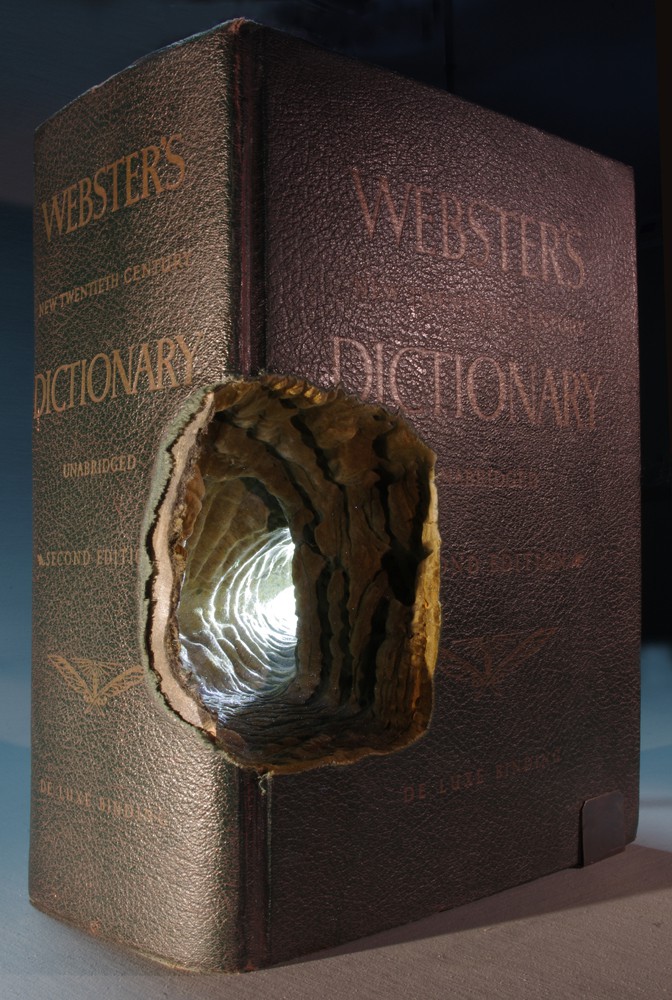
So I carve landscapes out of books and I paint romantic landscapes. Mountains of disused knowledge return to what they really are: mountains. They erode a bit more and they become hills. Then they flatten and become fields where apparently nothing is happening. Piles of obsolete encyclopedias return to that which does not need to say anything, that which simply IS. Fogs and clouds erase everything we know, everything we think we are.
After 30 years of practice, the only thing I still wish my art to do is this: to project us into this thick “cloud of unknowing.” ~ Guy Laramée
Visit the website of the artist, Guy Laramée
Republished by Blog Post Promoter
Republished by Blog Post Promoter
The Yellow-Bellied Sapsucker is a master of natural resource management, conservation, symbiosis, and being a good neighbor!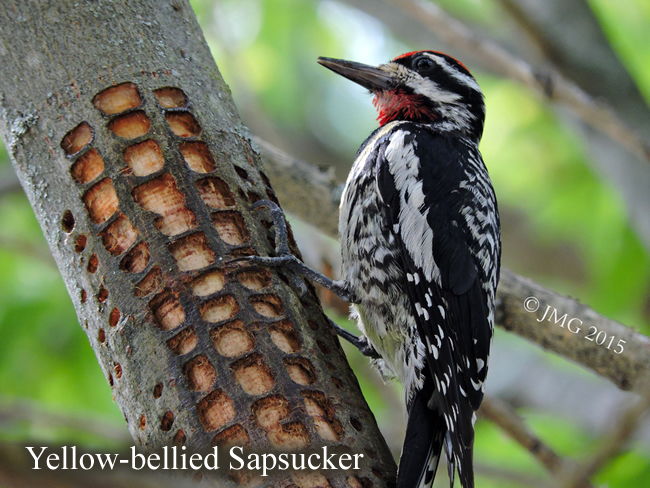 On a walk through the forest you might spot rows of shallow holes in tree bark. In the East, this is the work of the Yellow-bellied Sapsucker, an enterprising woodpecker that laps up the leaking sap and any trapped insects with its specialized, brush-tipped tongue.
The Yellow-bellied Sapsucker makes two kinds of holes in trees to harvest sap. Round holes extend deep in the tree and are not enlarged. The sapsucker inserts its bill into the hole to probe for sap. Rectangular holes are shallower, and must be maintained continually for the sap to flow. The sapsucker licks the sap from these holes, and eats the cambium of the tree too. New holes usually are made in a line with old holes, or in a new line above the old.
LEARN MORE: http://www.allaboutbirds.org/guide/Yellow-bellied_sapsucker/lifehistory/ac
Republished by Blog Post Promoter
Video by Richard Borge
Lyrics and Music by Tom Waits:
Misery’s the River of the World.
Misery’s the River of the World.
The higher the monkey can climb the more he shows his tail.
Call no man happy ’til he dies.
There’s no milk at the bottom of the pail.
God builds a church.
The Devil builds a chapel like the thistles that are growing ’round the trunk of a tree.
All the good in the world you can put inside a thimble and still have room for you and me.
If there’s one thing you can say about Mankind: there’s nothing kind about Man.
You can drive out Nature with a pitch fork but it always comes roaring back again.
Misery’s the River of the World.
Misery’s the River of the World.
Misery’s the River of the World.
For want of a bird the sky was lost.
For want of a nail a shoe was lost.
For want of a life the knife was lost.
For want of a toy a child was lost.
Misery’s the River of the World.
Misery’s the River of the World.
Everybody Row! Everybody Row!
Misery’s the River of the World.
Misery’s the River of the World.
Everybody Row! Everybody Row!