Paintings, photography, aesthetic objects, beautiful communication, and anything I consider to be art, artful, artistic, artsy or whatever.
Art is subjective. It is a quality of communication can be contributed to by the viewer through empathy or agreement with its creator.
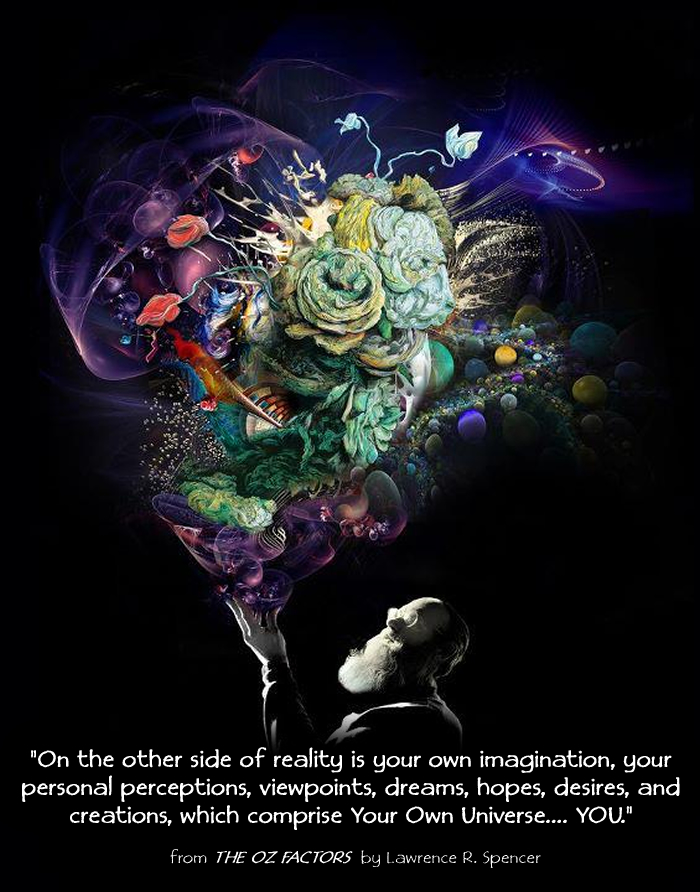
“On the other side of reality is your own imagination, your personal perceptions, viewpoints, dreams, hopes, desires, and creations, which comprise Your Own Universe…. YOU.”
“IF YOU WANT TO FIND THE SECRETS OF THE UNIVERSE, THINK IN TERMS OF ENERGY, FREQUENCY AND VIBRATION.” — Nikola Tesla
The full experiment:
WIKIPEDIA DEFINITION OF TERMINOLOGY:
The hertz is named after the German physicist Heinrich Hertz (1857–1894), who made important scientific contributions to the study of electromagnetism. The name was established by the International Electrotechnical Commission (IEC) in 1930.[6] It was adopted by the General Conference on Weights and Measures (CGPM) (Conférence générale des poids et mesures) in 1960, replacing the previous name for the unit, cycles per second (cps), along with its related multiples, primarily kilocycles per second (kc/s) and megacycles per second (Mc/s), and occasionally kilomegacycles per second (kMc/s). The term cycles per second was largely replaced by hertz by the 1970s.
Applications
Sine wave with varying frequency.
Details of a heartbeat as an example of a non-sinusoidal periodic phenomenon that can be described in terms of hertz. Two complete cycles are illustrated.
Vibration
Sound is a traveling longitudinal wave which is an oscillation of pressure. Humans perceive frequency of sound waves as pitch. Each musical note corresponds to a particular frequency which can be measured in hertz. An infant’s ear is able to perceive frequencies ranging from 20 Hz to 20,000 Hz; the average adult human can hear sounds between 20 Hz and 16,000 Hz.[7] The range of ultrasound, high-intensity infrasound and other physical vibrations such as molecular vibrations extends into the megahertz range and well beyond.
Electromagnetic radiation
Electromagnetic radiation is often described by its frequency—the number of oscillations of the perpendicular electric and magnetic fields per second—expressed in hertz.
Radio frequency radiation is usually measured in kilohertz (kHz), megahertz (MHz), or gigahertz (GHz). Light is electromagnetic radiation that is even higher in frequency, and has frequencies in the range of tens (infrared) to thousands (ultraviolet) of terahertz. Electromagnetic radiation with frequencies in the low terahertz range, (intermediate between those of the highest normally usable radio frequencies and long-wave infrared light), is often called terahertz radiation. Even higher frequencies exist, such as that of gamma rays, which can be measured in exahertz. (For historical reasons, the frequencies of light and higher frequency electromagnetic radiation are more commonly specified in terms of their wavelengths or photonenergies: for a more detailed treatment of this and the above frequency ranges, see electromagnetic spectrum.)
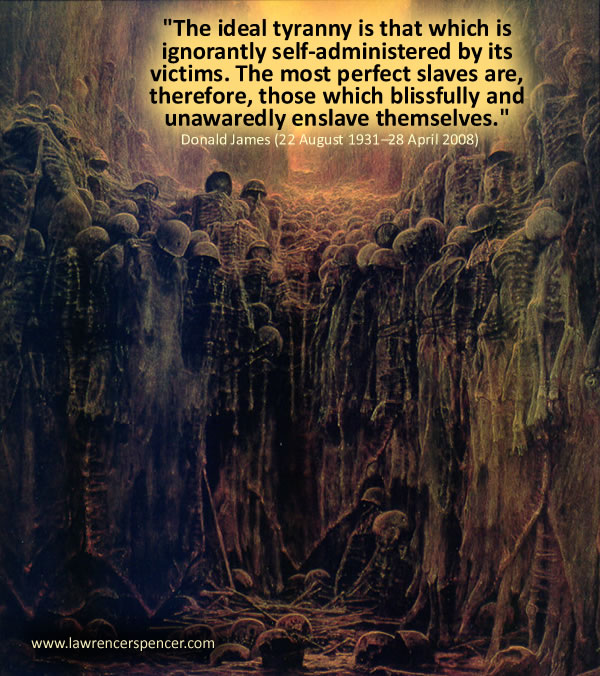
“The ideal tyranny is that which is ignorantly self-administered by its victims. The most perfect slaves are, therefore, those which blissfully and unawaredly enslave themselves.”
— Donald James (22 August 1931—28 April 2008) — the author of the best-selling novels Vadim, Monstrum, The Fortune Teller and The Fall of the Russian Empire, as well as non-fiction books such as The Penguin Dictionary of the Third Reich. He wrote under a number of pseudonyms, notably Thomas Dresden and James Barwick. James’s career as a scriptwriter included work on TV series such as The Adventurer, The Avengers, The Champions, Department S, Joe 90, Mission: Impossible, The Persuaders!, The Protectors, Randall and Hopkirk (Deceased), The Saint, The Secret Service, Space: 1999, Terrahawks and UFO. He wrote for a total of 22 titles, including the Century 21 film Doppelgänger.