Republished by Blog Post Promoter
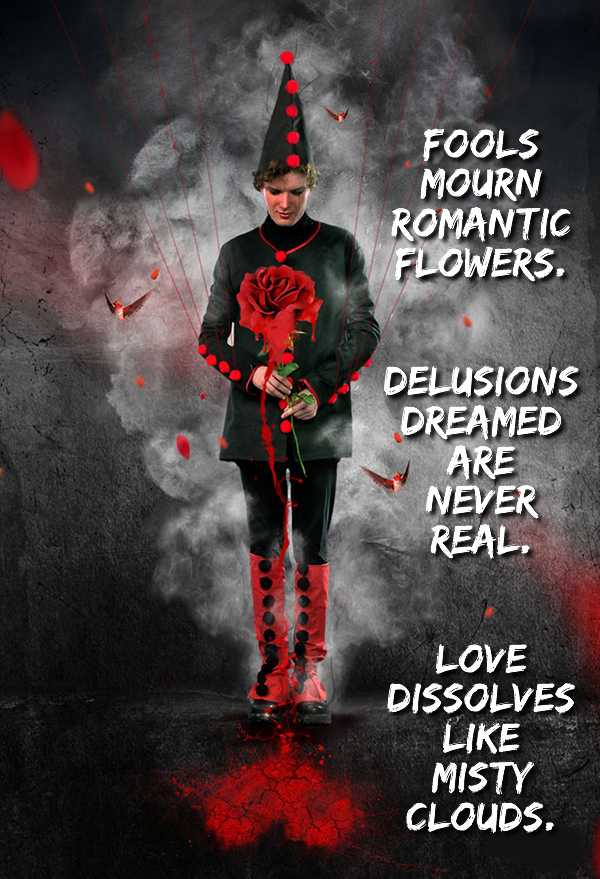
MOURNING FOOL HAIKU
Fools Mourn Romantic Flowers
Delusions Dreamed Are Never Real
Love Dissolves Like Misty Clouds.
_________________
Lawrence R. Spencer. 2013.

Republished by Blog Post Promoter
MOURNING FOOL HAIKU
Fools Mourn Romantic Flowers
Delusions Dreamed Are Never Real
Love Dissolves Like Misty Clouds.
_________________
Lawrence R. Spencer. 2013.
Republished by Blog Post Promoter

The Primary Prevention of Peace and Prosperity on this Planet is PEOPLE!
If you are a “people” who seeks Peace and Prosperity, avoid patronizing people who practice professions beginning with the letter “P”.
EXAMPLES:
PROPHET, PRIEST, PREACHER, POPE, POLITICIAN, PRIVATE BANKER, POLICE, PROFITEER, PETROLEUM (fill in the blank), PHARMACEUTICAL (fill in the blank), PHARMACIST, PROSECUTOR, PSYCHIATRIST, PSYCHOLOGIST, PHYSICIST, PEDANT, POTENTATE, POET, PHILOSOPHER, POLITICAL (fill in the blank), PIMP, PROSTITUTE, PUSHER, PERVERT, PIRATE, POSER, POLE DANCER, PHILANTHROPIST, PRINCIPAL, PROFESSIONAL (fill in the blank), PRACTITIONER OF THE LAW, POWER BROKER, POLTERGEIST, POINT MAN, PISTOLEER, PARATROOPER, PRICE-FIXER, PUNDIT, POLECAT, PAWN BROKER, PORK BARREL LOBBYIST to name a few….
— “FREE ADVICE” courtesty of Lawrence R. Spencer
Republished by Blog Post Promoter
 “When I despair, I remember that all through history the ways of truth and love have always won. There have been tyrants, and murderers, and for a time they can seem invincible, but in the end they always fall. Think of it–always.”
“Power is of two kinds. One is obtained by the fear of punishment and the other by acts of love. Power based on love is a thousand times more effective and permanent then the one derived from fear of punishment.”
Republished by Blog Post Promoter
Republished by Blog Post Promoter
This is my favorite live music performance of all time. Astonishing…haunting… mesmerizing…amazing!
via YouTube – Steps Ahead – Live in Tokio 1986, 30th July – In a sentimental mood / Trains.