Tag Archives: war

COMPUTER, END PROGRAMS

Republished by Blog Post Promoter

The personal toys we call “computers” are not real computers.  The “apps” we are allowed to use on our toy computers are social and mind control devices, designed for governmental surveillance and “dumbing down” members of “the masses”.  If the real potential power of computing technology were applied to creating prosperity and intelligence instead of war, subservience and scarcity, the human race could travel to the stars and beyond at speeds exceeding light, and create a literal paradise on Earth .  As it is, we’re going nowhere fast.

END PROGRAMS

REALITY IS A DISINFORMATION PAGEANT

Republished by Blog Post Promoter

“We’ll know our disinformation program is complete when everything the American public believes is false.” William Casey, CIA Director (from first staff meeting in 1981)

____________________________

“The “Old Empire” thought control operation is run by a small group of old “baboons” with very small minds.  They are playing insidious games with no purpose and no goal other than to control and destroy IS-BEs who could otherwise manage themselves perfectly well, if left alone.  These types of artificially created incidents are being forced upon the human race by the operators of the mind-control prison system. The prison guards will always promote and support oppressive or totalitarian activities of IS-BEs on Earth.  Why not keep the inmates fighting between themselves?  Why not empower madmen to run the governments of Earth?  The men who run the criminal governments of Earth mirror the commands given them by covert thought-controllers of the “Old Empire”.”

— Excerpt from the Top Secret military transcripts from Roswell AFB, 1947, published in the book ALIEN INTERVIEW.

_____________________________

If you have never seen the film WAG THE DOG, here is a trailer and a couple of extra videos that illustrate exactly how the main-stream media is used to control the minds of the public.  It’s not reality: “it’s a pageant”.

The following video shows “real life” examples of the CIA disinformation “pageant” in recent events.  The point is simple: you can’t believe ANYTHING you see on television.  It is all a “disinformation pageant” designed to control you, keep you in fear, keep you paying taxes, praying to non-existent gods, supporting false economies, and electing criminal politicians to pass laws that will enslave you.

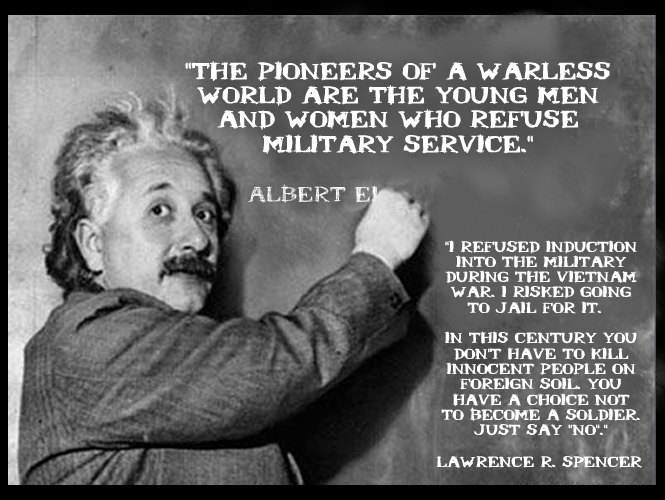
WITHHOLD A PIECE FOR PEACE, LADIES

Republished by Blog Post Promoter

A synopsis of the play “LYSISTRATA” by the Greek poet and play writer, Aristophanes ( 411 B.C.E.)

The Peloponnesian War has been dragging on for eighteen long years, and the beautiful Lysistrata, in common with the other wives of Athens, is heartily tired of the intermittent absence of their warrior husbands. She decides that it is time to bring an end to this situation. The only solution, she concludes, is a boycott to deprive the husbands of their wives’ love.

Lysistrata sets out to enlist the other women in the plan, but finds them somewhat reluctant. One thinks that to so punish their husbands would be punishing themselves; others offer similar excuses. Lysistrata tells them that they are cowards and that the poets’ jibes about women’s frailty are well deserved.

But she perseveres in her determination, and convinces the women at last that peace surely will come if they all dress, powder and perfume themselves irresistibly, then withhold their favors from their men unless they promise to take steps to end the war forthwith. The wives agree to try the scheme, and, for a start, seize the public funds. The old men of Athens try to burn them out of the treasury, but the embattled women retaliate with pitchers of water upon their heads. The President of the Senate arrives at this juncture, ordering the arrest of “that traitress,” Lysistrata.

The women win the scuffle that follows, the President admitting defeat; but he asks an explanation for the feminine onslaught upon the treasury. Lysistrata blandly explains their purpose: to save the public money so that the men won’t fight any wars over it. The President protests the absurdity of their fancy that the war is being fought over mere money. Lysistrata assures him that of course it is; that every war is for the sake of money–else why are politicians always manufacturing wars? Merely as an occasion to steal, she says.

Then Lysistrata announces that, from now on, things are going to be different: the men won’t be able to get any money for fighting because the women are going to take over the treasury. And why not? They manage the household finances. But household finances, the President tolerantly explains, are quite different; the public money is necessary for the fighting. To this Lysistrata readily agrees, but adds that the fighting itself is hardly necessary.

The listening women, weary of the argument by this time, seize the President, unclothe him and dress him as a woman. They tell him that they are going to take the state into their own hands, rescue it from the muddling of men, unravel the knots of war just as they straighten out a skein of wool, and unite all nations into a single thread of peace and good will.

But the President persists: war, after all, is the business of men, he says. Nothing of the kind, Lysistrata replies, it is the business of women–for who suffers most in the loss on the battlefields of sons and husbands? To end the debate, the women again seize the official and garb him as a corpse. He retreats in terror.

After a time, the wives of the enemy city of Sparta join in the boycott. The plan is a success: the husbands of both cities surrender to their wives, and, to recapture their love, agree to end the war. Here a male chorus observes that it was a wise philosopher who called women the paradoxical sex: you cannot live with them and you cannot live without them. A female chorus replies that, say what you will and do what you will, the women always have the last word, for theirs is the unanswerable argument. Together the choruses agree that there has been enough of idle quarrels: they urge that the discord cease.

Lysistrata is chosen as intermediary between the Athenian and Spartan envoys for formal termination of the conflict, and she lectures them soundly at the start of their conference. She is a woman, she says, but hopes that she is not without some sense; she reminds them that they are all of the same blood, the same gods and the same language. Why, then, do they kill each other? Why should they not come to terms? She agrees that it may be necessary for animals to fight, but certainly not for men–particularly for Greek men–to fight among themselves while barbarians are looking on.

A Spartan delegate announces that his side is ready to make peace if it gets what it wants, and an Athenian observes that what both the Spartans and Athenians want is to get their wives back again. Lysistrata sees some feasibility in this, but orders that first the former enemies must go off to a feast to repair their friendship. After that, she says, each warrior may take his woman home.

The warriors try Lysistrata’s program, and at length return as bosom friends. This accomplished, she bids them each take his woman, and all join in a dance of peace as the chorus pleads:A Spartan seconds this idea, proposing further, that they all get drunk–a suggestion not unpleasant to one Athenian who notes that people are surliest when most sober. If there were more drinking bouts among diplomats, he thinks, there would be no war; they would drown their quarrels in wine, have some singing together, and decide that, after all, an enemy could still be a good fellow.

“O let us prayTo the gods today
While in peace we eatOur bread and our meat.
That every fieldMay its harvest yield,
O Venus, arrayed in love, restore
The hopes and joys we have lost in the war…
Let the sword be forgotten for evermore.”