Tag Archives: universe

PASSAGE HOME

Republished by Blog Post Promoter
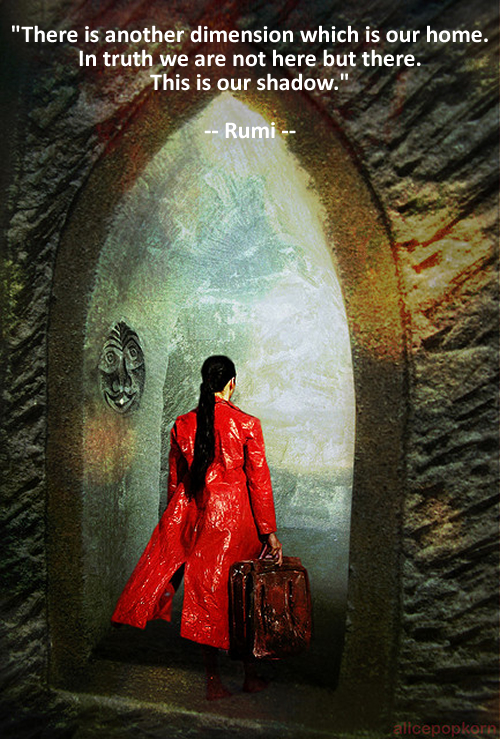
PASSAGE(Image by Cornelia Kopp)

“There is another dimension which is our home. In truth we are not here but there.
This is our shadow.”

Jalāl ad-Dīn Muhammad Balkhī (Persian, also known as Jalāl ad-Dīn Muhammad Rūmī and more popularly in the English-speaking world simply as Rumi.

(30 September 1207 – 17 December 1273), was a 13th-century Persianpoet, jurist, theologian, and Sufi mystic.Iranians, Turks, Afghans, Tajiks, and other Central Asian Muslims as well as the Muslims of the Indian subcontinent have greatly appreciated his spiritual legacy in the past seven centuries. Rumi’s importance is considered to transcend national and ethnic borders. His poems have been widely translated into many of the world’s languages and transposed into various formats. In 2007, he was described as the “most popular poet in America.”

CONSTANT CHANGE

Republished by Blog Post Promoter

“The Only Constant is Change.”

CONSTANT CHANGE

Heraclitus of Ephesus (c. 535 BC – 475 BC) was a Greek philosopher, known for his doctrine of change being central to the universe, and for establishing the term Logos (λόγος) in Western philosophy as meaning both the source and fundamental order of the Cosmos.  From the lonely life he led, and still more from the riddling and paradoxical nature of his philosophy and his stress upon the needless unconsciousness of humankind, he was called “The Obscure” and the “Weeping Philosopher”.  He believed in the unity of opposites, stating that “the path up and down are one and the same”, all existing entities being characterized by pairs of contrary properties. His cryptic utterance that “all entities come to be in accordance with this Logos” (literally, “word”, “reason”).

UNIVERSE HAIKU

Republished by Blog Post Promoter

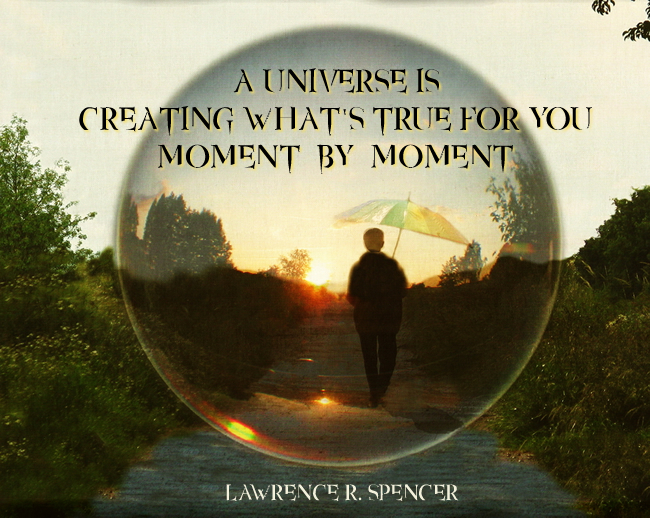
A UNIVERSE IS

CREATING WHAT’S TRUE FOR YOU

MOMENT BY MOMENT

______________________________________________

Definition of “HAIKU” — noun:   an epigrammatic Japanese verse form of three short lines.  In contrast to English verse typically characterized by meter, Japanese verse counts sound units known as “on” or morae. Traditional haiku consist of 17 on, in three phrases of five, seven and five on respectively.

ALL IS MIND

Republished by Blog Post Promoter

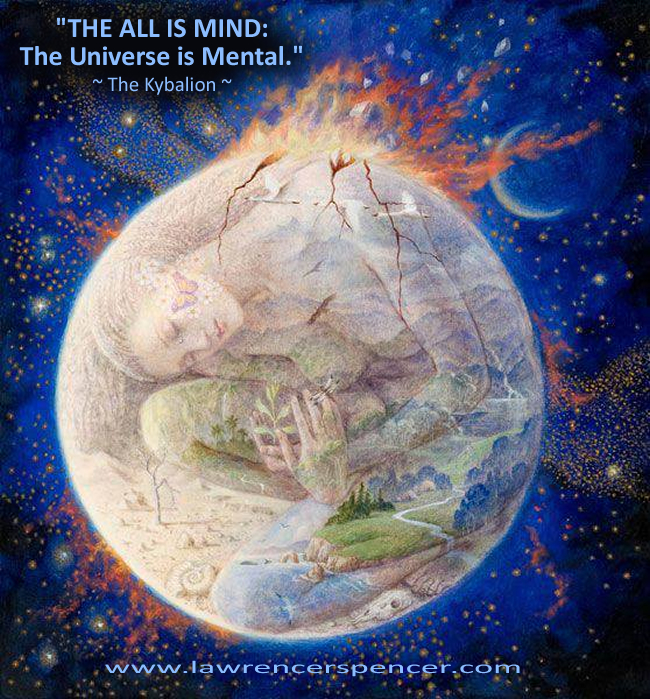
ALL IS MIND

This principle embodies the truth that “All is Mind.” It explains that THE ALL (which is the Substantial Reality underlying all the outward manifestations and appearances which we know under the terms of “The Material Universe”; the ”Phenomena of Life”; “Matter”; ”Energy”; and, in short, all that is apparent to our material senses) is SPIRIT, which in itself is UNKNOWABLE and UNDEFINABLE, but which may be considered and thought of as AN UNIVERSAL, INFINITE, LIVING MIND. It also explains that all the phenomenal world or universe is simply a Mental Creation of THE ALL, subject to the Laws of Created Things, and that the universe, as a whole, and in its parts or units, has its existence in the Mind of THE ALL, in which Mind we “live and move and have our being.” This Principle, by establishing the Mental Nature of the Universe, easily explains all of the varied mental and psychic phenomena that occupy such a large portion of the public attention, and which, without such explanation, are non-understandable and defy scientific treatment.

– from The Kybalion