Republished by Blog Post Promoter
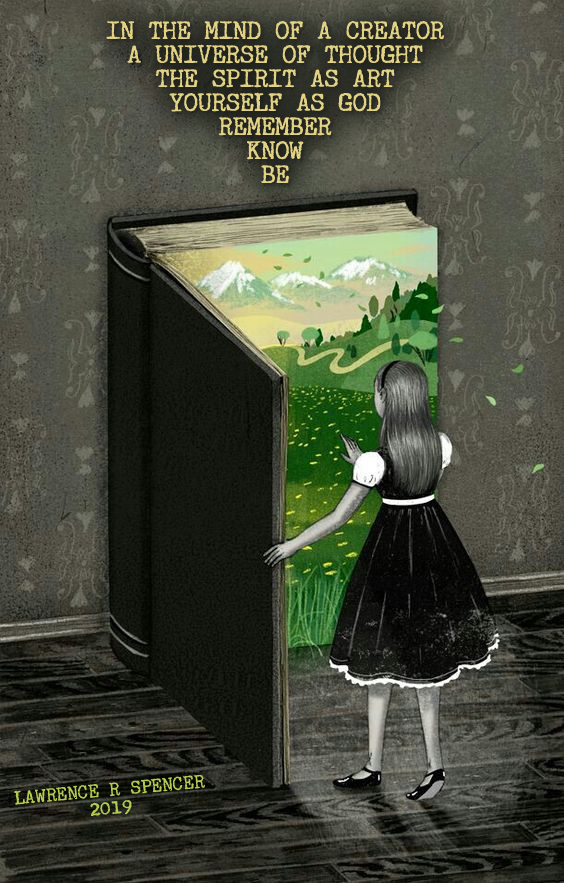 IN THE MIND OF A CREATOR
A UNIVERSE OF THOUGHT
THE SPIRIT AS ART
YOURSELF AS GOD
REMEMBER
KNOW
BE
~ Lawrence R. Spencer. 2019 ~

Republished by Blog Post Promoter
A UNIVERSE OF THOUGHT
THE SPIRIT AS ART
YOURSELF AS GOD
REMEMBER
KNOW
BE
~ Lawrence R. Spencer. 2019 ~
Republished by Blog Post Promoter

Republished by Blog Post Promoter
I am fascinated with the metaphysically meditational graphic photo-manipulations of Tasmanian artist Cameron Gray. (http://parablevisions.com/)
Republished by Blog Post Promoter
Republished by Blog Post Promoter
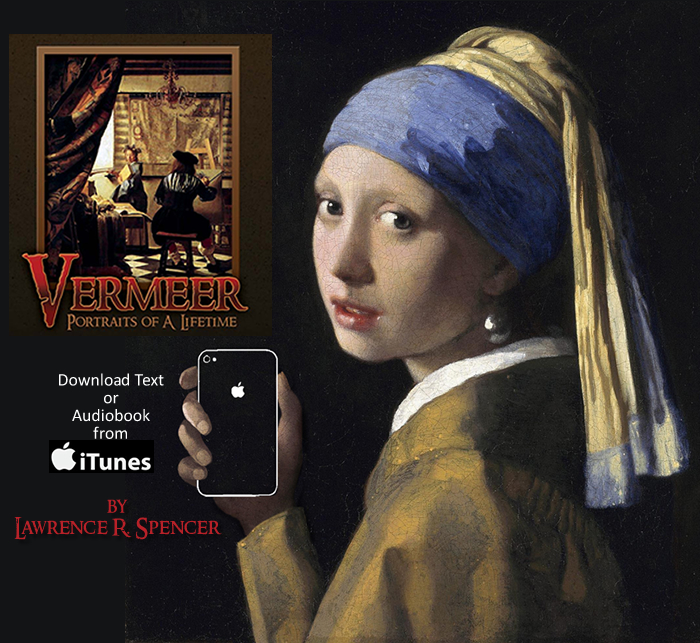
“I am very sure that my new book, Vermeer: Portraits of A Lifetime, will be considered by many people to be delusional or heretical. Many will dismiss my observations and comments because they don’t follow the dictates of “authoritative research” or the opinions of art “experts”.
This book may threaten persons who have a financial vested interest in the Vermeer paintings that still exist today, as their livelihood or financial well-being depend to some degree on the value currently assigned to the paintings.
Although the monetary value of Vermeer’s paintings have been vastly inflated, in part, due to the mystique created by authorities or speculators, it is not my intention to devaluate them. It is not my intention to invalidate property that was sold or bartered by Vermeer and his wife, Catharina, hundreds of years ago. Quite the contrary.
My intention is to honor the lives of Johannes, Catharina, their eleven surviving children and Maria Thins, his mother-in-law and patroness.
This book does not represent or endorse any financial, spiritual, religious, political organization or practice or philosophy of any kind. All personal observations and opinions offered by the author herein are purely and solely personal opinions, with no other source than those noted in the footnotes or appendix.
Any and all individuals or organizations from whom research and/or opinions have been borrowed or sited for referential purposes in this book are not affiliated with and do not in any way acknowledge the validity of or endorse the findings or assertions of the author or publisher of this book.
Finally, this book is not intended for people who have a vested interest, or who “know best”. Personal observations, whether visual, empathetic or conjectural, of the author about the life and death of Vermeer, 300 years after the fact, are wholly subjective.”
Vermeer: Portraits of A Lifetime https://itunes.apple.com/us/audiobook/vermeer-portraits-lifetime/id569744974
Paperback book — 