THE PATHLESS LAND

Republished by Blog Post Promoter


Krishnamurthi

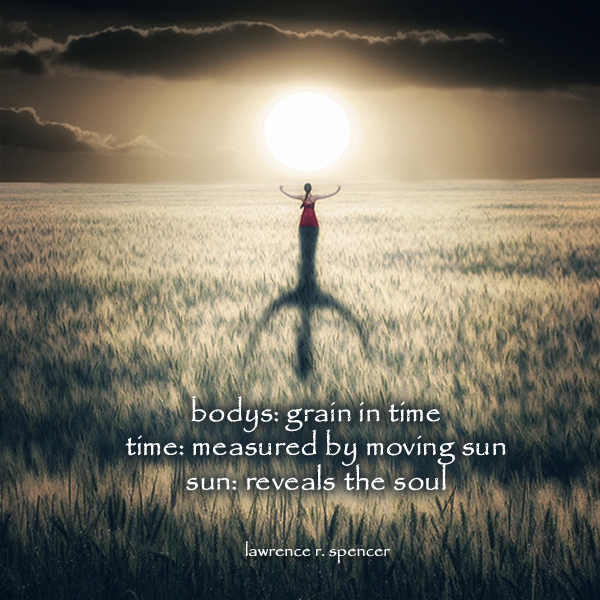
“I maintain that Truth is a pathless land, and you cannot approach it by any path whatsoever, by any religion, by any sect.”
— Jiddu Krishnamurti —

_____________________________________

Jiddu Krishnamurti (May 12, 1895 – February 17, 1986) was an Indian speaker and writer on philosophical and spiritual subjects, and was widely considered as a World Teacher. His subject matter included: psychological revolution, the nature of mind, meditation, inquiry, human relationships, and bringing about radical change in society. He constantly stressed the need for a revolution in the psyche of every human being and emphasized that such revolution cannot be brought about by any external entity, be it religious, political, or social.

AS ABOVE SO BELOW

Republished by Blog Post Promoter
AS ABOVE SO BELOW

Mortality Mechanics' ManualThe Secret of The Thrice-Greatest Hermes (the three parts of the wisdom — alchemy, astrology, and theurgy — is a text purporting to reveal the secret of the primordial No-Thing and its diverse transmutations, passed down to humankind through an entity described as a combination of the Greek messenger of the gods, Hermes, and the Egyptian god Thoth, who guided souls to the afterlife.)

It was revealed in a letter written by the Greek philosopher and teacher, Aristotle to his student, Alexander the Great, who perceived himself as god-like, and yet remained mortal.  Aristotle, hoping to pass his own investigation into the Mystery of Mysteries to his student, related this story of his adventures:

“Here is that which the priest Sagijus of Nabulus has dictated concerning the entrance
of Balinas into the hidden chamber…  
After my entrance into the chamber I came up to an old man sitting on a golden throne.  He was holding an emerald tablet in one hand.

And behold the following, engraved in Cyriac, the primordial language of Cyrus The Great, was written thereon:  It contains an accurate commentary that cannot be doubted.  It states:

“What is the above is from the below and the below is from the above. The work of Wonders is from The One.”

— from the book MORTALITY MECHANICS MANUAL, by Lawrence R. Spencer

Support independent publishing: Buy this book on Lulu.

DOWNLOAD THE AUDIOBOOK )  

AESOP’S FABLE: LIFE LESSONS FROM 620 BC

Republished by Blog Post Promoter

AESOP’S FABLES are a collection of hundreds of short stories, usually featuring animals impersonating humans, that tell a pithy moral story.  They are precise observations of human behavior made more than 2,500 years ago by a Greek writer / philosopher.  Aesops lived in Greece around the same time the Buddha and Loa-Tze lived in the India and China.  His moral lessons are as relevant now as they were in 620 BCE.  This demonstrates the maxim that “The more things change, the more they stay the same“.  Apparently, this applies even more so to human behavior and misbehavior.  — Lawrence Spencer, 2012

________________________________________________________________________

Aesop (c. 620-564 BC)  was a fabulist or story teller credited with a number of fables now collectively known as Aesop’s Fables. He was born a slave, and in his lifetime two different masters owned him before being granted his freedom. The slave masters were named, Xanthus and Iadmon, the latter gave him his freedom as a reward for his wit and intelligence. As a freedman he became involved in public affairs and traveled a lot—telling his fables along the way. King Croesus of Lydia was so impressed with Aesop that he offered him residency and a job at his court.

“The popularity of Aesop is also shown by the fact that Plato records that Socrates decided to versify some of his fables while he was in jail awaiting execution.”  -Robert Temple

While on a mission for King Croesus to distribute a certain amount of gold to the people of Delphi in Greece, there was a misunderstanding about how much gold each person was supposed to receive. Aesop became discouraged because the Delphians did not seem appreciative enough of the gift from the King so Aesop decided to take it all back to King Croesus. On his journey back the people of Delhi, who thought he was actively cheating them and giving them a bad reputation, tracked him down. Lloyd W. Daly writes “Apprehensive of his spreading this low opinion of them on his travels, the Delphians lay a trap for Aesop. By stealth they [stashed] a golden bowl from [their] temple in his baggage; then as he starts off through Phocis, they overtake him, search his baggage, and find the bowl. Haled back to Delhi, Aesop is found guilty of sacrilege against Apollo for the theft of the bowl and is condemned to death by being hurled off a cliff.”

READ THE ON-LINE FABLES OF AESOP HERE:  http://www.aesopfables.com/aesopsel.html

“We hang the petty thieves and appoint the great ones to public office.”

“United we stand, divided we fall.”

“The gods help them that help themselves.”

“The shaft of the arrow had been feathered with one of the eagle’s own plumes. We often give our enemies the means of our own destruction.”

“I will have nought to do with a man who can blow hot and cold with the same breath.”

“We would often be sorry if our wishes were gratified.”

“Never trust the advice of a man in difficulties.”

“No act of kindness, no matter how small, is ever wasted.”

120 YEARS AGO

Republished by Blog Post Promoter

FRED OTT SNEEZE 1894

“Fred Ott’s Sneeze” by the Edison Manufacturing Company.

This was the first motion picture to be copyrighted in the United States.  In the five-second film, one of Thomas Edison’s assistants, Fred Ott, takes a pinch of snuff and sneezes. The film was recorded between January 2, 1894 and January 7, 1894.    Source: Wikipedia

ALIEN INTERVIEW

It is truly amazing to me to think that motion pictures did not exist on this planet until as recently as 120 years ago.  This is only about two life times!!!  When my Grandmother was a young woman, motion pictures were a “new thing”!  She lived on a farm in Michigan.  She raised 8 children.

They, along with a lot of other Americans, were farmers.  They grew their own food, and raised chickens, and had a milk cow.  They churned their own butter and plowed hard dirt fields to grown corn and vegetables to feed themselves.

Their wooden house did not have indoor plumbing.  They pumped water from a hand operated water pump in the front yard.  They carried buckets of water into the house and boiled it on a wood-burning stove for drinking, cooking, bathing and washing clothes!

There was no electricity.  The only source of light and energy were candles, a wood burning stove and a fireplace and kerosene lamps.

Their was no indoor bathroom.  They had a small, wooden “out-house” about 30 yards from the main house.  When you needed to take a pee during the night, you used a brass or porcelain bowl that was kept under the bed.  Or, if you were brave enough, you could walk through the snow to the out-house to take a shit in privacy and freeze your ass off!

No air conditioning.  All the doors and windows were left open during the summer.  In the winter time they sat directly in front of the wood-burning stove, or snuggled together underneath piles of blankets in bed as soon as the sun went down! 

Times have certainly changed, technologically, at least in the USA. Do you ever wonder why and how so many technological innovations have been created during the past 120 years?  During the previous 10,000 years of human history there were nearly NO technical advancements!  Why have there been so many during the past 120 years?

Read the book ALIEN INTERVIEW.  You will find some answers in the pages of this book.

VISIT THE WEBSITE for the book at www.alieninterview.org

Support independent publishing: Buy this book on Lulu.