Republished by Blog Post Promoter
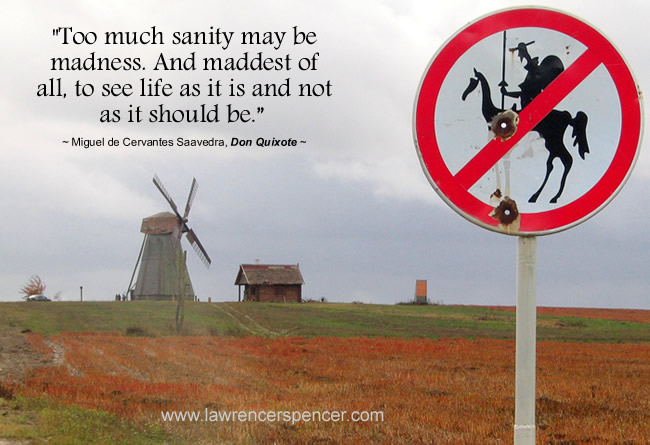 Don Quixote, fully titled The Ingenious Gentleman Don Quixote of La Mancha (Spanish: El ingenioso hidalgo don Quijote de la Mancha), is a Spanish novel by Miguel de Cervantes Saavedra. It follows the adventures of Alonso Quixano, an hidalgo (lower class of Spanish nobility) who reads so many chivalric novels that he decides to set out to revive chivalry, under the name Don Quixote. He recruits a simple farmer, Sancho Panza, as his squire, who often employs a unique, earthly wit in dealing with Don Quixote’s rhetorical orations on antiquated knighthood.
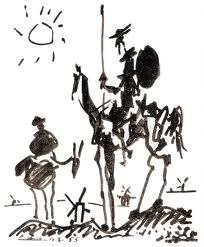 Published in two volumes, in 1605 and 1615, Don Quixote is considered the most influential work of literature from the Spanish Golden Age and the entire Spanish literary canon. As a founding work of modern Western literature, and one of the earliest canonical novels, it regularly appears high on lists of the greatest works of fiction ever published. It has had major influence on the literary community, as evidenced by direct references in Alexandre Dumas’ The Three Musketeers (1844) and Mark Twain’s Adventures of Huckleberry Finn (1884). In a 2002 list, Don Quixote was cited as the “best literary work ever written”, and has been translated into more languages than any book other than the Bible. — (ref: Wikipedia.org)