Category Archives: READING MATTER

Books I read & recommend

EDWARD GIBBON ON HUMAN HISTORY

Republished by Blog Post Promoter

I heartily recommend that everyone read The History of the Rise and Fall of The Roman Empire, by Edward Gibbon.  Personally, it has given me a perspective on the economic, political and religious vested interests that have driven the materialistic evolution of  Western Civilization.  Understanding our past creates the realization, for me, that we have learned little from history.  A nearly total absence of spiritual self-awareness of the beings who create and inhabit  Western society has been carefully nurtured since the rise of the Greeks and Romans 3,000 years ago.  Corrupt senators, imperialist armies and brutal entertainments of the circus maximus for plebeian mobs still thrive in our daily lives!  —  Lawrence R. Spencer

Here is more information about Edward Gibbon from Wikipedia.org:

“Edward Gibbon (27 April 1737 – 16 January 1794) was an English historian and Member of Parliament. His most important work, The History of the Decline and Fall of the Roman Empire, was published in six volumes between 1776 and 1788. The Decline and Fall is known for the quality and irony of its prose, its use of primary sources, and its open criticism of organized religion.Gibbon’s work has been criticised for its scathing view of Christianity as laid down in chapters XV and XVI. Those chapters were strongly criticised and resulted in the banning of the book in several countries. Gibbon’s alleged crime was disrespecting, and none too lightly, the character of sacred Christian doctrine, by “treat[ing] the Christian church as a phenomenon of general history, not a special case admitting supernatural explanations and disallowing criticism of its adherents”. More specifically, the chapters excoriated the church for “supplanting in an unnecessarily destructive way the great culture that preceded it” and for “the outrage of [practicing] religious intolerance and warfare”. Gibbon, though assumed to be entirely anti-religion, was actually supportive to some extent, insofar as it did not obscure his true endeavour – a history that was not influenced and swayed by official church doctrine. Although the most famous two chapters are heavily ironical and cutting about religion, it is not utterly condemned, and its truth and rightness are upheld however thinly.

Gibbon’s apparent antagonism to Christian doctrine spilled over into the Jewish faith, leading to charges of anti-Semitism. For example, he wrote:

 “Humanity is shocked at the recital of the horrid cruelties which [the Jews] committed in the cities of Egypt, of Cyprus, and of Cyrene, where they dwelt in treacherous friendship with the unsuspecting natives; and we are tempted to applaud the severe retaliation which was exercised by the arms of legions against a race of fanatics, whose dire and credulous superstition seemed to render them the implacable enemies not only of the Roman government, but also of humankind.”

Gibbon is considered to be a son of the Enlightenment and this is reflected in his famous verdict on the history of the Middle Ages: “I have described the triumph of barbarism and religion.” However, politically, he aligned himself with the conservative Edmund Burke’s rejection of the democratic movements of the time as well as with Burke’s dismissal of the “rights of man.”

Gibbon’s work has been praised for its style, his piquant epigrams and its effective irony. Winston Churchill memorably noted, “I set out upon…Gibbon’s Decline and Fall of the Roman Empire [and] was immediately dominated both by the story and the style. …I devoured Gibbon. I rode triumphantly through it from end to end and enjoyed it all.” Churchill modelled much of his own literary style on Gibbon’s. Like Gibbon, he dedicated himself to producing a “vivid historical narrative, ranging widely over period and place and enriched by analysis and reflection.”

Unusually for the 18th century, Gibbon was never content with secondhand accounts when the primary sources were accessible (though most of these were drawn from well-known printed editions). “I have always endeavoured,” he says, “to draw from the fountain-head; that my curiosity, as well as a sense of duty, has always urged me to study the originals; and that, if they have sometimes eluded my search, I have carefully marked the secondary evidence, on whose faith a passage or a fact were reduced to depend.” In this insistence upon the importance of primary sources, Gibbon is considered by many to be one of the first modern historians:

In accuracy, thoroughness, lucidity, and comprehensive grasp of a vast subject, the ‘History’ is unsurpassable. It is the one English history which may be regarded as definitive. …Whatever its shortcomings the book is artistically imposing as well as historically unimpeachable as a vast panorama of a great period.”

REFERENCE: WIKIPEDIA.ORG

DISINFORMATION: HOW THEY DO IT

Republished by Blog Post Promoter

THE CIA CULTURAL WAR

“The CIA owns everyone of any significance in the major media.”
William Colby, former CIA director

“We’ll know our disinformation program is complete when everything the American public believes is false.”
William Casey, CIA Director (from first staff meeting, 1981)

“Deception is a state of mind and the mind of the State.”
James Angleton, head of CIA counter intelligence from 1954-1974

“I never would have agreed to the formulation of the Central Intelligence Agency back in forty-seven, if I had known it would become the American Gestapo.”
Harry S. Truman

“The individual is handicapped by coming face-to-face with a conspiracy so monstrous he cannot believe it exists.”
J. Edgar Hoover, ex-FBI director on the New World Order conspiracy

“If the American people knew what we have done, they would string us up from the lamp posts.”
George H. W. Bush

” I will splinter the CIA into a thousand pieces and scatter it into the winds.”
John F. Kennedy

“Fifty men have run America, and that’s a high figure.”
Joseph Kennedy, father of JFK, in the July 26th, l936 issue of The New York Times

“There is no such thing, at this date of the world’s history, in America, as an independent press. You know it and I know it. There is not one of you who dares to write your honest opinions, and if you did, you know beforehand that it would never appear in print. I am paid weekly for keeping my honest opinion out of the paper I am connected with. Others of you are paid similar weekly salaries for similar things, and any of you who would be so foolish as to write honest opinions would be out on the streets looking for another job. If I allowed my honest opinions to appear in one issue of my paper, before twenty-four hours my occupation would be gone. The business of the journalists is to destroy the truth; to lie outright; to pervert; to vilify; to fawn at the feet of mammon, and to sell his country and his race for his daily bread. You know it and I know it, and what folly is this toasting an independent press? We are the tools and vassals of rich men behind the scenes. We are the jumping jacks, they pull the strings and we dance. Our talents, our possibilities, and our lives are all the property of other men. We are intellectual prostitutes.”
John Swinton, former New York Times Chief of Staff

HELL IS EARTH

Republished by Blog Post Promoter

HellAldous Huxley, English novelist (1894 – 1963), Author of “Brave New World”

_______________

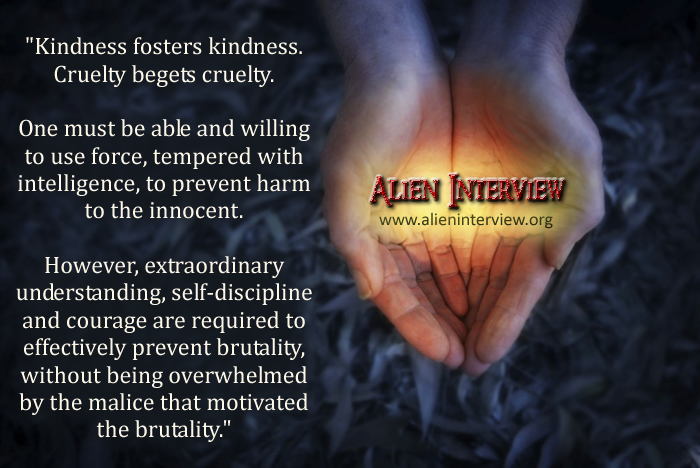
Seriously, what if Planet Earth really was nothing more than a “hell” established by another planet, or star system, or intergalactic government?  It would really explain a lot about the state of affairs on Earth.  For example, why are we subjected to continual pain, suffering, death, disease, starvation, chronic war, violence, stupidity, hatred, chaos, greed, earthquakes, tidal waves, volcanoes?  These are just a few of a plethora of pandemic pestilences that plague the population on this planet!  If you read the Top Secret military transcripts published in the book ALIEN INTERVIEW, you will understand that Earth IS Hell, and the the reasons why.

ALIEN INTERVIEWSupport independent publishing: Buy this book on Lulu.

VISIT THE WEBSITE and BLOG for the book at www.alieninterview.org and www.alieninterview.org/blog

FOLLOWING

Republished by Blog Post Promoter

“Do not seek to follow in the footsteps of the wise. Seek what they sought”.

— *Basho, (1644-1694)

This is good advice. However, I would amend it to say “Follow in the footsteps of the wise and seek what they sought”.  The harmonics of wisdom recognize the gradient scale of wisdom.  Wisdom is relative to all other wisdom.
In the teaching of wisdom, one much become  a good follower.  Yet to follow effectively one must lead others.  Basho exemplified the most able of wise men.  At the time of his death, Basho had more than 2000 students.
Yet, here is the eternal right of the individual to disdain from the playing of games simply to enjoy the serene and simple state of Being.   Or, the enjoy the pleasure of Creation for its own sake, without regard to an audience.  However, it is far easier to preach to the choir than to enlighten the “heathen”.

Here are a few of the wonderful  *Haiku poems attributed to Bash (they may not have retained their purity in the English translation, but you get the flavour of them):

An old pond!
A frog jumps in-
The sound of water.

____________

The years first day
thoughts and loneliness;
the autumn dusk is here.

____________

Poverty’s child –
he starts to grind the rice,
and gazes at the moon.

____________

A weathered skeleton
in windy fields of memory,
piercing like a knife

____________

*DEFINITION OF HAIKU: Haiku is one of the most important form of traditional Japanese poetry. Haiku is, today, a 17-syllable verse form consisting of three metrical units of 5, 7, and 5 syllables. Since early days, there has been confusion between the three related terms Haiku, Hokku and Haikai. The termhokku literally means “starting verse”, and was the first starting link of a much longer chain of verses known ashaika. Because the hokku set the tone for the rest of the poetic chain, it enjoyed a privileged position in haikaipoetry, and it was not uncommon for a poet to compose ahokku by itself without following up with the rest of the chain.

The name Basho (banana tree) is a sobriquet he adopted around 1681 after moving into a hut with a banana tree alongside. He was called Kinsaku in childhood and Matsuo Munefusa in his later days.


HUMAN INFESTATION

Republished by Blog Post Promoter

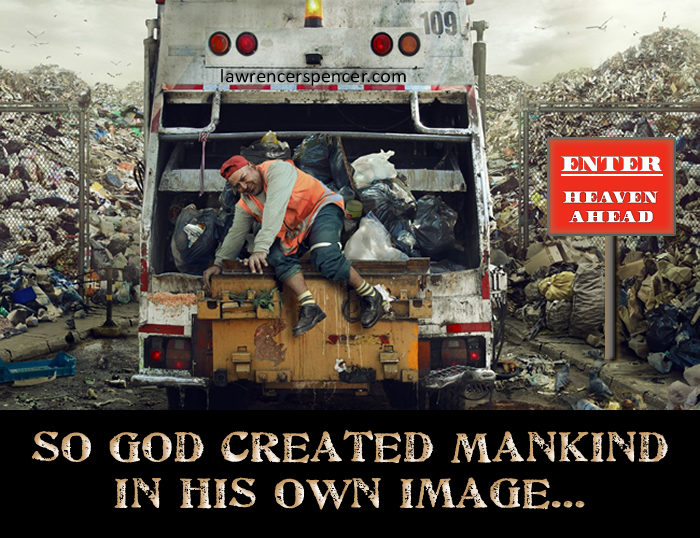
It’s a rhetorical question. It’s a theoretical question.  But, don’t you ever have a glimmer in the dimmest recesses of your soul that we may have encountered this problem before?  Perhaps far, far away….a  long, long time ago…. How did we handle it then?  Or, did we fail to handle it at all?  Either way, here we go again, my godly friends.  Here we go again.  What do we do now?