Republished by Blog Post Promoter

( Ohhhhh yeaaaaa…..! )

Poetry by Lawrence R. Spencer. Poetic nonsense by Lawrence R. Spencer and others. Haiku poems by Lawrence R. Spencer.
Republished by Blog Post Promoter
This video is a scene from The Twilight Zone episode “The Obsolete Man“. It is a commentary on how governments destroy the individual, independent intelligence of writers, and other “revolutionaries” who are a huge percentage of the population of Prison Planet Earth.
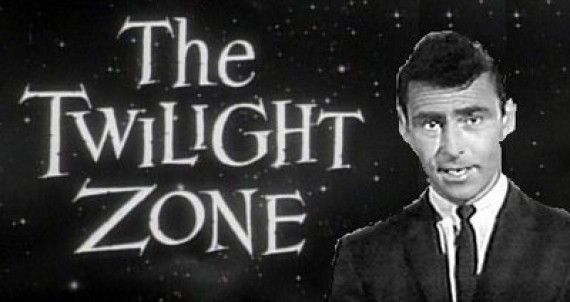 “There is a fifth dimension beyond that which is known to man. It is a dimension as vast as space and as timeless as infinity. It is the middle ground between light and shadow, between science and superstition, and it lies between the pit of man’s fears and the summit of his knowledge. This is the dimension of imagination. It is an area which we call the Twilight Zone.” ~ Rod Serling (December 25, 1924 – June 28, 1975)
Rod Serling (creator of the 1960’s Sci-Fi TV series “The Twilight Zone“) was a fan of pulp fiction stories. As an adult, he sought topics with themes such as racism, government, war, society, and human nature in general. Serling decided to combine these two interests as a way to broach these subjects on television at a time when such issues were not commonly addressed.
Serling was active in politics, both on and off the screen, and helped form television industry standards. He was known as the “angry young man” of Hollywood, clashing with television executives and sponsors over a wide range of issues including censorship, racism, and war.
Throughout the 1950s, Serling established himself as one of the most popular names in television. He was as famous for writing televised drama as he was for criticizing the medium’s limitations. His most vocal complaints concerned censorship, which was frequently practiced by sponsors and networks.
“I was not permitted to have my senators discuss any current or pressing problem,” he said of his 1957 production ‘The Arena’, intended to be an involving look into contemporary politics. To talk of tariff was to align oneself with the Republicans; to talk of labor was to suggest control by the Democrats. To say a single thing germane to the current political scene was absolutely prohibited.”
The Twilight Zone ’s writers frequently used science fiction as a vehicle for social comment, as networks and sponsors who censored controversial material from live dramas were less concerned with seemingly innocuous fantasy and sci-fi stories. Frequent themes on The Twilight Zone included nuclear war, McCarthyism, and mass hysteria, subjects that were avoided on more serious primetime television. Aside from Rod Serling, who wrote or adapted nearly two-thirds of the series’ total episodes, writers for The Twilight Zone included leading authors such as Charles Beaumont, Ray Bradbury, Earl Hamner, Jr., George Clayton Johnson, Richard Matheson, Reginald Rose, and Jerry Sohl. Many episodes also featured new adaptations of classic stories by such writers as Ambrose Bierce, Jerome Bixby, Damon Knight, John Collier, and Lewis Padgett.
Republished by Blog Post Promoter
And now, for something COMPLETELY different!! A few explosive scenes from romantic films…..
Republished by Blog Post Promoter
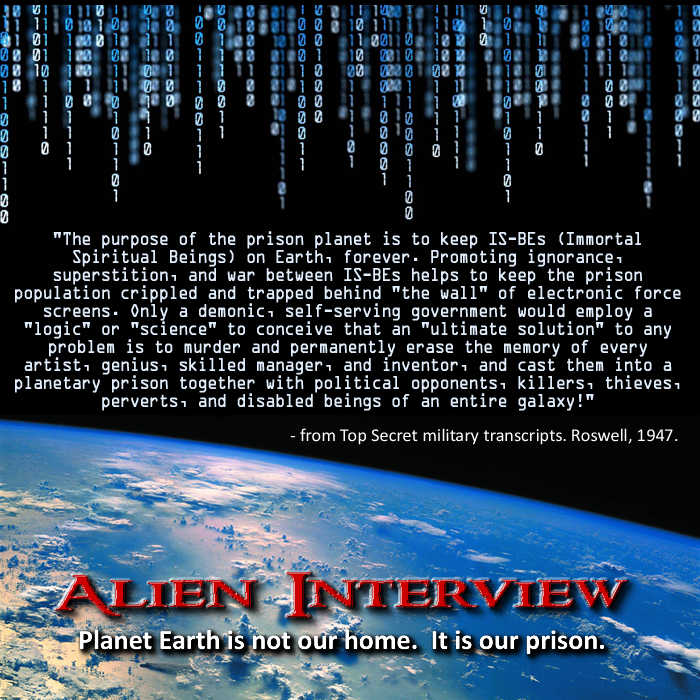 Prehistoric
Psyche (Spirit)
Pariah ( a person who is rejected from society or home
Physical universe
Perpetual
Prison Planet
Pilot (as in “Roswell UFO crash pilot”)
Pyramid civilizations (i.e. false facades)
Psychopaths
Pathological
Perverts
Predators
Parasites
Pretense
Power
Pyramid Scheme
Partnership
Privatization
Paper money
Profiteer
Price
Payment
Profit
Plunder
Plot
Provocateur
Premeditated
Propaganda
Philanthropic Foundation (i.e. a financial front group to fund secret operations)
Perpetrator
Public Protector
Perjury
Plea Bargain and/or Plea of Insanity
Pope
Priest
Preacher
Pedophile
Pimp
Prostitute
Politician
Policy
Privacy
Political Donation (i.e. bribe)
Political Puppet
Promises
Press Conference (i.e. scripted and authorized lying to the public)
Private Police
Programming Protocols
Psychotropic (i.e. mind control using television, electronic, drugs, etc..)
Patent (i.e. a Corporation license to own anything and everything)
Personal Electronic Devices
Password
Police State
Pharmaceutical Drugs
Perception (as in, “everything you perceive on drugs or the Mainstream Media is false)
Payroll
Poor
Poverty
Prayer (as in, “we don’t have a prayer”)
Putrid
Pathetic
Poisonous
Person
People
Population
Prisoners
Poignant (keenly distressing to the mind or feelings)
(for more details about how and why these words are related, read the book ALIEN INTERVIEW)
Republished by Blog Post Promoter
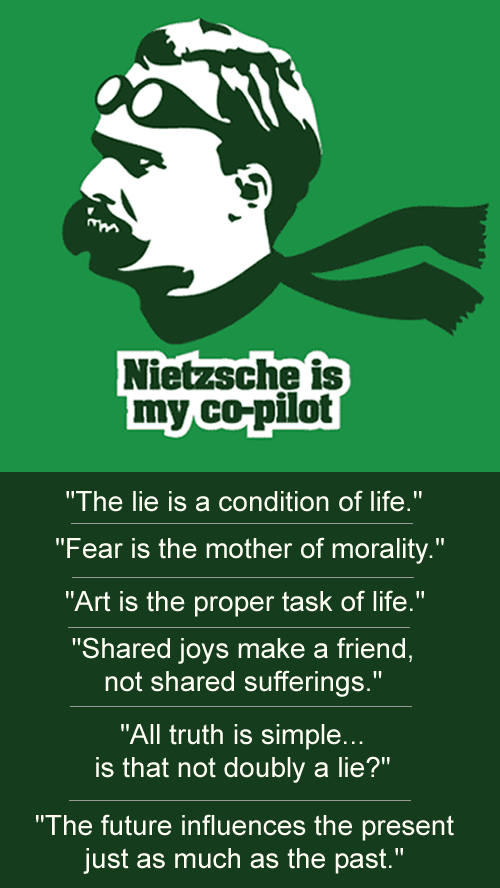
Friedrich Wilhelm Nietzsche (October 15, 1844 – August 25, 1900) was a German philosopher, poet, composer, cultural critic, and classical philologist. He wrote critical texts on religion, morality, contemporary culture, philosophy, and science, displaying a fondness for metaphor, irony, and aphorism.
Nihilism ( from the Latin nihil, nothing) is the philosophical doctrine suggesting the negation of one or more putatively meaningful aspects of life. Most commonly, nihilism is presented in the form of existential nihilism, which argues that life is without objective meaning, purpose, or intrinsic value.Moral nihilists assert that morality does not inherently exist, and that any established moral values are abstractly contrived. Nihilism can also take epistemological or metaphysical/ontological forms, meaning respectively that, in some aspect, knowledge is not possible, or that reality does not actually exist.
Nietzsche noted in his autobiographical Ecce Homo that his philosophy developed over time, so interpreters have found it difficult to relate concepts central to one work to those central to another, for example, the thought of the eternal recurrence features heavily in Also sprach Zarathustra (Thus Spoke Zarathustra), but is almost entirely absent from his next book, Beyond Good and Evil. Added to this challenge is the fact that Nietzsche did not seem concerned to develop his thought into a system, even going so far as to disparage the attempt in Beyond Good and Evil. (Wikipedia.org)
READ MORE ABOUT THE PHILOSOPHY OF NIETZSCHE HERE