
Republished by Blog Post Promoter
Category Archives: …and other stuff
miscellaneous postings by Lawrence R. Spencer
GIRL WITH A PEARL
Republished by Blog Post Promoter

 It is lovely to see that a Vermeer painting has been returning to Holland after being “on tour”. Personally, I am greatly saddened that Vermeer, his wife Catharina, and their children did not enjoy the immense financial rewards that art promoters have received during recent decades from his paintings, during his own lifetime! Within the context of the Eternal Now, financial rewards is irrelevant. However, acknowledgment, in the form of recognition of technical brilliance and praise of aesthetic artistry, are always welcome to any Immortal Being. (Read the article about the Vermeer painting, “Girl withe a pearl earring” being returned to Holland after two years): http://www.independent.co.uk/arts-entertainment/art/news/vermeers-girl-with-a-pearl-earring-to-return-home-to-the-netherlands-after-two-years-on-the-road-as-mauritshuis-royal-picture-gallery-reopens-9158240.html
Read MY THOUGHTS about Hollywood film, excerpted from my book VERMEER: PORTRAITS OF A LIFETIME:
 “Recasting The Girl, Spray-Painting The Pearl
| I |
will not soon forget seeing the horrendous Hollywood movie titled, “The Girl With A Pearl Earring” in 2004. It is a fictional depiction of a fictionalized relationship between Vermeer and an imagined “…young peasant maid working in the house of painter Johannes Vermeer becomes his talented assistant and the model for one of his most famous works.” It was nominated for 3 Oscars by the Academy of Motion Picture “arts” and “sciences”.
This tragically tacky spin on the life of Vermeer is classic Hollywood magic: take the true life story of a teen-age daughter of one of the finest painters in history, re-cast her as whore, and her father as an brutish ogre, spray-paint her naturally luminescent pearl earring with glitter glue and, presto! Nominate it for an Oscar!
Absurdly cliché characterizations contrived by the brain-dead writers invent a debased relationship between a fictional “peasant maid” and Vermeer that are typical of the money-motivated Hollywood swill fed to and gobbled up by an uneducated public. The socially redeeming value of this food for swine (to be polite) is a pile of steaming shit! Sexual intrigue may sell movie tickets, but pigs are stupid, and shit stinks.
The writers, producers and actors associated with this morose movie would have been more kind to Vermeer, his family and his artistic legacy if they had spent the budget for the film to visit the museums of the world, in which his priceless works hang, and spray them with graphic graffiti.
The film was written and directed without regard for historic fact or common sense. The preposterous personae of Vermeer was portrayed by the British actor, Colin Firth, with the charisma of a cardboard cereal box. Scarlett Johansson, who plays the role of the gawkish “girl”, is garish at best.
The premise of the ludicrous book and movie script, entirely ignores and abuses the obvious, and thoroughly researched historical information about Vermeer and his life. A few of the grossest omissions are:
1) All of the women in the Vermeer paintings, with one or two minor exceptions, are his wife, and daughters. To postulate that he hired a “peasant maid”, or that he had a painting assistant, much less that he had a sexual relationship with such an imaginary person, are sick, fictional contrivances.
2) That the Vermeers could afford to pay a servant, who could spare the time away from vitally needed chores, to become an artists assistant, is blatantly stupid. Household helpers were not something they could afford, except early in their marriage, at best. Some of the thoroughly researched facts about Vermeer were that he and his wife produced 15 children in 22 years! They lived in the small village of Delft, with his wife’s very Catholic mother, in her small house, to help reduce expenses. He died from overwhelming depression due to his inability to support his wife and 11 surviving children, who were left in extreme poverty at his premature death at the age of 43.
In a plea to her creditors after her husband’s death Catharina stated, in the public record, the final footnotes to Vermeer’s brief life:
“during the ruinous war he not only was unable to sell any of his art but also, to his great detriment, was left sitting with the paintings of other masters that he was dealing in.”
Catharina summarized the circumstances of his death: “as a result and owing to the great burden of his children, having no means of his own, he had lapsed into such decay and decadence, which he had so taken to heart that, as if he had fallen into a frenzy, in a day or day and a half had gone from being healthy to being dead.”
Obviously, the man she describes is the antithesis of the man portrayed in the movie.
3) That a woman would be allowed to become an artists apprentice or assistant, is an absurd fantasy. It was forbidden by the Guild of St. Luke which maintained strict, Puritanical oversight of the activities of every member.
4) It is a documented fact that Maria Thins employed a live-in servant woman in her home in the later years of her life. (Born ca. 1593 – died, December 27, 1680) Maria was 82 years old when Vermeer died in 1675 at the age of 43. Her servant’s name was Tanneke Everpoel. Maria bequeathed a small sum of money (20 guilders) to Tanneke upon her death. It is very likely that Tanneke is the servant shown in Vermeer’s painting, ” The Love Letter”.
5) The girl in the legendary painting (as well as in several other of his paintings) is his second daughter, Elizabeth! Vermeer never hired models — he painted only family and friends. It doesn’t take a cosmetic surgeon to compare the features of the women in the majority of his paintings to observe that the same women are being painted in their own home, again and again in different poses, settings, lighting and clothing. Most of his paintings feature his wife, Catharina, who was not only his constant accomplice in creating a family, she was his foremost ally in his life as an artist!
The paintings named (by others), “girl with a pearl earring”, as well as “the girl with a red hat”, and “the girl with a flute”, and others, are all of his second daughter, Elizabeth, who was a teenager when they were painted. He used her as the model for a series of very small “tronie” or facial portraits, which were popular at the time.
These miniature “head shots” were especially well suited to the use of the camera obscura to create what we know now to have a photographic quality, rendering the light and perspective differently than the unaided lens of the human eye perceives it.
The women in his family, during his lifetime, enjoyed dressing in the finest clothes and jewelry available to them, as well as exotic costumes, imitating the apparel of mysterious lands. Many of the accessories included in these paintings were borrowed. Trading vessels often brought fascinated news and relics to Delft from around the world. He and his family rarely ventured more than a short walk or boat ride from home.
That Vermeer would have an elicit affair with a maid in his own home is an insult to common sense and decency. Anyone who looks at paintings of his wife and nine daughters can plainly see his obvious love and devotion — if not obsession — for the women in the small house they shared. Vermeer’s family permeated every aspect of his life, and dominated his home.
His days were consumed with his work with the Guild of St. Luke, the militia of Delft, and interaction with other painters for whom, like his father before him, he sold their paintings to earn money to feed and clothe his 15 children. As his family grew, Vermeer barely had time work on his own paintings!
That there was ever any enmity or discord between Johannes and Catharina during their lives is a fantasy contrived by the Hollywood money machine that perverts reality to appeal to the lowest common denominator of prurient interest suitable only for soap operas, pornography, and girl-gossip magazines.
The self-proclaimed “artists” of Hollywood, driven by money mongers, like any mindless mercenary who act the part they’re paid for, notoriously devoid of ethics or integrity, are akin to any common soldier who massacres innocent civilians, and justifies their crimes in the name of war.
Vermeer, in this movie, and in his own lifetime, was a victim of brainless brutality. The stupid soldiers of Louis XIV of France who invaded Holland, together with the bloody British aristocracy combined to murder peasants, and plunder goods to enrich and glorify themselves. The net result for Vermeer was attested, after his death, by his wife, Catharina Bolnes, “during the ruinous war he not only was unable to sell any of his art but also, to his great detriment, was left sitting with the paintings of other masters that he was dealing in.” And further, “as a result and owing to the great burden of his children, having no means of his own, he had lapsed into such decay and decadence, which he had so taken to heart that, as if he had fallen into a frenzy, in a day or day and a half had gone from being healthy to being dead.”
Let us hope, sincerely, that those unfortunates who saw this “ruinous movie” can assess for themselves the denigrating massacre of an artist by Hollywood, compared with his own biographical portraits of a lifetime and the family he adored, magnificently embodied in his paintings, to judge for themselves the aesthetic intention and ethical integrity of the man, Vermeer.
— Lawrence R. Spencer
THE MAGIC
Republished by Blog Post Promoter

The word “magic” derives via Latin magicus from the Greek adjective magikos (μαγικός) used in reference to the “magical” arts of the Persian Magi, or priests of Zoroaster, the god Ahura Mazda.
Dictionary definitions of “magic”:
1) having or using special powers to make impossible things happen or seem to happen
2) having a special quality that makes something seem wonderful
3) Wonderful, amazing or incredible.
Etymology: magic (n.) from Old Persian magush, “to be able, to have power“.
HOW TO SPEAK “IS”
Republished by Blog Post Promoter
This is a “How To” video about how to speak “IS”. This could become a new Multidimensional Language of The Eternal Now…..
What’s the “IS” word for Highly Sentient, Empathetic, Insightfully Understanding, Aesthetic Communication?
See more video, art and other really incredibly great stuff at http://www.stuartdavis.com/
DOLPHINS: SUPER-BEINGS WITH FINS
Republished by Blog Post Promoter

DOLPHINS HAVE MORE SENSORY PERCEPTION, STRENGTH AND MOBILITY THAN HUMANS
Human beings consider themselves to be the “superior” species. However, compared to the physical bodies of Dolphins, human bodies and abilities are very fragile and limited! Dolphins do not have the limitations of spending most of their time working, paying taxes, cleaning houses, clothing, shopping, building shelters, supplying heat / air conditioning, etc., and a multitude of social limitations that burden and restrict human behavior and freedom. In short, Dolphins are relatively FREE to play, eat, have sex and travel.
And, they certainly seem to be MUCH more happy than humans. And, they do not murder each other and destroy their environment! (This fact alone automatically makes them FAR more intelligent than humans!)
Since the days of Aristotle, dolphins have impressed humans with their incredible swimming speeds and aquatic acrobatics. There are at least 32 known species of dolphins, many of which remain largely unstudied.
In addition to the limited sensory abilities of human bodies (sight, hearing, smell/taste, tactile, speech) Dolphins also perceive sonar, radar, the electromagnetic field of Earth, and the magnetic fields of life organism. The also possess the abilities to communicate sonically with a very sophisticated vocabulary of sounds, including ultra-sonic. Moreover, Dolphins tremendously strong bodies and physical skills and abilities far beyond humans, i.e. swimming, leaping, holding their breath under water (they are air-breathing mammals, after all), acrobatic balancing abilities, and coordination of athletic feats with other Dolphins which are not trained, but intuitive. The Dall’s porpoise, weighing 480 pounds or less, is one of the smaller dolphins, but his burst swimming speeds have been reported to be as fast as 34.5 miles per hour! (by contrast the fastest human foot speed on record is 44.7 km/h (12.4m/s, 27.78 mph), but for only 100 meters! Remember also that water density is about 1000 times more than air.
DOLPHINS ARE SELF-AWARE
“Research suggests that bottlenose dolphins are self-aware, a trait which is considered to be a sign of highly-developed, abstract thinking. One such indicator is that they have been shown to be able to recognise themselves in a mirror, a behaviour that until recently has only been recorded in humans and great apes. Interestingly, unlike most animals, they are also interested in television. Whereas chimps only learned to respond appropriately to television after a long period of training, dolphins respond appropriately to the images from the first time they were exposed.
Dolphins frequently play with things they find in their environment and have been even been seen to use them as tools. In Australia, bottlenose dolphins take marine sponges that they break off the seafloor and wear them over their closed rostrum as protection while they probe into the seabed for fish. There is evidence to suggest that they pass this skill on from one individual to another.
 Dolphins do not only respond to the basic needs of their lives; they are extremely playful, for example, producing underwater bubble rings, which they can do in either the horizontal or vertical plane. They mainly do this by either swimming repeatedly in a circle and then injecting air into the helical vortex currents formed or by rapid exhalation of a burst of air into the water and allowing it to rise to the surface in a ring. They frequently then spend time examining their creation both visually and with sonar.
In one experiment, two dolphins were rewarded whenever they came up with a new behaviour, for example a physical action that they would not normally perform such as a kind of tail slap on the surface. It took them a while to work out what was required of them before they realised, but then they started to offer all kinds of novel behaviours, to the point where the trial was stopped because their behaviours became too complex to make further positive reinforcement meaningful. When the experiment was repeated with humans, it took the volunteers roughly the same length amount of time to grasp what they were being asked to do, although they did not then continue on to create the range of behaviours the dolphins did.
BUY THIS BOOK: http://www.dolphin-way.com/the-book/#axzz3UbmelDag
Another example of interesting behaviour suggesting intelligence concerns a dolphin named Kelly at the Institute for Marine Mammal Studies in Mississippi. The dolphins there are trained to collect any rubbish that inadvertently falls into their pens and then give it to a trainer the next time they see one. They are then rewarded with a fish. Kelly worked out that the size of the piece of rubbish does not affect the reward. So instead of handing over a piece of litter immediately, she stores it under a rock in the tank and tears it into small pieces and hands them back one at a time. This strategy suggests that Kelly has a sense of future and is prepared to delay gratification. She has also in a way turned the tables — she has effectively trained the humans to do what she wants.
It is probable that dolphin intelligence would have developed somewhat differently to humans. Humans tend to manipulate their environment in order to meet their needs, and based on the simple fact that they have hands, can change things and are able to create complex aids to communication, ranging from the simple written word to the sophisticated electronics. Without the ability or need to manipulate their environment, dolphins must focus their considerable intelligence on other concerns that are relevant to their lives, and may well have specific developed talents presently beyond our understanding.”
THE NECESSITY OF BEING FREE
‘They may take our lives, but they’ll never take our freedom.’ It’s the memorable quote from the 1995 film Braveheart, and it will stand the test of time. To humans, freedom is the ultimate right, and we’ll fight for it to our deaths.
Suffering under confinement is shared by whales and dolphins, too. Unlike many animals that live longer in captivity than in the wild, in the case of these marine mammals it’s the other way round. Life expectancy is considerably shorter across the species, while infant mortality is higher. Male orcas, for example, live an average 30 years in the wild, while females average 46 years, with some living to 80 or 90. However, in a recent analysis of orcas born in captivity or captured from the wild, their average survival rate is estimated at only 8.5 years.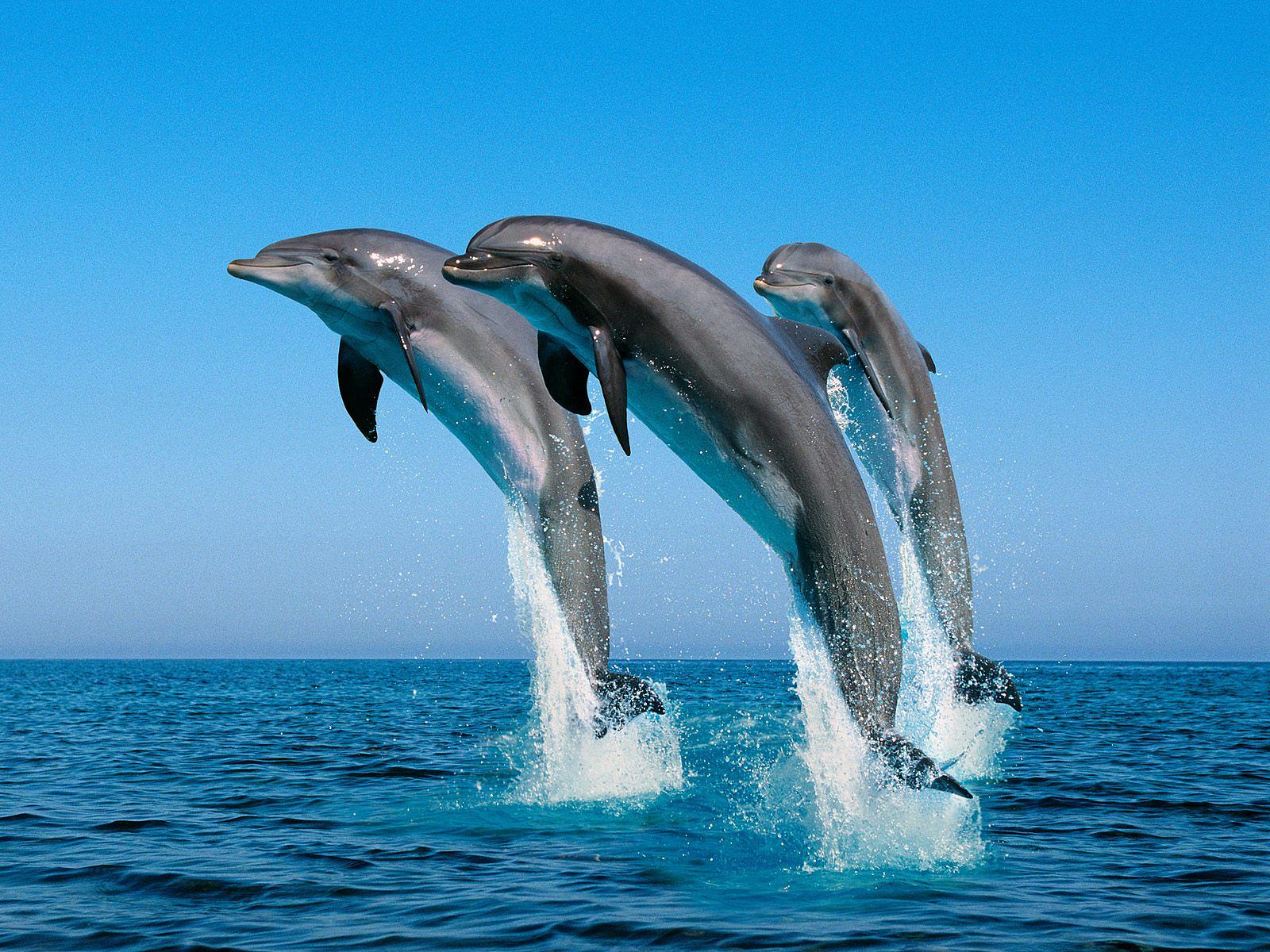
Whales and dolphins are wide-ranging, with large extended families and often huge social groups, in which individuals are dependent upon each other. Remove them from both these aspects of their lives, and the claustrophobic effects upon them can become catastrophic. Depression, physical illness and aberrant behaviour have all been documented. It is therefore unsurprising that, from time to time, human trainers are hurt or even killed by captive individuals, such as orcas, that have become unnaturally aggressive from being held in stressful artificial environments. In addition, those taken into captivity from the wild are not the only ones that suffer. The groups that are left behind may depend upon them for many social reasons, and vital bonds necessary for orca survival can be broken as key members are taken from family groups.
People who enjoy swimming with dolphins, or dolphin-assisted therapy, often say that the dolphins themselves seem so happy. Sadly, but understandably, they are misunderstanding the situation. The apparent smile on the faces of dolphins is actually just a physicality, not an emotive response. It remains there as part of dolphin anatomy, no matter how sad, upset or ill they may be. ” http://us.whales.org/whales-and-dolphins/brain-power
DOLPHIN NEWS and VIDEOS: http://www.crystalinks.com/dolphinnews.html
Dolphins are attracted to magnets PhysOrg – September 29, 2014
Dolphins are indeed sensitive to magnetic stimuli, as they behave differently when swimming near magnetized objects. Magnetoreception implies the ability to perceive a magnetic field. It is supposed to play an important role in how some land and aquatic species orientate and navigate themselves. Some observations of the migration routes of free-ranging cetaceans, such as whales, dolphins and porpoises, and their stranding sites suggested that they may also be sensitive to geomagnetic fields.
Checking the Claim: A Device That Translates Dolphin Sounds Into English Smithsonian – April 13, 2014
Researchers used new technology to interpret a dolphin noise they say translates loosely to “seaweed”.
Brazil dolphin is first new river species since 1918 BBC – January 22, 2014
Scientists in Brazil have discovered the first new river dolphin species since the end of World War One. Named after the Araguaia river where it was found, the species is only the fifth known of its kind in the world. Researchers say it separated from other South American river species more than two million years ago. There are believed to be about 1,000 of the creatures living in the Araguaia river basin. River dolphins are among the world’s rarest creatures.
Scientists gain new insights into dolphin’s evolutionary history and conversation PhysOrg – October 29, 2013Researchers found there were many factors related with the aquatic adaptations of cetaceans, such as positively selected genes (PSGs), and some functional changes. One of the noticeable findings is that PSGs in the baiji lineage were also involved in DNA repair and response to DNA damage stimulus, which have not been reported in previous studies of mammals or dolphin. Nicknamed “Goddess of the Yangtze”, the baiji was regarded as the goddess of protection by local fishermen and boatmen in China. Unfortunately, this species has suffered huge losses in recent decades largely due to the extreme pressures brought by human’s activities. The baiji has become one of the most famous species in aquatic conservation. There have been many great efforts made to conserve the baiji, but most of them failed.
Dolphins have ‘longest social memory’ among non-humans BBC – August 7, 2013
Forget about elephants – scientists say that dolphins have the longest memories yet found in a non-human species. Researchers in the US say that even after 20 years of separation, dolphins could recall the whistles of former companions. The authors believe that these long-term memories are a product of the complex social connections that dolphins have evolved. In the study, the scientists used information on the relationships between 56 captive bottlenose dolphins that have been moved for breeding purposes between six different zoos and aquariums in the US and Bermuda. The records, dating back decades, showed which of the dolphins had been housed together.
 Diver who saved dolphin: ‘He swam right up to me’ NBC – January 24, 2013
When a dolphin needed help off the coast of Hawaii, he was determined to let a scuba instructor know. Keller Laros was leading a group of divers on a tour of the waters off of Kona, Hawaii, on Jan. 11. He often goes on his dives with professional underwater videographers and this night was no exception. But as Laros, his camerawoman and the rest of the group began their dive, nothing seemed out of the ordinary. “All of a sudden I heard a loud squeak, and I turned around, and the dolphin was literally three feet behind me,” Laros said. “He swam right up to me.”
Dolphin Caught in Fishing Line Approaches Divers for Help Yahoo – January 23, 2013
Dolphins are known for being highly intelligent mammals. So intelligent, in fact, that they can communicate with humans even when they have not been trained to do so. That’s what happened to a group of divers on an observation trip off the coast of Hawaii, known as the Big Island.
Dolphins at Sea Greet Each Other Discovery – February 29, 2012
When groups of dolphins meet up in the open sea they thoughtfully introduce themselves. Bottlenose dolphins swap signature whistles with each other when they meet in the open sea, a new study reports, suggesting that these marine mammals engage in something akin to a human conversation. Earlier research found that signature whistles are unique for each dolphin, with the marine mammals essentially naming themselves and communicating other basic information.
Dolphin whistles are unfit for porpoise PhysOrg – February 29, 2012
Bottlenose dolphins have whistles which they use to exclusively greet other members of their species, marine biologists in Scotland reported. Using hydrophones, the researchers made recordings of dolphins swimming in St. Andrews Bay, off the northeastern coast of Scotland, in the summers of 2003 and 2004. When groups of dolphins met up, they swapped whistles that outwardly sounded the same.
How Far Will Dolphins Go to Relate to Humans? New York Times – September 20, 2011
In a remote patch of turquoise sea, Denise L. Herzing splashes into the water with a pod of 15 Atlantic spotted dolphins. For the next 45 minutes, she engages the curious creatures in a game of keep-away, using a piece of Sargassum seaweed like a dog’s chew toy. Based in Jupiter, Fla., she has tracked three generations of dolphins in this area. She knows every animal by name, along with individual personalities and life histories. She has captured much of their lives on video, which she is using to build a growing database.
New Dolphin Species Discovered in Big City Harbor National Geographic – September 16, 2011
Identified by DNA tests, the new mammals were right under researchers’ noses. An entirely new species of dolphin has been discovered in Australia, and not in some isolated lagoon but in the shadows of skyscrapers, scientists say. One of only three new dolphin species found since the 1800s, the Burrunan dolphin – naed after an Aboriginal phrase that means “large sea fish of the porpoise kind” – is known from only two populations so far, both in the state of Victoria. About a hundred Burrunan dolphins have been found in Port Phillip Bay near Melbourne, Australia’s second most populous city. Another 50 are known to frequent the saltwater coastal lakes of the Gippsland region, a couple hundred miles or so away.
Scientists find out that dolphins ‘talk’ like humans MSNBC – September 7, 2011
Dolphins do not whistle, but instead “talk” to each other using a process very similar to the way that humans communicate, according to a new study. While many dolphin calls sound like whistles, the study found the sounds are produced by tissue vibrations analogous to the operation of vocal folds by humans and many other land-based animals.
Dolphin Studies Could Reveal Secrets of Extraterrestrial Intelligence Live Science – September 6, 2011
How do we define intelligence? SETI, the Search for Extraterrestrial Intelligence, clearly equates intelligence with technology (or, more precisely, the building of radio or laser beacons). Some, such as the science fiction writer Isaac Asimov, suggested that intelligence wasn’t just the acquisition of technology, but the ability to develop and improve it, integrating it into our society. By that definition, a dolphin, lacking limbs to create and manipulate complex tools, cannot possibly be described as intelligent. It’s easy to see why such definitions prove popular; we are clearly the smartest creatures on the planet, and the only species with technology. It may be human hubris, or some kind of anthropocentric bias that we find difficult to escape from, but our adherence to this definition narrows the phase space in which we’re willing to search for intelligent life.
Dolphin hunts with electric sense BBC – July 27, 2011
A South American dolphin is the first “true mammal” to sense prey by their electric fields, scientists suggest. The researchers first showed that structures on the animal’s head were probably sensory organs, then found it could detect electric fields in water.
Dolphins’ ‘Sixth Sense’ Helps Them Feel Electric Fields Live Science – July 27, 2011
The common Guiana dolphin has just divulged its sixth sense: the ability to sense electric fields. It is the first placental mammal known to pull off this trick, new research finds. The dolphin, which bears live young like other placental mammals, most likely uses its sixth sense to find prey in the murky coastal waters it inhabits.
Miraculous! Dolphin Healing Powers May Help Humans Live Science – July 21, 2011
You have an animal that has evolved in the ocean without hands or legs, which swims faster than we can, has intelligence that perhaps equals our social and emotional complexity, and its healing is almost alien compared to what we are capable of. Several remarkable abilities work together for the seemingly miraculous healing in dolphins. First, even with a large gaping wound in their side, dolphins don’t bleed to death.
Successful mothers get help from their friends: Dolphin study PhysOrg – November 2, 2010
Female dolphins who have help from their female friends are far more successful as mothers than those without such help, according to a landmark new study.
‘Balloon head’ dolphin discovered BBC – November 2, 2010
A new type of dolphin with a short, spoon-shaped nose and high, bulbous forehead has been identified from a fossil found in the North Sea. The Platalearostrum hoekmani was named after Albert Hoekman, the Dutch fisherman who in 2008 trawled up a bone from the creature’s skull.
Why Do Dolphins Rub Flippers? National Geographic – November 10, 2008
Researchers have filmed dophins’ behaviors, which include flipper rubbing, to better understand the behaviors’ meanings.
Dolphin With Four Fins May Prove Terrestrial Origins National Geographic – November 6, 2006
Japanese fishers have found an unusual bottlenose dolphin with an extra set of fins that could be an evolutionary throwback to the time when the marine mammals’ ancient ancestors walked on land.
Dolphins Name Themselves With Whistles, Study Says National Geographic – May 8, 2006
Dolphins give themselves “names” – distinctive whistles that they use to identify each other, new research shows. Scientists say it’s the first time wild animals have been shown to call out their own names.
Newborn dolphins go a month without sleep New Scientist – June 29, 2005
Newborn dolphins and killer whales do not sleep for a whole month after birth, new research has revealed, and neither do their mothers, who stay awake to keep a close eye on their offspring. The feat of wakefulness is remarkable given that rats die if forcibly denied sleep. And in humans, as any new parent will tell you, sleep deprivation is an exquisite form of torture.